See on Scoop.it – Health Care Social Media Monitor
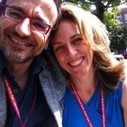
Susannah Fox (@SusannahFox) writes:
‘My schedule only allowed me to attend Day One of the fantastically rich Medicine 2.0 Congress being held this weekend in Boston. I thought I’d share my impressions and notes in case they spark inspiration for other people, as each presenter and hallway conversation did for me.
When I arrived at 7:30am, there was no line at the registration desk, so I grabbed my badge (created in the brilliant style of last year’s, as designed by Larry Chu) and started chatting with people.
I had a wonderful talk with a medical librarian working the National Library of Medicine table (sadly, I didn’t get her name). She told me that one of the most useful Pew Internet data points is this one, from a 2009 report:
Now thinking about all the sources you turn to when you need information or assistance in dealing with health or medical issues, please tell me if you use any of the following sources…”
86% of all adults ask a health professional, such as a doctor.
68% of all adults ask a friend or family member.
57% of all adults use the internet.
54% use books or other printed reference material.
33% contact their insurance provider.
5% use another source not mentioned in the list.
She uses it to advocate to her fellow librarians to keep books front and center, even as libraries adapt to the new digital realities. I pointed her to Pew Internet’s Libraries topic page as well as our Libraries in the Digital Age blog.
Gunther Eysenbach, founder of Medicine 2.0, opened the event right on time at 8am, as he said, “because I’m German.” I believe that the organizer deeply influences the personality of a conference. In this case, it is an academic conference, welcoming of researchers, clinicians, patients, and entrepreneurs (roughly in that order). There is also a sense of humor and adventure at Medicine 2.0, which are also aspects of Gunther’s personality (ask me some day about the time he dropped into John Lester‘s Second Life demo as a half-naked avatar).
Jamie Heywood’s keynote was perhaps the 30th speech I’ve seen him deliver and, as always, it was an inspiring indictment of the status quo in medicine. If you haven’t seen him tell the story of PatientLikeMe’s founding, his TEDMED talk is a good introduction. You could still see the fire in his eyes yesterday as he described fighting for his brother’s life, but now he’s banked the coals and is in for the longer fight of saving health care. Hopefully his talk was captured on video and will be released soon.
I stayed in the auditorium for the next installment of the PatientsLikeMe show — Paul Wicks, director of research and development, who joked that Jamie gave the 30,000-foot view and he, Paul, would give the 6 foot 2 view. It also was an enlightening talk, tuned just right for this audience, with insights about how to scale research that asks so much from participants. Here’s my capture of one key “how-to” slide:
Centralize, Rationalize, Simplify
More consistent navigation (w/funnelytics)
Moderators “floating” not specific communities
Admin tools not custom code
Greater use of collaborative workspace
Sally Okun, PatientsLikeMe’s Health Data Integrity & Patient Safety Manager, followed with what she called the “sea-level view” — a focus on patients themselves. I especially liked her description of how they started with two “buckets” (symptoms and treatments) but responded to their users’ wishes to track many more aspects of their lives. The new bucket list includes:
lab tests
conditions
hospitalizations
side effects
equipment
yoga
prayer
surgery
life events
pets
(Note: in no particular order on her slide.)
She closed with a poem she wrote: “To Learn / listen well / to impressions / voiced by patients / first”
At 9:45am I went to a session entitled “Building virtual communities and social networking applications for patients and consumers.” My phone was dead so I couldn’t tweet, but there sat Gonzalo Bacigalupe (@bacigalupe, pictured with Susannah Fox above) in the front row, a health geek scribe who was not letting anything get past him, so I rested my fingers.
Colleen Young (@Colleen_Young), manager of the Virtual Hospice community, presented her lessons on “How to Build and Sustain a Thriving Online Health Community.” She has promised to upload her slides, so I’ll link to them later, but here are a few notes I took:
“The irony is not lost on us that we are building a thriving community for the dying.”
[Read Susannah Fox’s full article by clicking on the title link above.]
See on e-patients.net
Discover more from Health Care Social Media
Subscribe to get the latest posts sent to your email.

 Health Care Social Media