See on Scoop.it – Blogging For Business
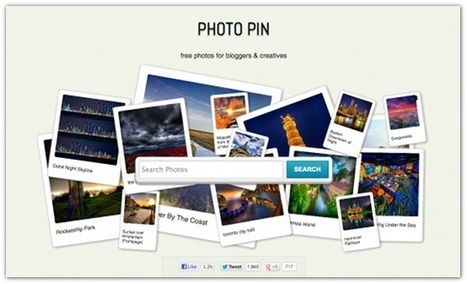
It can be hard to find exactly the right image for your blog posts. I use my own and buy some. This weeks cool tool makes finding free creative commons images easy.
See on spiderworking.com
See on Scoop.it – Blogging For Business
It can be hard to find exactly the right image for your blog posts. I use my own and buy some. This weeks cool tool makes finding free creative commons images easy.
See on spiderworking.com
See on Scoop.it – Health Care Social Media Monitor
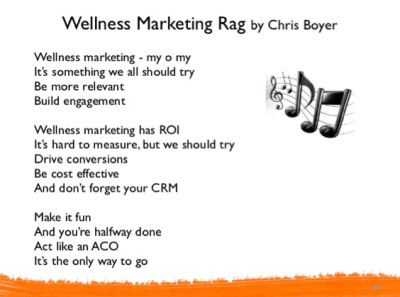
In October, Chris Boyer was the keynote speaker at a conference co-sponsored by the Massachusetts Hospital Association and the New England Society for Healthcare Communication: Influencing Population Health: Making the Case for Wellness & Prevention.
See on Scoop.it – Health Care Social Media Monitor
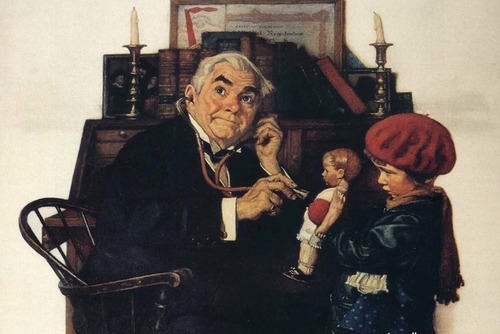
As scientists, medical practitioners, and teachers, doctors have a unique advantage to maintaining a blog that can educate and be beneficial to the public. Doctors can take advantage of the blogging platform to inform the public. The public wins because we can learn and use that knowledge to take better care of ourselves. The doctor wins because he/she will be in the front of peoples’ minds when they’re searching for a new doctor, or referring friends to a doctor.
Doctors, nurses, and other medical professionals have many options for content. Here are three content categories with some ideas for topics.
See on www.brandingpersonality.com
See on Scoop.it – Health Care Social Media Monitor
I was fortunate enough to be part of a workshop today looking at the issues around broadening the adoption of genomics in the health system in the UK.
See on healthworkscollective.com

Are Patient Communities an Effective Way to Deliver Care?
That was the question debated at the 2012 Connected Health Symposium on October 25. Two physicians, Dr. Andrew Watson, Surgeon and Medical Director for the Center for Connected Health and Dr. Jeffrey Benabio, Physician Director of Innovation with Kaiser Permanente faced off on this topic. Alexandra Drane, Founder of Eliza Corporation, moderated the event.
Dr Watson presented the argument in favor of patient communities. Noting the Institute of Medicine’s figures that $750 to $900 billion are wasted by traditional healthcare in the US, Watson feels that the face-to-face system of care needs to evolve. With so many US patients already online, online communities are a vehicle to reach people over distance and time and the medical community has an obligation to help organize this, he said.
Dr. Benabio began with a quote from another physician “Patients running online communities are…
View original post 281 more words
See on Scoop.it – Health Care Social Media Monitor
People join Twitter for a variety of reasons,. For gossip, news, humour and information. And in the healthcare sphere, it’s information that is important. Good, reliable, orthodox information.
At the healthcare coalface it soon becomes clear that a large minority of the population fall into one or more of these categories:
are busy, have no time or interest to engage, just want the facts, then out dislike chit-chat are uncomfortable expressing their opinion do not have English as their first language are naturally laconic are none of the above but, on the day, just don’t want to talk
It’s the role of the treating health worker to recognise one or more of these traits in a person, and offer choices and solutions for their presenting complaint in an appropriate way. But it isnot their role to say “Look, if you don’t engage with me, you might as well leave”. It’s the same with professional Social Media.
See on www.allergynet.com.au
See on Scoop.it – Health Care Social Media Monitor
If you have more reasons Twitter can be a good health resource, please share them.
See on www.kevinmd.com
See on Scoop.it – Health Care Social Media Monitor
Microsoft and Steria have recently launched a pilot project to develop a software application that automates communication between patients and doctors, called…
See on blog.digmed.in
See on Scoop.it – Health Care Social Media Monitor
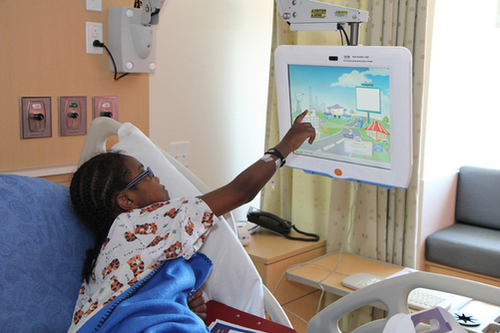
Patients can benefit by getting a variety of healthcare information electronically–as these seven options prove. The tools also help healthcare organizations comply with the HITECH Act Meaningful Use requirements.
See on www.informationweek.com