Posted in #HCSM

Instagram for Doctors: Dangers of Social Media in Healthcare


Ever wonder what your doctors and nurses talk about at the water cooler? Well, grab a paper cup and some Emetrol, because a new app is transporting medical chatter from hospital hallways to mobile devices.

Nicknamed Instagram for doctors, Figure 1 is a new social media outlet that allows users to upload photos of patients’ symptoms and maladies in order to ask for diagnoses, glean some advice or simply provide amusement to their peers.

Immediately after logging on – anyone can sign up – I was reviewing the x-ray of a 90-year-old female with a grotesque radial fracture. Scrolling down started a parade of stubbed toes, extracted tumors and rashes galore – enough to make me regret downloading the app over lunch. But as I kept scrolling (and cringing), my communicator instincts started to develop a nervous twitch. The word “HIPAA” began echoing in my head. Were these patients comfortable being photographed and discussed publicly? Did they even know? And what are the implications of a doctor following care recommendations he received from a stranger on a social media site?

The explanation from app creator Josh Landy, as told to Vox.com, is hardly comforting: “These are people who are talking about a lot of the cases because they’re interesting, textbook, classic versions and they can help.”

To be clear, there are doctors using the app for productive reasons. There are also users like the one who posted a photo of a sutured hand with the caption, “Anyone want to guess what happened here?” Others have taken to posting gruesome photos of traumatic amputations and the like.

Regardless of the user’s intent, it’s only a matter of time before a patient’s identity is exposed on Figure 1. For communicators, an ounce of prevention can go a long way in deterring a privacy breach. Start by educating employees on:

Your organization’s social media policy. Most pitfalls lie in the gray areas. Be specific.HIPAA laws. Make sure health workers understand the basics of HIPAA and their roles in upholding it. Encourage them to ask questions.The “rules” of posting online. Whether they want to or not, employees represent their employers on social media. Instill the mentality that nothing is private, nothing can be deleted, and everything could end up on the front page of the paper.

Ill-advised social media posts (not to mention covert photography) have wrought the downfall of many. It’s never been more important to stay vigilant of what employees are posting and where. Otherwise, one unwise post could lead to one “interesting, textbook, classic version” of a HIPAA violation for your organization.

Source: jarrardinc.com

See on Scoop.itHealth Care Social Media And Digital Health
Posted in #HCSM

Patient, Doctor Beliefs About Technology, Health Data Access Differ – iHealthBeat

A recent WebMD survey finds that 84% of patients want to use diagnostic tools to help their physicians make diagnoses, but just 69% of physicians said patients should do so. Meanwhile, 89% of patients believe they have the right to view all physician notes included in their health records, compared with 64% of physicians. MobiHealthNews et al.

Source: www.ihealthbeat.org

See on Scoop.itHealth Care Social Media And Digital Health

Posted in #HCSM

Physician Introductions on Video

dandunlop's avatarThe Healthcare Marketer

For some time now I have been on the video bandwagon. Video is the ideal platform for effective, authentic storytelling. As I said in a recent article in eHealthcare Strategy & Trends (February 2013):

There exists a clear opportunity within the healthcare industry to more effectively engage consumers online using video. As Marie Gross of Signature Healthcare points out, the move to well-crafted physician videos is a necessary reaction to the changing appetite of consumers, who want to know more about their healthcare providers. “We believe that the physician videos we’re producing help us to capture and retain the consumers’ interest while responding to their need for a greater depth of information about their potential healthcare provider,” Gross says. Recognizing this opportunity, production companies such as WebOuts and On-Site Studios are developing solutions that make it easier for marketers to produce professional-quality videos at a reasonable cost. The convergence…

View original post 119 more words

Posted in #HCSM

Reframing privacy

jsperber's avatarPatient Driven, Patient Centered

A week has gone my since MedX took place at Stanford, and at this point most of us are back to our “regular” lives. But as with any good meeting, the connections and rumination actively continues, and one of the things that I just can’t shake is a topic that came up briefly during a panel on communicating the experience of illness in the digital age: privacy.

A generation ago, we lived in a world where it was relatively inexpensive to remain private, and costly to make something public. Today, with online social networks making it so simple to share our lives, and “big data” evolving to help make sense out of this and other online information, this equation has flipped – it is now far more of an effort to remain private, while making information accessible to others is at times required (consider every time you have had to…

View original post 547 more words

Posted in #HCSM

Designing a Patient Friendly Conference

Great discussion on designing patient-friendly conferences.

Colin Hung's avatarhcldr

HIMSS'13

Blog post by Colin Hung

Over the past 3 days I have been actively following the Stanford Medicine X conference (#MedX) through Twitter and via the live feed of the plenary sessions. I have never been to #MedX (I’m hoping to go next year) but from what I have seen and from what many others have said – this conference sets the standard when it comes to (a) patient involvement, (b) taking care of attendee needs and (c) meaningful presentations.

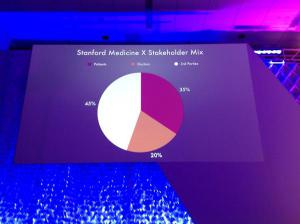
Patient Participation at MedXIn just a few years, Larry Chu (@LarryChu), has established #MedX as THE CONFERENCE to attend for patient advocates, researchers, physicians, nurses, IT folks and of course, for patients themselves. In fact, this year’s event had the highest ratio of patient participants: 35% (picture from Janet Freeman-Daily).

At #MedX, patients are not just passive participants. Patients, REAL patients, make up a significant portion of the presentations and…

View original post 997 more words