See on Scoop.it – Health Care Social Media Monitor

A well-functioning online patient community is a network of microexperts
See on ronizeiger.com
See on Scoop.it – Health Care Social Media Monitor
A well-functioning online patient community is a network of microexperts
See on ronizeiger.com
See on Scoop.it – Health Care Social Media Monitor
Encouraging lifestyle change through social media – the #GetFit campaign.
See on www.blueeyeddigital.com
Patient Engagement Is A Physician-Patient Communication Challenge…Not A Health Information Technology Challenge
There is no app for engaging patients in their own health care absent a strong doctor-patient relationship.
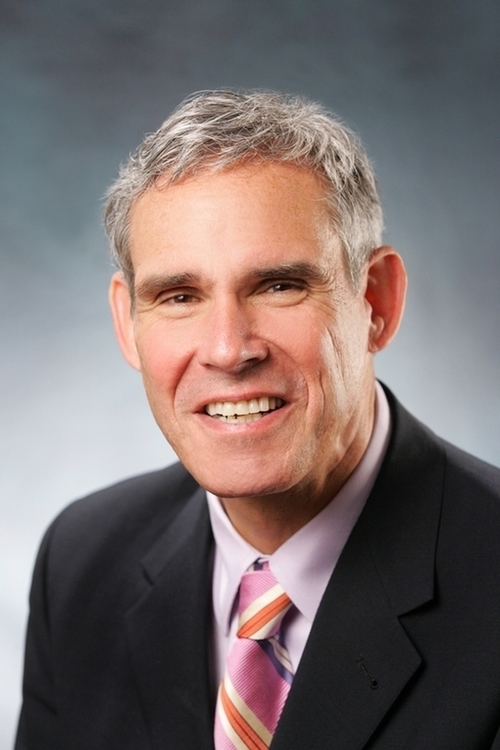
Dr. Eric Topol’s introduction to Dave deBronkart’s new book Let Patients Help.
See on epatientdave.com
Author Leonard Kish explains how patient narratives and health information in context may be the gravitational force that pulls patients toward their goals.
See on www.hl7standards.com
See on Scoop.it – Health Care Social Media Monitor
Greaves, F et al. BMJ Qual Saf doi:10.1136/bmjqs-2012-001527
Abstract
Recent years have seen increasing interest in patient-centred care and calls to focus on improving the patient experience. At the same time, a growing number of patients are using the internet to describe their experiences of healthcare. We believe the increasing availability of patients’ accounts of their care on blogs, social networks, Twitter and hospital review sites presents an intriguing opportunity to advance the patient-centred care agenda and provide novel quality of care data. We describe this concept as a ‘cloud of patient experience’. In this commentary, we outline the ways in which the collection and aggregation of patients’ descriptions of their experiences on the internet could be used to detect poor clinical care. Over time, such an approach could also identify excellence and allow it to be built on. We suggest using the techniques of natural language processing and sentiment analysis to transform unstructured descriptions of patient experience on the internet into usable measures of healthcare performance. We consider the various sources of information that could be used, the limitations of the approach and discuss whether these new techniques could detect poor performance before conventional measures of healthcare quality.
See on qualitysafety.bmj.com
See on Scoop.it – Health Care Social Media Monitor
The Internet is quickly becoming patients’ resource of choice to learn more about their doctors. But doctors have been slow to embrace it for one reason: they aren’t sure how to be a doctor online.
“The biggest risk of social media in health care,” they conclude, “is not using it at all.”
See on well.blogs.nytimes.com
See on Scoop.it – Health Care Social Media Monitor
discussion of the uses of social media for medical education, prepared as part of the STFM Medical Student Education Conference 2013
See on www.slideshare.net
See on Scoop.it – Health Care Social Media Monitor
Robin Good: If curation is all about finding and sharing great content, what’s the difference with what so many bloggers have been doing until now?
The difference, according to Deanna Dahlsad at Kitsch-Slapped, is in the focus. While bloggers often cover just about anything that intercepts their online wanderings, curators are characterized by a strong focus on a specific topic.
Here is a key passage from her article: “Many bloggers spend their time selecting what they consider the best of what other people have created on the web and post it at their own sites, just like a magazine or newspaper.
Or they provide a mix of this along with writing or otherwise creating their own content. Not to split hairs, but curation involves less creation and more searching and sifting; curation’s more a matter of focused filtering than it is writing.
Because content curation is expected to be based on such focused filtering, it begins far more based on topic selection.
This is much different from blogging, where bloggers are often advised to “just begin” and let their voice and interests accumulate over time to eventually reveal a primary theme.
…
Some collectors just collect what they like as they stumble into it. …Sometimes, collectors just keep piling up stuff, no matter what it is. Even if this isn’t hoarding, it’s not-so-much of a purposeful pursuit.
But professional curators, those who manage collections for museums or other organizations, and serious collectors, they maintain a specific focus.
And rather than stumbling into items, they continually seek for specific items.
The definition dictates the curation — and everything from funding to their continued employment is based on how well their collection meets the collection’s definition.
While blogging success may be thought of in many different ways, the success of content curation lies in how well you define, search/research, and stick to your subject.”
Rightful. 8/10
Full article: http://www.kitsch-slapped.com/2012/06/facts-questions-on-blogging-curating-collecting/ ;
See on www.kitsch-slapped.com
See on Scoop.it – Health Care Social Media Monitor
Leeds and York partnership NHS foundation trust have ditched the automated tweets and are trying out Pinterest and YouTube to reach a wider audience, explain Victoria Betton and Abhay Adhikari
See on www.guardian.co.uk