Posted in HCSM

5 steps to engage patients in their healthcare data

See on Scoop.itHealth Care Social Media Monitor

NeHC framework aims to help providers improve patient access to electronic health records


Marie Ennis-O’Connor‘s insight:

The National eHealth Collaborative, a Washington, D.C.-based public-private partnership geared toward enabling nationwide health information exchange, has released a model framework provider organizations can use to help spur patient engagement efforts. The model–dubbed the Patient Engagement Framework–is divided into five phases, each of which incorporates advice from organizations that have successfully launched and sustained patient engagement efforts.


The five phases of the framework are:

Inform Me: The most basic level of patient engagement. In this phase, providers make tools and forms available to patients.Engage Me: In this phase, patients have access to their electronic health records and take care of administrative tasks online, rather than in the office.Empower Me: In this phase, patients use secure messaging to communicate with their providersPartner with Me: In this phase, care is more seamless, as more advanced care management tools are utilized by patients to provide timely data to doctors.Support My e-Community: In this phase, providers likely are participating in accountable care or patient-centered medical home efforts using a full array of electronic tools to communicate and manage patients.

The model’s creation likely was spurred on by a NeHC survey released earlier this year that found little agreement among health leaders as to the definition of patient engagement. Some providers, according to the survey, view patient engagement as patients having access to educational tools, while others see it as interaction via electronic tools. Still, almost all respondents agreed that patient engagement was a high priority.


To learn more:
– here’s the NeHC announcement (.pdf)
– here’s the framework overview
– check out the five steps (.pdf)


See on www.fiercehealthit.com

Posted in HCSM

Why one NHS trust is experimenting with social media

See on Scoop.itHealth Care Social Media Monitor

Leeds and York partnership NHS foundation trust have ditched the automated tweets and are trying out Pinterest and YouTube to reach a wider audience, explain Victoria Betton and Abhay Adhikari

Marie Ennis-O’Connor‘s insight:

This past year an NHS foundation trust has been beginning to get to grips with the opportunities as well as the challenges of using social media at a corporate as well as clinical level. The incentives to do so are the ability to enter into conversations with different stakeholders, and getting authentic feedback to create meaningful change and improve services. At the same time, it hopes social media can help us become more sociable as an organisation.

See on www.guardian.co.uk

Posted in HCSM

Facebook ‘likes’ could translate to real life likes for hospitals

See on Scoop.itHealth Care Social Media Monitor

If you “like” a hospital on Facebook, does that mean you’re a satisfied patient? A study from the American Journal of Medical Quality set out to assess whether Facebook “likes” were associated with hospital quality and patient satisfaction.

Marie Ennis-O’Connor‘s insight:

The study–"Do Patients ‘Like’ Good Care?"–was an exploratory quantitative analysis of hospitals’ Facebook pages near New York City. It determined that "likes" have a negative association with 30-day mortality rates, and are positively associated with patient recommendation. Healthcare Innovation Technology’s HIT Lab Blog reports that, based on the dataset, for every 93 additional Facebook "likes" there is a corresponding 1 percentage point decrease in 30-day mortality. The findings, according to the study’s authors, suggest that the number of Facebook "likes" for a hospital could serve as an indicator of hospital quality and satisfaction.

"We’re encouraged that the correlations support the idea that free, widely accessible data made available via social media will continue to find a place in academic assessment of hospital quality," Alex Timian, lead author of the study, said, according to the blog post. "Our hope is that this exploratory work will serve as a stepping stone for other public health and ICT researchers to build on by analyzing data from Facebook and other social media tools against various traditional measures."

Social media is part of a shift in focus by healthcare organizations in their care delivery, with Facebook and Twitter serving as significant sources of specific and individual healthcare information, according to an editorial published earlier this month in BMJ Quality & Safety.

 "Already, social networking has proved to be a major benefit for patients, especially those with rare conditions, to share information among themselves," the authors of the editorial said. "However, just as today it is possible to select restaurants more effectively with Yelp, it is likely that patients will be making decisions about where to get their healthcare through such approaches–though the stakes are considerably higher in healthcare choices."

To learn more:
– see the study abstract
– read the HIT Lab Blog post

See on www.fiercehealthit.com

Posted in HCSM

Health Affairs is the new shirtless dancing guyNickDawson.net « NickDawson.net

See on Scoop.itHealth Care Social Media Monitor

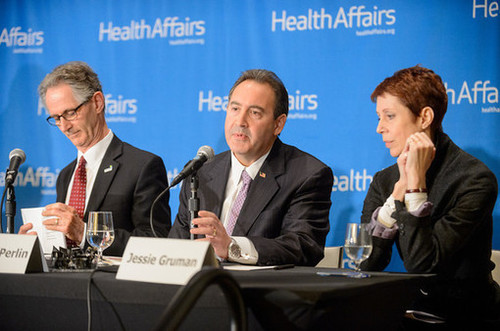
Last week, the well-regarded health policy journal Health Affairs hosted a briefing on The New Era of PAtient Engagement. I attended and left feeling satisfied, even excited, and also frustrated and a tad disappointed.

Marie Ennis-O’Connor‘s insight:

Nick Dawson reports back from The New Era of PAtient Engagement.

See on www.nickdawson.net

Posted in HCSM

Health Affairs

See on Scoop.itHealth Care Social Media Monitor

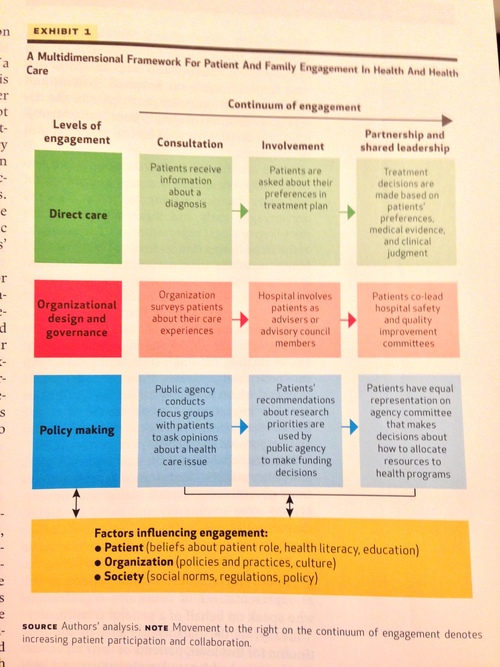
The Health Affairs February 2013 special issue “New Era of Patient Engagement”  on patient engagement


Marie Ennis-O’Connor‘s insight:

In the words of one of the Society for Participatory Medicine’s founders, Gilles Frydman "This is hugely important. Activated & engaged patients are called “the blockbuster drug of the century” in an editorial of Health Affairs. That was unthinkable just a couple of years ago. It finally looks like it’s going to be hard to stop that train."

See on www.healthaffairs.org

Posted in HCSM

Motivating patients to make wise choices – amednews.com

See on Scoop.itHealth Care Social Media Monitor

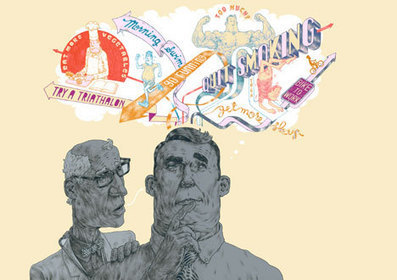
Patients are often the biggest obstacle to their own health. Physicians are exploring new communication techniques to help patients make lasting changes.

Marie Ennis-O’Connor‘s insight:

Achieving superior clinical outcomes often depends less on physicians making the right diagnosis and recommending the correct treatment and more on their patients’ willingness to take the necessary steps to maintain or improve their health.

See on www.ama-assn.org