Posted in HCSM

An Open Letter to Mobile Health App Developers and Their Funders | Center for Advancing Health

See on Scoop.itHealth Care Social Media Monitor

Jessie C. Gruman, PhD is president and founder of the Center for Advancing Health. Her experiences as a patient — having been diagnosed with five life threatening illnesses — informs her perspective as an author, advocate, and lead contributor to the Prepared Patient Forum blog. Her most recent book, AfterShock, helps patients navigate their way through the health care system following a serious or life-threatening diagnosis.

Marie Ennis-O’Connor‘s insight:

Dear Mobile Health App Developers,


We—patients and caregivers—need your help to reduce the demands of self care. Mobile health (mHealth) apps have enormous potential to lessen our burdens. But our needs are often only loosely related to what clinicians and/or the evidence expect us to do. Most mobile apps have ignored this fact by designing tools that primarily reflect the imperatives of clinicians and evidence and were developed with little or no consultation with us patients about our experiences, our wishes or our requirements.


While I can’t promise you that consultation with us is the magic key to successful, well-used apps, I can tell you that without it, your app doesn’t stand a chance.

See on www.cfah.org

Posted in HCSM

Study: Facebook fatigue — it’s real

See on Scoop.itHealth Care Social Media Monitor

Bored or annoyed by Facebook? You’re not alone. A majority of people surveyed by the Pew Internet and American Life Project said they had taken sabbaticals from the social network at some point, to escape the drama, or the tedium.

Marie Ennis-O’Connor‘s insight:

Forty-two percent of Facebook users ages 18 to 29, and 34 percent of those ages 30 to 49 say that the time they spend on Facebook on a typical day has decreased over the last year. A majority of Facebook users, or 69 percent, say they plan to spend the same amount of time on the site this year, but more than a quarter, or 27 percent, say they will spend less time on Facebook this year.

See on news.cnet.com

Posted in HCSM

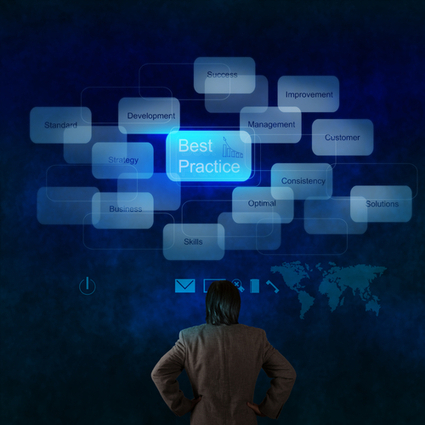
Best Practices for a Healthcare Social Media Strategy

When you find a brand whose approach you like, spend some time studying what they do with their followers. Watch for several weeks and get a sense of the cadence of their social activities

Social media has grown from a curiosity to an integral piece of corporate strategy in the space of only a few years. Nearly overnight, business owners have brought on whole teams of specialists to craft effective social media strategies and manage multiplying numbers of social media accounts. The truth is that you can build an efficient and valuable social media strategy by following a few Best Practices.

See on socialmediatoday.com

Posted in HCSM

Rx For The ‘Blockbuster Drug’ Of Patient Engagement

See on Scoop.itHealth Care Social Media Monitor

Marie Ennis-O’Connor‘s insight:

The topic of this thematic issue of Health Affairs, patient engagement is variously defined; the Institute for Healthcare Improvement describes it as “actions that people take for their health and to benefit from care.” Engagement’s close cousin is patient activation—“understanding one’s own role in the care process and having the knowledge, skills, and confidence to take on that role,” as Judith Hibbard and coauthors explain.

See on content.healthaffairs.org

Posted in HCSM

Reinventing Care: A New Era of Networked Health Science | HL7 Standards

See on Scoop.itJourneying Beyond Breast Cancer

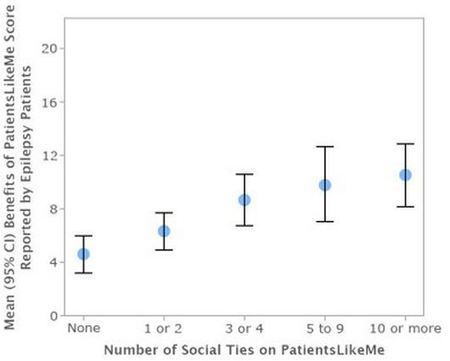
The team at PatientsLikeMe indicate that patient-patient interactions can improve a patient’s perceived well-being, suggesting engagement may soon be shown to improve outcomes along multiple dimensions: patient-to-patient, patient-to-physician,…

Marie Ennis-O’Connor‘s insight:

Technology, payment reform, and advancements in social and behavioral sciences are creating a perfect storm, leading to rapid acceleration in our understanding of how to improve health outcomes in a networked world, let’s call it “networked health science.”

See on www.hl7standards.com