See on Scoop.it – Health Care Social Media Monitor
New report shows the why, what and how of selecting social listening tools Listen first! is the first step in almost all advice on creating a social media.
See on www.smartinsights.com
See on Scoop.it – Health Care Social Media Monitor
New report shows the why, what and how of selecting social listening tools Listen first! is the first step in almost all advice on creating a social media.
See on www.smartinsights.com
See on Scoop.it – Blogging For Business
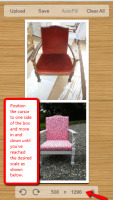
In our last post, we talked about how creating an extra wide photograph for your facebook page can really highlight that photograph and status. In this post, I’m going to show you how to crea…
See on write-on-track.com
Hearing that pinterest is driving as much traffic to businesses as google +, Linked in and youtube combined is all very well, but how do you know that your pinning is working? How do you monitor your efforts and time spent on pinterest? How can you tell what % of your pins are being repinned? How many people are visiting your website as a result of your activity on pinterest and if pinterest is helping your bottom line?

One way to see which pins are being pinned from your website is to place your website after http://www.pinterest.com/source as shown here – http://www.pinterest.com/source/write-on-track.com – this will show the pins pinned by myself, Marie and any other party who has pinned our blog posts.
Pinterest also emails you each time a pin is repinned, liked or commented on – this information also comes for any pins you have repinned.
View original post 556 more words
See on Scoop.it – Blogging For Business
Anne Marie Cunningham (@amcunningham) writes:
‘”My very first tweet was made in May 2008.
preparing for a seminar on medicine and the media- thinking about health 3.0″
— AnneMarie Cunningham (@amcunningham) May 27, 2008
I was invited to join Twitter by a friend who works in IT. It just happens that at the time I was still at work thinking about a teaching session so my first tweet has quite a strong medical education flavour.
Like many people I wasn’t sure what to actually make of Twitter after this and I left it for several months until I went to two medical education conferences and decided that social media could serve a purpose for me.
But I’m not a techno-evangelist. I believe we have to be very careful about how we use technology and to consider how it impacts on relationships.
If you google web 2 (a term for newer social technologies including social media) sceptic then the top result is actually about me, because I have disputed with other doctors in the past that these technologies are having any impact on our clinical practice. And I am still uncertain about this.
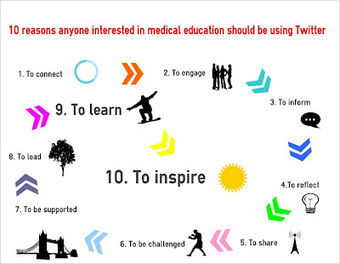
However I am certain, and have decided that I can allow myself to be evangelical, about the benefits that can be had for anyone who is at this conference and is therefore interested in improving medical education. I started becoming aware of this a short while after starting my own blog in October 2008 which is why in 2009 I gave a presentation at [the Association for the Study of Medical Educaton Annual Scientific Meeting] ASME about how social media and networks could develop and support scholarship in medical education. However, this did not lead to the expected paradigm shift in scholarly communication. So I have decided that I might need to be a little more direct with you this time. And this is why I am going to give you 10 reasons why you should be on Twitter now.’
See on Scoop.it – Blogging For Business
Trends in Twitter Use by Physicians at the American Society of Clinical Oncology Annual Meeting, 2010 and 2011
See on jop.ascopubs.org
See on Scoop.it – Health Care Social Media Monitor
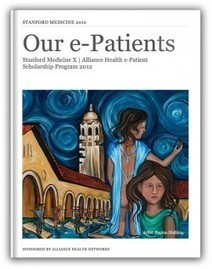
Medicine X is please to announce its first eBook entitled, Our e-Patients. The book is designed to provide insight into our 2012 Stanford Medicine X | Alliance Health e-Patient Scholarship program and will share the stories of the 35 e-patient scholars attending the conference September 28-30, 2012.
The book includes contributing text from Larry Chu, MD, Nick Dawson, Regina Holliday, Julia James and Amy Tenderich. It also features the artwork of Regina Holliday. A selection of e-patient profiles from the Stanford Medicine X Film series is also included in this enhanced eBook. The book was produced by the Stanford AIM lab.
See on medicinex.stanford.edu
See on Scoop.it – Health Care Social Media Monitor
Social media has mostly been talked about in the negative when it comes to hospitals and healthcare organizations.
Data breaches – Confidential records, with personal info like Social Security numbers, leaked to the public. Doctors talking about patients on unsecured iPhones and other devices.
It’s all happening, for sure. But some good things are happening too, when it comes to social media and the healthcare world.
According to Rebecca McNeil, educational content manager, healthcaresource.com, “Hospital marketing and HR departments seem to have embraced social media right away, specifically Facebook and Twitter,” she said in an interview. “It’s a customer-service-driven industry so these platforms are a great way to engage current and prospective patients.”
McNeil noted that one of her company’s clients, Cleveland Clinic, has a cover image on Facebook promoting their recent top ranking in U.S. News & World Reports Best Hospitals issue. “In fact, they were ranked #1 in cardiology and heart surgery. This is a great thing to promote to potential patients.”
In addition, current and past patients showed their support on the Facebook page, “which drove engagement,” she revealed, while the demographics for Facebook tend to work better for hospitals.
As for Twitter, its many users may still be too “young,” typically at ages 18 to 25, to really care about healthcare. But Facebook, on the other hand, popular with women ages 45 to 65, is a keeper. “Seems to me those are the decision makers in the family for where to seek medical treatment!” McNeil said.
Hospitals are also a great fit for Facebook because it’s a source of peer recommendations, McNeil added. “If you see your Facebook friend posting praise on a hospital’s business page, you will definitely think about going to that hospital next time you need a medical procedure.”
Hospitals should not be afraid to ask people to recommend them on Facebook (you can actually ask for recommendations from your “likes” right on Facebook) and to like their status when they post something engaging – like a patient success story.
And it’s not just for patients. McNeil said that HR departments are “now partnering with marketing departments to help them learn how to use social media for recruitment” of medical personnel, using similar tactics. Some healthcare organizations, like MedStar, which considers recruitment to be business development, run social media channels just like a marketing department, she reported.
And finally, there are the patients, who may just be the biggest beneficiaries of new media. McNeil said that educating the public on diseases and answering common health questions through social media is not only smart marketing, but may even keep a community healthier, referencing Cleveland Clinic, which does this all the time on its Facebook page.
Another healthcare organization using social media, Tufts Medical Center, created “Tufts TV” to give advice on everything from “Does Chicken Soup Really Cure the Common Cold?”, on their Fact or Myth program to address serious medical conditions.
Social media even gets high marks from the public relations side of the house. A story at prdaily.com showcases 20 hospitals that use it well, including Mayo Clinic, where patients can connect online with each other, to Rush University Medical Center in Chicago, where doctors blog and were even able to share updates with readers and patients on the relief efforts that followed the earthquake in Haiti in 2010.
“Content is king these days,” said McNeil. “Social media is a great platform, because it reaches so many people, to share that content.”
See on www.healthtechzone.com
Hashtags help journalists find people tweeting about topics they are covering. They also help people who are interested in the topics you cover find your tweets.
My second #twutorial post on Twitter techniques explained how to use lists, saved searches and alerts to help you organize the chaos of Twitter. Hashtags also help organize Twitter.
We’ll start with the basics: A hashtag is the # symbol, followed immediately, with no space, by a word or phrase: #twutorial. In tweets, the hashtag becomes a hyperlink you can click to go to a search of recent tweets using the hashtag.
Journalists use hashtags in two primary ways: to find tweets and to help others find their tweets.
Non-journo tweeps use hashtags in at least four primary ways that are helpful to reporters: regular hashtags, event hashtags, breaking-news hashtags that catch on and humorous hashtags.
I’ll address these four types of hashtags…
View original post 2,410 more words
Yesterday Dike Drummond, M.D., responded to my blog post about the ROI for physicians engaged in social media. Rather than bury his response as a comment, I thought I’d feature it here as a guest post. His response is thoughtful and provides context for our conversation. Take a look:
Hey Dan,
Thanks for this thoughtful post. Just the kind of introspection I had hoped this article would prompt in its readers. Looking at your perspective and mine on this very popular and important issue … I am reminded of the parable of the blind men and the elephant.
Each is touching a different part of the animal and assuming it is a completely different thing. The key here is BOTH of our viewpoints are valid when you understand our very different perspectives.
What you failed to share with your readers is the purpose of my blog and business…
View original post 575 more words





 Health Care Social Media