This week’s cool tool recommendation is Design Cap – an online graphic design tool, designed to be user-friendly, even for those without prior design experience.
Key Features
Effortless Design: Intuitive interface designed to be user-friendly, even for those without prior design experience.
Extensive Template Library: Choose from a vast collection of professionally designed templates for posters, flyers, social media, and more.
Effortless Customization: Easily personalize templates with your own text, images, and colors to match your unique brand.
Powerful Editing Tools: Fine-tune your designs with a range of tools for text formatting, image adjustments, and shape manipulation.
Rich Stock Resources: Access a library of high-quality stock photos and icons to elevate your designs.
Whether you’re a marketer, educator, small business owner, or simply someone who wants to express their creativity, DesignCap provides the tools and flexibility to bring your vision to life.
An effective headline has the power to captivate readers and encourage them to delve deeper into your content. In addition to engaging readers, headlines play a crucial role in search engine optimization (SEO). Search engines rely on headlines to understand the essence of your content, and a well-crafted headline can contribute to increasing your content’s ranking in search results.
How it works
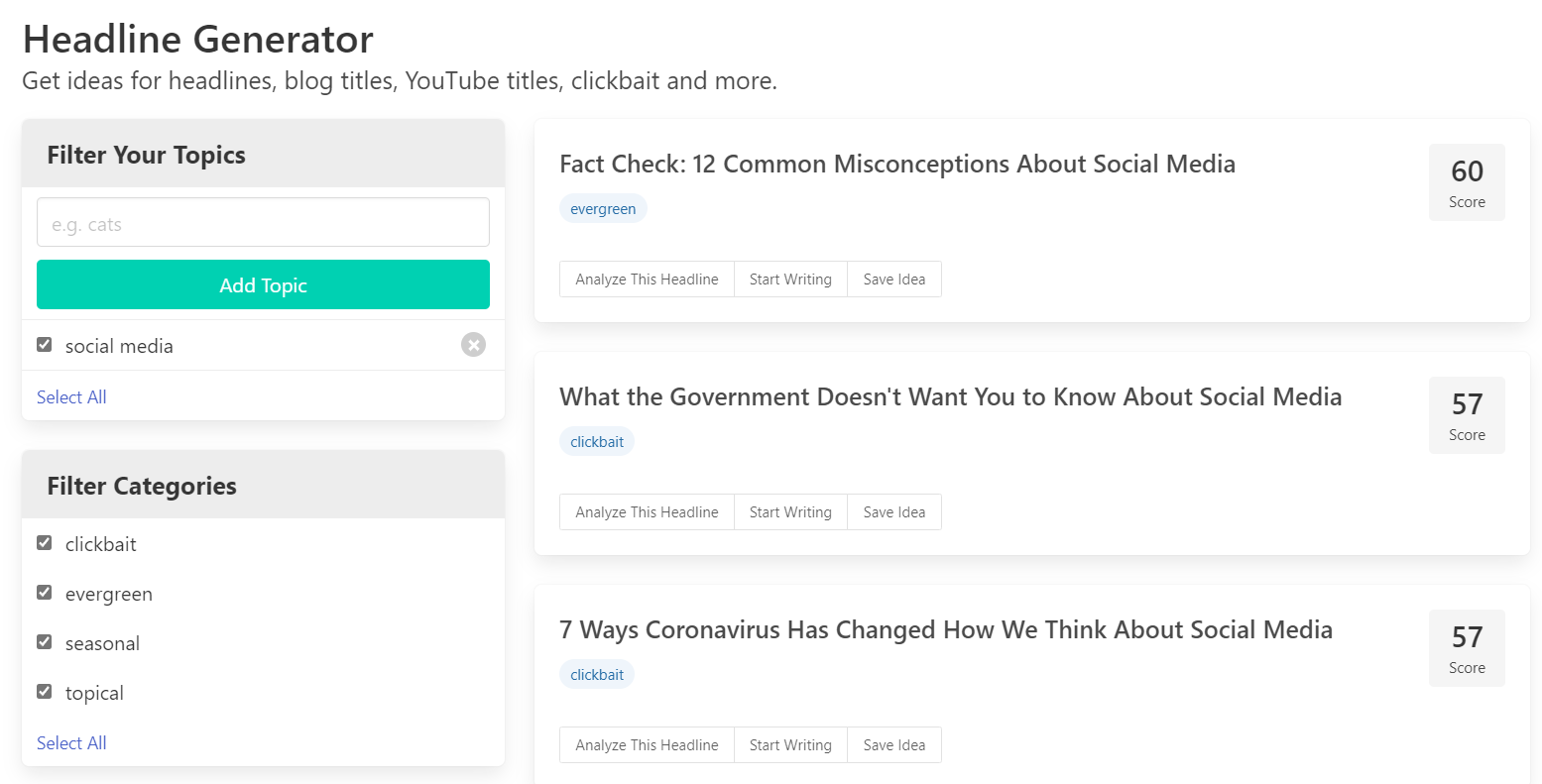
Using the term “social media” the tool provides the following suggested headlines for me. Keep in mind that as it’s an AI tool results are not an exact science, so it’s advisable to disregard clickbait titles. Once you’re logged in as a user, you have the option to filter out clickbait in your search.
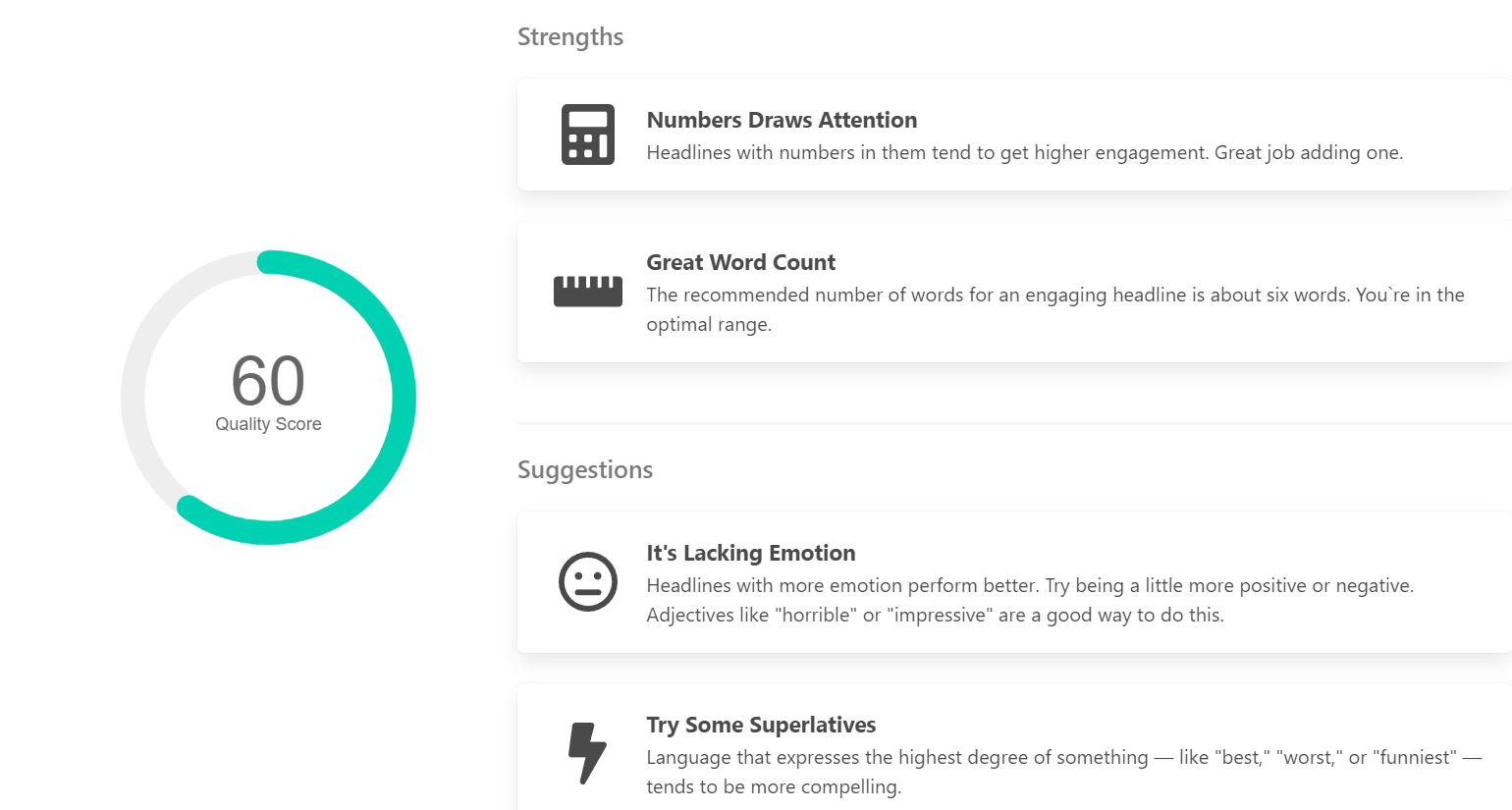
Each headline is given a score, and you can click on the option to analyze it, which is a nice feature as it gives you some suggestions on how to improve it.
While these tools aren’t perfect, they can kickstart the creative thinking process when it comes to writing headlines.
The original Mad Man of advertising, David Ogilvy, famously stated, “On average, people read the headline five times more than the body copy.” When you have written your headline, you have spent eighty cents out of your dollar.” This reminder highlights the crucial importance of the headline.
Headlines still matter in the digital age. A well-written headline can capture a reader’s attention and make them want to read more. In contrast, a poorly constructed headline can drive readers away. This is particularly true online, where attention spans are short and individuals are constantly inundated with information.
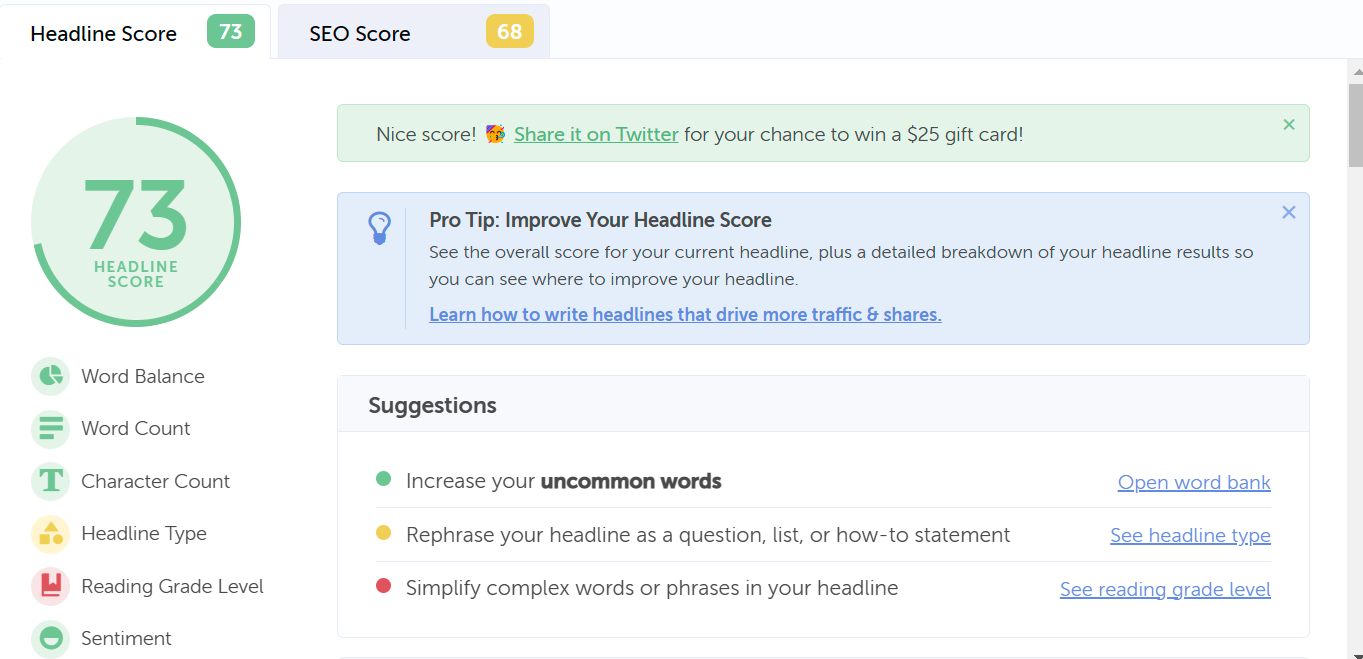
Effective headlines take various factors into account that can affect their success. Tools like CoSchedule’s Headline Analyzer can help. The tool analyzes headlines based on several factors, including word choice, length, and emotional impact, providing users with a score that reflects how likely their headline is to be successful. Your headline is then broken down by word balance, sentiment, and commonality, helping you identify areas for improvement and adjust your language.
Here’s the breakdown of a title I entered into the tool:
The tool provides a detailed breakdown of the word balance, sentiment, and commonality of your headline, helping you identify areas for improvement and adjust your language to better resonate with your audience.
The Headline Analyzer tool can also help with SEO optimization. The tool analyzes your headline for relevant keywords and provides suggestions for incorporating them more effectively into your headline. This can help increase the visibility of your content in search results and drive more organic traffic to your website.
This is just a snapshot of the many insights you can gain from using CoSchedule’s Headline Analyzer tool. You can use the insights and recommendations provided to create headlines that not only grab readers’ attention but also drive traffic, social shares, and SEO value. This can ultimately lead to more visibility for your content and greater success in achieving your marketing and business goals.
This headline analyzer is a free tool from the Advanced Marketing Institute that you can use to calculate the EMV of your own headlines. It scores the EMV of your headline with a breakdown of why it scored that value. A perfect score would be 100%, but don’t despair if yours doesn’t match up. According to the Institute, “most professional copywriters’ headlines will have 30%-40% EMV Words in their headlines, while the most gifted copywriters will have 50%-75% EMV words in headlines.”
Here’s how it works.
Enter your headline in the space provided and choose the industry you are targeting your message to.
Click Submit.
Here’s my score:
While the score is low on EMV, I am still happy with it, as it fulfills my aim of arousing curiosity in the reader.
Your headline carries words that predominantly appeal to most people’s intellectual sphere. Intellectual impact words are especially effective when your goal is to arouse curiosity.
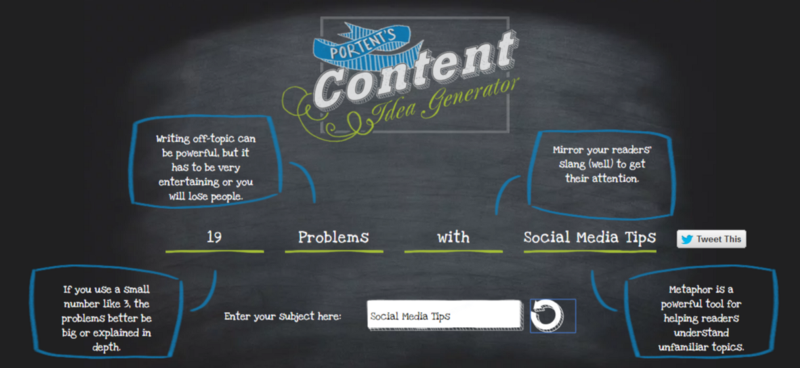
This tool allows you to generate headline ideas with just one keyword. Be prepared that the tool can throw up some quirky suggestions, but don’t let that put you off. Keep playing around with it until you find one you can work with. I also really like how it shows you best practice tips, such as using metaphors in your writing.
Sometimes all you need to get those creative juices flowing again is a title and this is where Inbound Now’s Blog Title Idea Generator comes in. You don’t even need to input a keyword — keep clicking on the generate title button until you find the inspiration you need.
Quora is a question and answer platform where you can either ask a question about your topic or simply do a search using your topic keyword to find what people are asking about that topic. It’s a super place for market research. Make a list of those questions which you feel you could write about.
You have the option to follow chosen topics in your niche. Once you do so you’ll keep seeing the ‘Top Stories’ (questions) in your Quora newsfeed. You can also check out the ‘New Questions’ option to see the latest questions. When you have written an article or blog post on the topic, go back into Quora and answer a question related to the topic. You can include a link to your post in your answer.






 Health Care Social Media