See on Scoop.it – Health Care Social Media Monitor

Mayo Clinic provides a social media strategy that many healthcare organizations would do well to emulate.
See on Scoop.it – Health Care Social Media Monitor
Mayo Clinic provides a social media strategy that many healthcare organizations would do well to emulate.
See on Scoop.it – Health Care Social Media Monitor
Relationships between doctors and patients don’t stop at the office door. Prescriptions, medical records and home care instructions all involve the doctor’s office in a patient’s day-to-day management of his or her medical condition. In the age of social media, though, patients are expanding their searches for information beyond the clinic altogether. Not only do 80% of Americans search for health care information online, they’re also posing direct questions to experts on top-trafficked networks like Facebook and Twitter. This conversational shift opens up new opportunities for social media developers and storytellers – as two experts in health care social media explain here.
See on socialmediaweek.org
See on Scoop.it – Health Care Social Media Monitor
Crowdsourcing research allows investigators to engage thousands of people to provide either data or data analysis. However, prior work has not documented the use of crowdsourcing in health and medical research. We sought to systematically review the literature to describe the scope of crowdsourcing in health research and to create a taxonomy to characterize past uses of this methodology for health and medical research.
Thi study concluded that crowdsourcing can improve the quality, cost, and speed of a research project while engaging large segments of the public and creating novel science. Standardized guidelines are needed on crowdsourcing metrics that should be collected and reported to provide clarity and comparability in methods.
See on link.springer.com
See on Scoop.it – Health Care Social Media Monitor
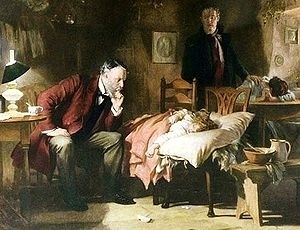
The house call of yesterday For many, the house call represents medicine at it’s best. The Doctor, by Sir Luke Fildes (1891) (Photo credit: Wikipedia) The comfort of your home combined with the personal attention of your doctor.
See on www.forbes.com
See on Scoop.it – Health Care Social Media Monitor
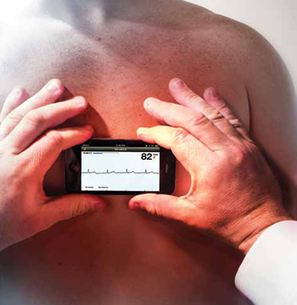
MHealth apps are powerful tools revolutionizing patient engagement and provide a unique opportunity to improve certain clinical outcomes.
See on Scoop.it – Health Care Social Media Monitor
Service users have a valuable contribution to make to service development and training, writes Ray Johannsen-Chapman
See on www.theguardian.com
See on Scoop.it – Health Care Social Media Monitor
While there are still reasons why support groups are popular, online patient communities have definite advantages.
See on www.kevinmd.com
See on Scoop.it – Health Care Social Media Monitor
Health social networking sites (HSNS), virtual
communities where users connect with each other
around common problems and share relevant health
data, have been increasingly adopted by medical
professionals and patients. The growing use of HSNS like
Sermo and PatientsLikeMe has prompted public concerns
about the risks that such online data-sharing platforms
pose to the privacy and security of personal health data.
This paper articulates a set of privacy risks introduced by
social networking in health care and presents a practical
example that demonstrates how the risks might be
intrinsic to some HSNS. The aim of this study is to
identify and sketch the policy implications of using HSNS
and how policy makers and stakeholders should
elaborate upon them to protect the privacy of online
health data.
See on jamia.bmj.com
See on Scoop.it – Health Care Social Media Monitor
Medical applications for smartphones and tablets are so ubiquitous that it’s easy to become a victim of app overload. Here’s a look at FDA-approved apps, reference apps, and apps that FPs are “prescribing.”
See on www.jfponline.com




 Health Care Social Media