The largest online database of social media policies from companies, governments, non-profits – many of which are applicable to healthcare too.
See on socialmediagovernance.com
The largest online database of social media policies from companies, governments, non-profits – many of which are applicable to healthcare too.
See on socialmediagovernance.com
See on Scoop.it – Health Care Social Media Monitor
See on download.thelancet.com
See on Scoop.it – Health Care Social Media Monitor
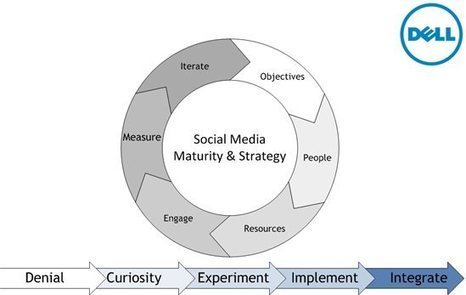
The second in a two-part post on NHS digital engagement in the social era from the Dell blog
See on en.community.dell.com
See on Scoop.it – Health Care Social Media Monitor
See on www.healthnewsreview.org
See on Scoop.it – Health Care Social Media Monitor
Today’s healthcare consumers are more tech savvy than ever and are regularly turning to the Web for research and to reach out regarding their medical needs.
See on www.mdgadvertising.com
See on Scoop.it – Health Care Social Media Monitor
DOCTORS IN IRELAND have been issued with a new set of guidelines for using social media, advising on the “digital legacy” left on the internet.
In its recently-published position paper on Social Media, the Irish Medical Organisation reminds its members that an online environment is still a “public arena” and warned about the “unintended consequences” when the private “suddenly becomes public”.
See on www.imo.ie
See on Scoop.it – Health Care Social Media Monitor
Those suffering from a Rare Disease can find much comfort, support, and information on the social web … if they know where to look. Here’s my own story.
See on www.symplur.com
See on Scoop.it – Health Care Social Media Monitor
When it comes to health information, social media users are more willing to take than give, a new study finds.
See on blogs.wsj.com
What a week it’s been here in Oxford for an evidence nerd like me! First, two days of brilliant presentations, stimulating debate and some tasty and reassuringly-managable food that could be eaten standing up, without fear of finding I’d been talking to Ben Goldacre with a piece of coleslaw draped over my conference badge (I suspect he’d have been merciless). That was our Cochrane UK and Ireland 21st Anniversary Symposium, in which both ‘Cochranites’ and those not involved in the Collaboration (gasp!) gathered to discuss the challenges of the changing healthcare landscape and particularly what Cochrane might do to meet them. Hard on its heels and before we’d had time to set about changing the world, came another fabulous two day evidence-fest, Evidence Live, aimed at ‘everyone with an interest in evidence-based healthcare’. Thanks to social media, large numbers of those people were able to join in as virtual participants…
View original post 1,079 more words
Funny how the blogosphere echoes some of the thoughts that have been incubating in my own mind… A few posts have caught my eye recently. One that I have been meaning to comment on was Dr. Vartabedian’s piece “Do You Initiate or Respond?” which characterizes physicians, in general, as trained responders rather than initiators [give it a look, it’s a quick read].
I had myself been concurrently pondering the same idea (though classifying it as reactive versus proactive in my own mind, but we mean the same thing). As Dr. V points out, doctors are reflexive and very much good at it. We are nimble thinkers on our feet when faced with problems, calculating a large number of variables to try solve problems in -let’s face it- a very short period of time, all the while doing our best to navigate through a myriad of emotions along the way. The importance of this…
View original post 226 more words





 Health Care Social Media