Posted in HCSM

Medical education at Stanford gets more interactive by going online

See on Scoop.itBlogging For Business

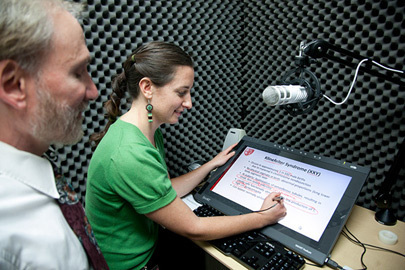
The Stanford Medicine Interactive Learning Initiatives, or SMILI, is designed to combine something new – the Internet – with something old – the Socratic method – to improve the education of doctors. 


Instead, the time for online learning for medical students has arrived, says Patterson, and a core group of Stanford medical professors, education technology specialists and collaborators from the Khan Academy are working toward that future.


Charles Prober, the senior associate dean for medical education at the School of Medicine, is onboard. Part of Prober’s vision is that video instruction could be shared by the country’s leading medical schools – they all teach essentially the same material to first- and second-year students. Representatives of those schools are discussing shared curriculum, he said, and they are all reconsidering how they deliver knowledge.

See on news.stanford.edu

Posted in HCSM

Dr. Bertalan Meskó's avatarScienceRoll

I’ve recently got in touch with an amazing group, the Thesys Group. They invited me to their HQ to show me what kind of projects they are working on and we started a bit of brainstorming about what we could come up with together.

In our first project, the Thesys Group analyzed the network of discussions focusing on one of the most popular medical Twitter hashtags, MD_chat. In the figure below, a dot represents a Twitter user, lines connecting the dots represent their relationship. The bigger the dot is, the more tweets the Twitter user had. The thicker the line is, the more tweets the two users had with each other. Based on this, here is the network graph (click on the image below to access the interactive graph):

Dots in the middle account for active users, while dots in the periphery did not participate that often in…

View original post 240 more words

Posted in HCSM

Online health information seekers more likely to visit Wikipedia

See on Scoop.itHealth Care Social Media Monitor

US consumers seeking health information online are more likely to visit Wikipedia than health magazine websites or Facebook, connect through a PC rather than a mobile device, and be swayed by word of mouth over direct-to-consumer advertising, according to results from a new national consumer survey conducted by Makovsky Health and Kelton.

The research investigates consumers’ overall engagement with online healthcare information, and reveals specific consumer preferences for online publishing sources, channels and even devices, and finds that consumers rate government agencies such as the Centers for Disease Control and Prevention or the Food and Drug Administration and advocacy organizations among the most credible.

“Whether they want guidance for an informed conversation with their doctor, or the support of a larger community coping with the same illness, consumers seek trusted sources for health information,” says Gil Bashe, executive vice president and Practice director, Makovsky Health. “These new survey results enhance our understanding of how and with whom consumers connect online, and help ensure that credible, useful information is readily accessible to the patients who need it.”


People are still most likely to use a personal computer (90 percent)—and not a smartphone (7 percent) or tablet (4 percent)—to search for health information online. And PC-reliant consumers are more likely than smartphone/tablet-reliant consumers to visit a pharma website after receiving a diagnosis from their doctor (52 percent vs. 31 percent), although smartphone/tablet users are far more likely than PC users (43 percent vs. 24 percent) to visit a pharma website after they experience a few symptoms.

See on www.holmesreport.com

Posted in HCSM

Institute of Medicine Infographic: The Possibilities for Health Care

dandunlop's avatarThe Healthcare Marketer

My friend Danny Fell was doing a presentation last week at the SHSMD conference on healthcare ratings. During the course of the conference, he Tweeted a link to this interesting infographic from the Institute of Medicine. He mentioned that the graphic does a nice job of summing up many of the points from his presentation. My thanks to Danny for sharing this infographic! Now I’m passing it on. Enjoy!

View original post