See on Scoop.it – Health Care Social Media Monitor

Pascal Lardier, Director, International Events of Health 2.0, answers questions about the co-production of health by patients and physicians today and in the future.
See on thehealthcareblog.com
See on Scoop.it – Health Care Social Media Monitor
Pascal Lardier, Director, International Events of Health 2.0, answers questions about the co-production of health by patients and physicians today and in the future.
See on thehealthcareblog.com
See on Scoop.it – Health Care Social Media Monitor
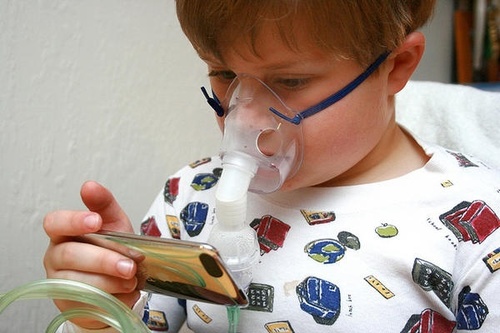
A study has found that sending a text every day to asthmatic children, asking about their symptoms and offering more information about their condition, can have a positive effect.
See on www.mobileworldlive.com
See on Scoop.it – Health Care Social Media Monitor
Every weekday, I tweet a carefully curated stream of new evidence, analysis and commentary that covers all the health we might need to know about.
See on www.kevinmd.com

I am delighted to be included in the line up of speakers at the forthcoming Doctors 2.0 & You Conference, which will be held at Cité Internationale Universitaire de Paris, June 6-7 2013.
Speakers at the conference come from the 5 continents and from all walks of healthcare: patients, professionals, associations, public sector, payors, industry, tech innovators…. They share a common interest in improving life for patients, and in particular, thanks to the use of collaborative New Technologies….healthcare social media, web 2.0 tools, mobile apps… They will provide informed and personal analysis…and engage with us.
Now in its third year, Doctors 2.0™ & You, is the first international conference of its kind to examine how doctors and patients are using social media, applications and web 2.0 tools to work with peers, governments, industry and payers. The conference draws on the expertise of physicians, patient communities, online and mobile tool providers, hospitals, insurers, pharmaceutical companies and governments to help address the role of new technology in healthcare from both the doctor and patient perspective.
Find out more at http://www.doctors20.com
See on Scoop.it – Health Care Social Media Monitor
From physician to partner The more I listen, the more I hear about the disenchanted, tired and uninspired physician.
See on www.forbes.com

Thanks to all who contributed to yesterday’s discussion on how the public perceive doctors sharing their stories online. Please keep the discussion going!
Today, my attention was taken by an abstract I discovered in PubMed, which I feel is pertinent to the current discussion on medical professionalism online.
Wanted: role models–medical students’ perceptions of professionalism.Byszewski A, Hendelman W, McGuinty C, Moineau G.
Transformation of medical students to become medical professionals is a core competency required for physicians in the 21st century. Role modeling was traditionally the key method of transmitting this skill. Medical schools are developing medical curricula which are explicit in ensuring students develop the professional competency and understand the values and attributes of this role. The purpose of this study was to determine student perception of professionalism at the University of Ottawa and gain insights for improvement in promotion of professionalism in undergraduate medical education.
The results of the study revealed that “students identified role modeling as the single most important aspect of professionalism” and while this study relates to professional competency in curricular development, I think it also has relevance for the medical students who are going online. So, who can we point them to as role models? I have some suggestions in mind, but I would love to hear who you think is a great online role model for the next generation of doctors and why.
User-created content and communications on Web-based applications, such as networking sites, media sharing sites, or blog platforms, have dramatically increased in popularity over the past several years, but there has been little policy or guidance on the best practices to inform standards for the professional conduct of physicians in the digital environment. Areas of specific concern include the use of such media for nonclinical purposes, implications for confidentiality, the use of social media in patient education, and how all of this affects the public’s trust in physicians as patient–physician interactions extend into the digital environment. Opportunities afforded by online applications represent a new frontier in medicine as physicians and patients become more connected. This position paper from the American College of Physicians and the Federation of State Medical Boards examines and provides recommendations about the influence of social media on the patient–physician relationship, the role of these media in public perception of physician behaviors, and strategies for physician–physician communication that preserve confidentiality while best using these technologies.
See on annals.org
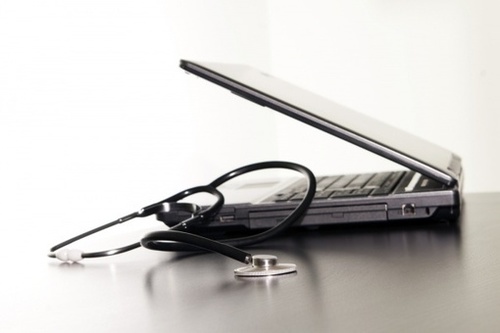
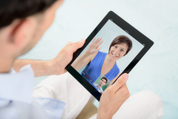
For a new generation of patients, could the laptop — or even cellphone — replace the stereotypical shrink’s couch? A crop of new startups wants to take psychotherapy into the 21st century.
About one in five Americans will experience a mental health challenge during their lifetime, according to the Substance Abuse and Mental Health Association. But experts say that 60 percent of them will never seek help. The lack of available care, inconvenience and cost are all barriers to access, but so is the fear of prejudice and discrimination from friends, family and even employers.
“Stigma and shame is a huge factor – maybe the most important one,” said Oren Frank, founder of mental health startup Talktala. “People who have been to regular therapy are less ashamed of it, but people who are newcomers are paralyzed by fear.”
Online options enable people to receive therapy on their own turf and terms, without needing to update others on their whereabouts – and they offer the benefit of anonymity.
See on gigaom.com
By Fanny Gillet and edited by Colleen Young
On Wednesday May 1st, Nicole Ghanie-Opondo (@todayisbanana) moderated our tweetchat and asked the community how social media can serve behaviour change messages and help track diseases. As an introduction to the discussion she wrote an article in her blog – Behaviour Change, Disease Tracking & Social Media?
T1: People have tuned out of some behaviour messaging – can SM help?
Generally speaking, when it comes to behavior changes there is no miracle and most hcsmca-ers agreed that social media can’t be “the solution”. However, according to some chat participants, social media can provide useful peer support. By sharing real stories people may feel less alone and be influenced by the positive behaviour changes of others in their networks – “if you/they can do it, so can I”.
T1: SM can help folks empower themselves to change behaviours, especially…
View original post 587 more words



 Health Care Social Media