Articles

Posted in mHealth

A pill that sends a text on entering a patient’s stomach

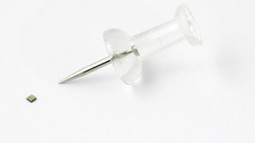
Proteus Digital Health has developed a pill that can text an alert when it enters a patient’s stomach. The technology, widely tested and already available for over-the-counter sale in a pilot program in the UK is just one of several new developments in caregiving technology designed to prevent hospital readmissions and relieve family caregivers of the persistent worry: “Is Dad taking his meds?”

See on www.forbes.com

Posted in #HCSM

Feasibility of a Wiki as a Participatory Tool for Patients in Clinical Guideline Development

See on Scoop.itHealth Care Social Media Monitor

Feasibility of a Wiki as a Participatory Tool for Patients in Clinical Guideline Development

Marie Ennis-O’Connor‘s insight:

ABSTRACT

Background: Patient participation is essential in developing high-quality guidelines but faces practical challenges. Evidence on timing, methods, evaluations, and outcomes of methodologies for patient participation in guideline development is lacking.
Objective: To assess the feasibility of a wiki as a participatory tool for patients in the development of a guideline on infertility determined by (1) use of the wiki (number of page views and visitors), (2) benefits of the wiki (ie, number, content, and eligibility of the recommendations to be integrated into the guideline), and (3) patients’ facilitators of and barriers to adoption, and the potential challenges to be overcome in improving this wiki.
Methods: To obtain initial content for the wiki, we conducted in-depth interviews (n = 12) with infertile patients. Transcripts from the interviews were translated into 90 draft recommendations. These were presented on a wiki. Over 7 months, infertile patients were invited through advertisements or mailings to formulate new or modify existing recommendations. After modifying the recommendations, we asked patients to select their top 5 or top 3 recommendations for each of 5 sections on fertility care. Finally, the guideline development group assessed the eligibility of the final set of recommendations within the scope of the guideline. We used a multimethod evaluation strategy to assess the feasibility of the wiki as a participatory tool for patients in guideline development.
Results: The wiki attracted 298 unique visitors, yielding 289 recommendations. We assessed the 21 recommendations ranked as the top 5 or top 3 for their eligibility for being integrated into the clinical practice guideline. The evaluation identified some challenges needed to be met to improve the wiki tool, concerning its ease of use, website content and layout, and characteristics of the wiki tool.
Conclusions: The wiki is a promising and feasible participatory tool for patients in guideline development. A modified version of this tool including new modalities (eg, automatically limiting the number and length of recommendations, using a fixed format for recommendations, including a motivation page, and adding a continuous prioritization system) should be developed and evaluated in a patient-centered design.

(J Med Internet Res 2012;14(5):e138)
doi:10.2196/jmir.2080

See on www.jmir.org

Posted in #HCSM

Ethical guidelines for use of electronic mail between patients and physicians

See on Scoop.itHealth Care Social Media Monitor

Bovi AM, et al.,Am J Bioeth. 2003 Summer;3(3):W-IF2.

Marie Ennis-O’Connor‘s insight:

Abstract

This report examines the ethical implications of electronic communication, focusing on the use of electronic mail (e-mail), considers its impact on a previously established patient-physician relationship, and the limitations in using e-mail to create a new patient-physician relationship. In its recommendations, this report offers guidance to physicians who use electronic mail to communicate with patients and online users. These guidelines maintain that e-mail should not be used to establish a patient-physician relationship, but rather to supplement personal encounters. When using e-mail, physicians hold the same ethical responsibilities to their patients as they do during other encounters and that information must be presented in a manner that meets professional standards. The report requires that physicians notify patients of e-mail’s inherent limitations and that patients be given the opportunity to accept these limitations prior to the communication of privileged information. Finally, physicians should be aware of privacy and confidentiality concerns when using e-mail to communicate with patients.

See on www.ncbi.nlm.nih.gov
Posted in #HCSM

Use of health-related online sites

See on Scoop.itHealth Care Social Media Monitor

Bovi AM, et al., Am J Bioeth. 2003 Summer;3(3):W-IF3.

Marie Ennis-O’Connor‘s insight:


Abstract

This report offers recommendations to physicians who provide information or services through online sites. The recommendations maintain that physicians responsible for health-related information should ensure that it is accurate, timely, reliable, and scientifically sound. Also, advice to the online users with whom physicians do not have pre-existing relationships or the use of decision-support programs that generate personalized information directly transmitted to users should be consistent with general and specialty-specific standards. In particular, these standards address truthfulness, protection of privacy, informed consent, and disclosures including limitations inherent in the technology. Finally, physicians who establish or are involved in health-related online sites must minimize conflicts of interest and commercial biases and, if patient specific information is transmitted, they must provide high-level security protections, as well as privacy and confidentiality safeguards.

See on www.ncbi.nlm.nih.gov

Posted in #HCSM

The patient-surgeon relationship in the cyber era: communication and information.

See on Scoop.itHealth Care Social Media Monitor

 Blake JH, et al.,Thorac Surg Clin. 2012 Nov;22(4):531-8. doi: 10.1016/j.thorsurg.2012.07.002. Epub 2012 Aug 22.

Marie Ennis-O’Connor‘s insight:


Abstract

From Laennec’s invention of the stethoscope in 1816 to the recently introduced Sapien transcatheter aortic valve replacement, the increasing complexity of health care technology has altered the relationship between patients and physicians, usually for the better. Telemedicine, the provision of medical services through electronic media, has dramatically changed how the patient and physician interact and how medical care is delivered. Many studies of physicians’ perceptions of electronic communication with patients have documented recognition of benefits as well as a co

See on www.ncbi.nlm.nih.gov