The cool tool recommendation this week wins the prize for the most interesting title!
Lose the Very is a web-based tool designed to help writers find alternative words and phrases to use in place of the word “very.” The tool operates on the premise that using “very” is often seen as lazy or imprecise, and that finding more descriptive words and phrases can help improve writing.
To use the tool, users simply type in the word they want to replace (in this case, “very”) and hit the “Find” button. The tool then generates a list of alternative words and phrases, along with their definitions and example sentences. Users can scroll through the list to find the word or phrase that best fits their needs.
In addition to its main functionality, the tool also features a built-in thesaurus and dictionary, which users can access by clicking on the corresponding tabs. The tool is free to use and does not require any sign-up or login.
It’s a super little tool to improve your writing and I highly recommend you check it out.
The cool tool recommendation this week is Onelook– an online dictionary search tool that allows you to search multiple dictionaries at once.
With Onelook, you can search for definitions, synonyms, and translations of words from a variety of online dictionaries and other reference sources. Onelook also offers a variety of advanced search options, including the ability to search by wildcard, find related words, and search for words that rhyme.
Johnathan Swift once wrote that falsehood flies and truth limps after it. As the COVID-19 pandemic progressed, we saw the spread of disinformation on social media as an “infodemic”. An infodemic is when there’s too much information, some of it accurate and some not, that makes it hard for people to find trustworthy sources and reliable guidance when they need it. Public health can be negatively affected by confusion and mistrust of health officials.
Although conspiracy theories surrounding COVID-19 are novel, infodemics are not new and have been around for a long time. Even the term “fake news” was first coined in 1925, when an article in Harper’s Magazine, entitled “Fake News and the Public” mourned how newswires were allowing misinformation to disseminate rapidly.
However, the growth of the internet has enabled misinformation to spread rapidly, causing concern about potential “digital wildfires” of intentionally or unintentionally misleading information. With ideas no longer limited by geography, what was once spread locally can quickly become global.
This week’s cool tool recommendation is Hemingway Editor, an online writing tool that helps writers improve the clarity and readability of their writing.
The app is named after the famous American writer Ernest Hemingway, who was known for his simple and direct writing style. It works by highlighting common issues in writing such as long and complex sentences, passive voice, adverbs, and excessive use of adjectives.
How to use Hemingway App
To use the tool, either copy and paste your text or write directly into the app. The app then analyzes the text and highlights any issues that need to be addressed. The highlights are color-coded to indicate the type of issue, such as yellow for long and complex sentences and blue for passive voice.
In addition to highlighting issues, Hemingway App also offers suggestions for improvement. For example, if a sentence is too long and complex, the app may suggest breaking it up into smaller sentences. If the writer has used a passive voice, the app may suggest using an active voice instead.
With its user-friendly interface and suggestions for improvement, Hemingway App is a useful tool to enhance your writing quality, efficiency, and professionalism.
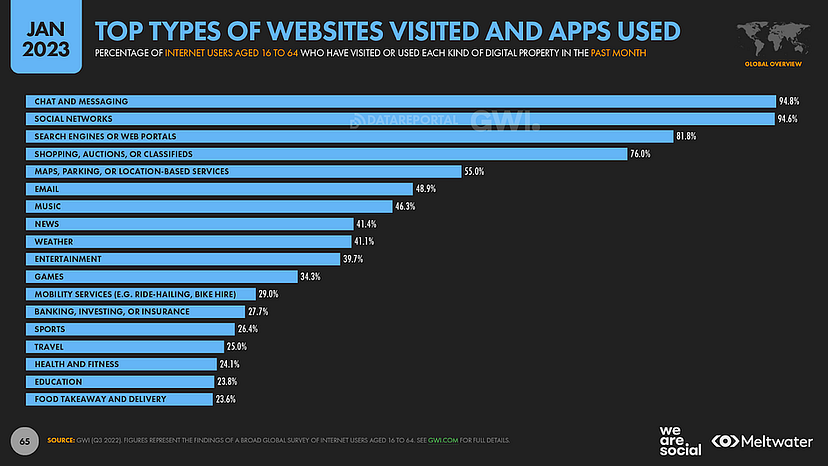
In recent years, messaging apps like WhatsApp, Facebook Messenger, WeChat, and Instagram Direct have become increasingly popular. For healthcare, this shift towards private messaging opens up new opportunities for personalized audience engagement.
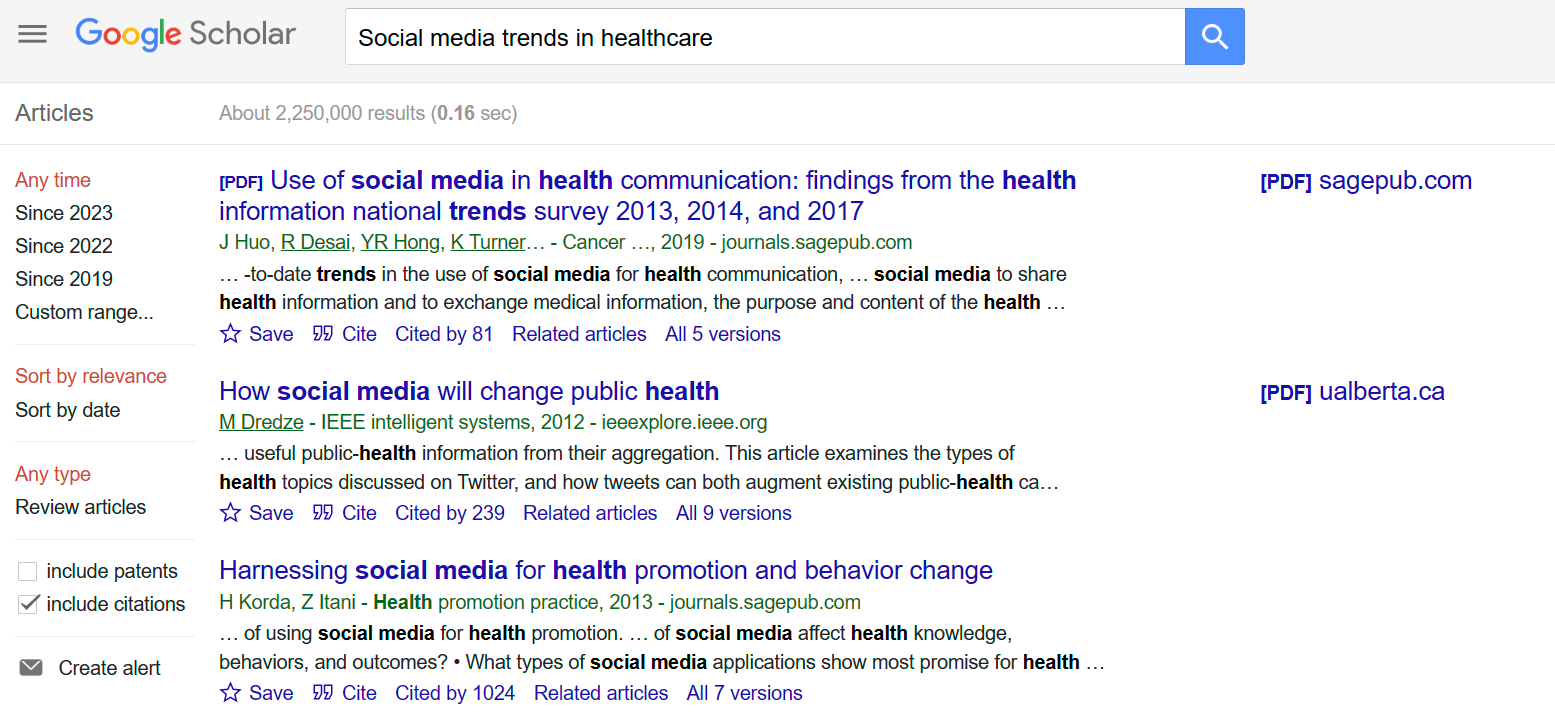
The cool tool recommendation this week is Google Scholar – a free academic search engine that indexes scholarly literature across a wide range of disciplines and sources.
It works by crawling the web for scholarly literature, like journal articles, conference proceedings, theses, dissertations, books, and technical reports. After that, it indexes and makes the content searchable. In contrast to other search engines, Google Scholar’s results are primarily academic sources, making it a great tool for scholarly research.
One of the most significant benefits of Google Scholar is its broad coverage. It indexes content from a variety of sources, including academic publishers, university repositories, and scholarly societies. This means that researchers can access a vast amount of scholarly literature from a single search engine, rather than having to search multiple databases separately.
Another advantage of Google Scholar is its user-friendly interface. Users can easily search for articles and refine their search using various filters, such as author, publication, and date. Additionally, Google Scholar provides links to related articles, allowing users to explore further on a particular topic.
Additionally, Google Scholar’s citation tracking feature is a valuable tool for researchers. It enables users to monitor the number of times a specific article has been cited by other scholarly works, giving an indication of its impact and influence within the field. Citation tracking is also helpful for discovering related research and identifying potential collaborators.
In addition to its search capabilities, Google Scholar also offers other useful features. For example, users can create alerts for new articles related to specific keywords or authors. This feature can save researchers time and effort by automatically notifying them when new relevant research is published.
The ability to link to full-text articles is another great feature of Google Scholar. Some articles require a subscription or purchase, but Google Scholar usually has free full-text versions, so it’s easier for people without institutional access to do research.
While most content is scholarly and reputable, some articles may not go through the same rigorous peer-review process as traditional academic journals, imposing limitations. However, the significant benefits outweigh these limitations.
Keeping up with healthcare news is crucial, but the vast amount of information available can be overwhelming. That’s where healthcare newsletters or roundups come in, as they curate the most relevant and impactful news by topic, allowing readers to stay informed about the latest scientific breakthroughs, research, and policy developments without spending hours scouring the internet.
By creating a well-crafted healthcare news roundup, you can establish trust and credibility within your community while positioning yourself as a reliable source of healthcare news. In my latest article for the Patient Empowerment Network, I’ve shared some best practices for creating a regular news roundup that educates, informs, and inspires your readers.
Although most patients trust their doctors, they also look for medical information outside of the exam room. Many resources offer accurate information (e.g., government health agencies, professional groups, and patient advocacy groups), but not all are dependable. Medical misinformation can be found online from various sources, which can have serious health consequences. The wrong information can lead to patients making bad decisions, delaying or avoiding necessary treatment, or even harming themselves by taking the wrong treatment.
The internet and social media have simplified the access and sharing of health information, but this has also led to the spread of false or misleading information. There are various ways in which patients can encounter medical misinformation, including social media posts, blogs, online forums, and videos.
In order to provide high-quality care, healthcare professionals must address patient-held misinformation. Misinformation cannot be effectively addressed by discrediting misperceptions alone. Patients’ misinformation can provide clinicians with insight into their values, preferences, comprehension, and information diet.
Systematically training healthcare professionals to address patient misinformation with empathy and curiosity while acknowledging time and resource constraints will be crucial to reducing medical misinformation in the future.
The past twelve months have brought about significant changes in the way we use digital technology, and these changes continue to evolve in unexpected ways. That’s according to the latest Digital 2023 Global Overview Report, an eagerly anticipated publication each year.
What can you expect to see in this year’s report?
Global internet users have changed significantly
Online activity is declining in a variety of ways
Insights into evolving social media platform preferences
Changes in how people access digital content and services
Changes in online search behaviour around the world
Twitter, with its vast network of users, has become an indispensable tool for healthcare professionals seeking to share knowledge and collaborate with their peers. The platform allows healthcare professionals to connect with one another, stay up to date on the latest industry news, and engage in conversations about healthcare issues and trends.
In my latest Medium article, I explore some of the advantages (and barriers) of using Twitter as a medium for healthcare communication and knowledge exchange.







 Health Care Social Media