
Dr. Saif Abed describes five key steps to building digital health solutions, whether it’s Digital Health, mHealth or the more traditional HealthIT.
Source: hitconsultant.net
See on Scoop.it – Health Care Social Media And Digital Health
Dr. Saif Abed describes five key steps to building digital health solutions, whether it’s Digital Health, mHealth or the more traditional HealthIT.
Source: hitconsultant.net
See on Scoop.it – Health Care Social Media And Digital Health

More than one-third of physicians have recommended the use of mobile health apps to their patients in the past year, according to a recent Manhattan Research survey. Experts say that the bulk of
Source: medicaleconomics.modernmedicine.com
See on Scoop.it – Health Care Social Media And Digital Health
I tweeted my first presentation recently and am now a convert to the practice. If you want to learn more about why it’s a good idea, then Colleen Young’s post is a great place to start.
@JBBC@endocrine_witch I often livetweet my talks using Tweetdeck – @colleen_young taught me how
— Pat Rich (@cmaer) October 11, 2014
@RonanTKavanagh I’m curious about what benefits are… Apart from clever:) @cmaer@JBBC@endocrine_witch@colleen_young
— AnneMarie Cunningham (@amcunningham) October 11, 2014
This conversation took place on Twitter over the weekend. It was impossible to answer in 140 characters.
I often schedule tweets to appear during my presentations. I primarily do this to give credit where credit is due, not to pick out key messages of my talks. Takeaways, highlights, key messages of my talks that resonate I leave to the audience to tweet in 140 character snippets. In fact, reading their interpretations of my presentation gives me great insight as to what interests them or surprises them.
So what information do I schedule?
View original post 197 more words

Physicians are on duty most of the time. When they aren’t, you can be sure they’re either resting or trying to find new answers to the latest issues. It should come to no surprise that doctors and medical professionals don’t spend time on social media. However, what if they don’t necessarily have the time to get in direct contact with one of their colleagues?
Thankfully, there are social networks specifically designed for the medical professional (doctors, nurses, etc.) in mind.
Ask your burning questions, anything you want regarding some of your latest cases by going through the networks we’ve listed below.
Here are the top 20 social networks for doctors, separated by applications you can download on your mobile device, forums and websites for extended discussions, and groups in LinkedIn and Google Plus.
Enjoy the read!
Apps
Doximity – Make your life much simpler as a physician by joining Doximity, one of the leading social networks for doctors. More than 40% of the physicians in the US are on the platform, allowing you to connect with professionals from all kinds of fields.
Figure1 – Figure1 lets you share and access images of patient ailments in order to discuss them. While surprisingly useful to engage with other professionals, patient privacy is of the utmost importance. Figure1 aims to let professionals discuss images without identifying information.
Sermo – Sermo is the number one social network created exclusively for physicians! More than 270,000 physicians have joined the social network, discussing clinical cases, collaborating on resources, and more.
SharePractice – SharePractice is a powerful social-based resource supported by physicians everywhere. Stay informed with constantly updated treatments and share your knowledge where it’s needed among peers.
WeMedUp – Connect with some of the top medical professionals on the web using WeMedUp. This private community allows you to discuss the latest research findings and network with others in your field of expertise.
Forums & Websites
AllNurses – Ask any question on the nurse’s life on AllNurses! Articles, FAQs, and trending topics and questions are more than enough to keep you engaged with this community of nursing practitioners.
Doctors Hangout – Doctors Hangout is a professional networking site for both doctors and medical students worldwide! This site contains a variety of medical groups for you to chose from and interact with.
Doc2Doc – Doc2Doc internationally connects doctors and healthcare professionals. SIgn up for your free profile today and get in on these interesting discussions!
MomMD – MomMD connects women in medicine with each other. Participate in the forums and come together to make an impact!
Nursezone – Get insights on nursing work and life with the members of Nursezone! Explore the entire career path, talk travel nursing, and learn about the latest nursing events once you join up.
Orthomind – Orthomind is a global network created specifically for the orthopaedic surgeon in mind. Only orthopaedic surgeons can join this network, specializing in improving patient care.
Ozmosis – Go from good to great with Ozmosis! Join a secure and private community and discuss the latest news of the day in the medical field.
Quantia MD – Quantia MD offers practical advice for practicing physicians. Learn from experts and trusted colleagues with real names and institutions to validate their experiences upon connecting.
The Social Media Health Network – The Social Media Health Network brings social media to healthcare! Get notified of events, curated news and tips, and more when you visit this page and stay connected with the community.
The Student Doctor Network (SDN) – This non-profit organization of thousands of practicing physicians and medical students offers a large reservoir of knowledge and networking capabilities. Any question of yours will be answered with full support of the community!
Social Media Groups (LinkedIn & Google Plus)
American Medical Association – Do you want to participate in the future of medicine? Learn to help your patients by joining this union of physicians from across the world at the American Medical Association.
Digital Healthcare: Social Media and Online Tools – Meet healthcare professionals, patients, and other stakeholders online in this Google Plus Community Page!
Medical Group Management Association (MGMA) – This is a community of the Medical Group Management Association website. Communicate with other leaders in medical practices to get better insight for your management practices.
Medical Doctor (MD) Network – The MD Network is the meeting place to converse on the issues various professionals face. Feel free to ask any and all questions regarding your medical practice and insurance, right here.
Physicians Practice – In order to improve patient outcomes in your practice, talk with people actively trying to solve the problem in their fields. Physicians Practice is a top LinkedIn Group you’ll enjoy contributing towards.
Source: upcity.com
See on Scoop.it – Health Care Social Media And Digital Health
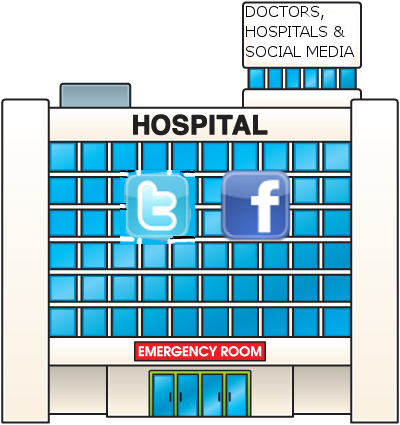
Headlines like this are becoming more common: “Company CEO steps down after social media fiasco.” Or, “Executive fired over social media gaffe.”
Every company today should have a social media policy in place to reduce its chances of becoming a negative headline, but even with a social media policy, things can get out of hand. For healthcare practices and hospitals, upholding patient privacy and confidentiality is of the utmost importance, and in addition to having a written policy, monitoring your social media is critical.
One of our employees recently told me about a situation that occurred with a medical practice she had worked for previously. The medical practice encouraged employees to “like” company posts on a social media platform. A female employee liked one of the company posts. But, by clicking on the likes, readers could be directed to her social media account image. She was in a very revealing outfit in her profile image. Apparently, patients saw the thumbnail image, clicked on it, and were treated to an eyeful. The young lady was a front-desk practice employee who engaged with every patient who walked in. The practice did not have a social media policy in place and lost patients due to the image and the negative attention it reflected on the practice.
Other examples of social media disasters are easy to find by searching Google. So, if you think your company or business is pretty safe from a social media debacle, you could be very wrong.
Navigating social media and creating comprehensive policies are not for the novice, and hiring a social media expert or PR agency is your best bet for providing your healthcare business with the best and most complete social media policy to keep your patients’ information safe and your company name out of trouble.
If you do not have the budget, but still want a social media policy, there are many examples on the Internet to use as a basic template for your business. Here are some pointers to keep in mind before creating your social media policy.
1. Start out by defining what your healthcare business deems as social media
A very detailed description may not take into account emerging trends and may leave your policy open to misinterpretation. For example, the National Council of State Boards of Nursing (NCSBN) describes social media as “social media outlets, platforms and applications, including blogs, social networking sites, video sites, and online chat rooms and forums.” A broad statement like this covers most forms of social media including ones that may be on the horizon.
2. Define acceptable social media use while working
Some employees may be authorized to check your company social media accounts while on-duty, but the parameters need to be defined. If employees bring their own devices, your policy needs to address this use very specifically. If your employees use computers or tablets that have Internet access, the use of both kinds of equipment while on the premises need to be clarified. Your guidelines for taking images while on duty with electronic devices needs to be written into your policy as well.
3. Define acceptable social media use while off-duty
More concerning to healthcare professionals is the use of social media by healthcare staff after hours. HIPAA defines patient privacy, and all employees in healthcare should be trained and educated on a regular basis about HIPAA regulations. While the majority of healthcare professionals would not disclose protected information on personal social media platforms, it can happen inadvertently and without intention to harm. Your policy should cover professionalism and ethics, and cover proper employee use of social media in regards to protected information even after employment terminates.
4. Define disciplinary action
When there is a breach of HIPAA guidelines or your own social media policy, there can be real repercussions. According to the NCSBN, improper use of social media by healthcare providers or workers may violate state and federal laws (established to protect patient privacy and confidentiality) and may result in both civil and criminal penalties, including fines and possible jail time. Educate your employees about your policy and spell out what actions the company will take if an employee uses social media against HIPAA or your company social media rules.
Because there are so many social media platforms available today, it becomes even harder to draw the line between work and off-duty social activity. If your company encourages its employees to post on the company social media accounts, how are you managing this? Can anyone post to your company accounts? Is there an employee who is responsible for monitoring posts and comments? Does your company have a policy in place to handle questionable employee posts? What is the disciplinary process for inappropriate or unprofessional posts?
These are important areas a social media policy must address to be enforceable. If you prefer your employees refrain from posting on your company social media accounts, do you state this in your employee handbook or social media policy? Are your employees “friends” or “followers” of your company social media accounts? If so, does your company regularly look at the employee pages associated with your account?
Make sure each employee comprehends your social media policy, put it in writing, and have each employee sign the document. As another layer of protection for your business, have your legal department review it before distributing the policy to employees.
Source: www.easttnmedicalnews.com
See on Scoop.it – Health Care Social Media And Digital Health
A new study of physicians’ use of twitter, including detailed analysis separated by specialty and subspecialty, gender, geography.
Source: exploreb2b.com
Diving in behind the tweets to mine interesting data.
See on Scoop.it – Health Care Social Media And Digital Health
This talk was given at the University of North Carolina School of Medicine on October 27, 2011, as part of the UNC Academy of Educators Lecture Series. #uncaoe
Source: www.slideshare.net
See on Scoop.it – Health Care Social Media And Digital Health

Ever wonder what your doctors and nurses talk about at the water cooler? Well, grab a paper cup and some Emetrol, because a new app is transporting medical chatter from hospital hallways to mobile devices.
Nicknamed Instagram for doctors, Figure 1 is a new social media outlet that allows users to upload photos of patients’ symptoms and maladies in order to ask for diagnoses, glean some advice or simply provide amusement to their peers.
Immediately after logging on – anyone can sign up – I was reviewing the x-ray of a 90-year-old female with a grotesque radial fracture. Scrolling down started a parade of stubbed toes, extracted tumors and rashes galore – enough to make me regret downloading the app over lunch. But as I kept scrolling (and cringing), my communicator instincts started to develop a nervous twitch. The word “HIPAA” began echoing in my head. Were these patients comfortable being photographed and discussed publicly? Did they even know? And what are the implications of a doctor following care recommendations he received from a stranger on a social media site?
The explanation from app creator Josh Landy, as told to Vox.com, is hardly comforting: “These are people who are talking about a lot of the cases because they’re interesting, textbook, classic versions and they can help.”
To be clear, there are doctors using the app for productive reasons. There are also users like the one who posted a photo of a sutured hand with the caption, “Anyone want to guess what happened here?” Others have taken to posting gruesome photos of traumatic amputations and the like.
Regardless of the user’s intent, it’s only a matter of time before a patient’s identity is exposed on Figure 1. For communicators, an ounce of prevention can go a long way in deterring a privacy breach. Start by educating employees on:
Your organization’s social media policy. Most pitfalls lie in the gray areas. Be specific.HIPAA laws. Make sure health workers understand the basics of HIPAA and their roles in upholding it. Encourage them to ask questions.The “rules” of posting online. Whether they want to or not, employees represent their employers on social media. Instill the mentality that nothing is private, nothing can be deleted, and everything could end up on the front page of the paper.
Ill-advised social media posts (not to mention covert photography) have wrought the downfall of many. It’s never been more important to stay vigilant of what employees are posting and where. Otherwise, one unwise post could lead to one “interesting, textbook, classic version” of a HIPAA violation for your organization.
Source: jarrardinc.com
See on Scoop.it – Health Care Social Media And Digital Health

A recent WebMD survey finds that 84% of patients want to use diagnostic tools to help their physicians make diagnoses, but just 69% of physicians said patients should do so. Meanwhile, 89% of patients believe they have the right to view all physician notes included in their health records, compared with 64% of physicians. MobiHealthNews et al.
Source: www.ihealthbeat.org
See on Scoop.it – Health Care Social Media And Digital Health


 Health Care Social Media