Posted in Cool Tool

Monday Morning Cool Tool: Glasp AI YouTube Summarizer

This week’s cool tool recommendation is Glasp AI YouTube Summarizer a free Chrome extension to generate summaries and give you the full transcript of any YouTube video.

Key Features

  • Pulls up transcripts of YouTube videos in multiple languages and summarizes them.
  • Summary can be generated via ChatGPT, Claude, Mistral AI, Gemini.
  • You can set how long or detailed the summary should be.
  • Summaries can include timestamps so you can navigate to specific parts of video.
  • You can highlight parts of the transcript, add notes, and export highlights/notes to tools like Obsidian, Notion, etc., in formats like Markdown, HTML, CSV, JSON.
  • Get the transcript of the video in multiple languages. Watch the video with the transcript on the side and get the content quickly or simply copy the transcript.

How it works:

  1. Install the extension.
  2. Open a YouTube video.
  3. Click the Glasp “Transcript & Summary” bar on the top right.
  4. Copy the transcript with one click.
  5. Paste it into your doc.

Limitations / Considerations

  • You’ll need an internet-connected browser that supports the extension.
  • Accuracy depends on the quality of the video’s transcript and AI summarization.
  • Complex or nuance-heavy videos may lose depth if the summary is too short.

Posted in Cool Tool

Monday Morning Cool Tool: Adobe Podcast

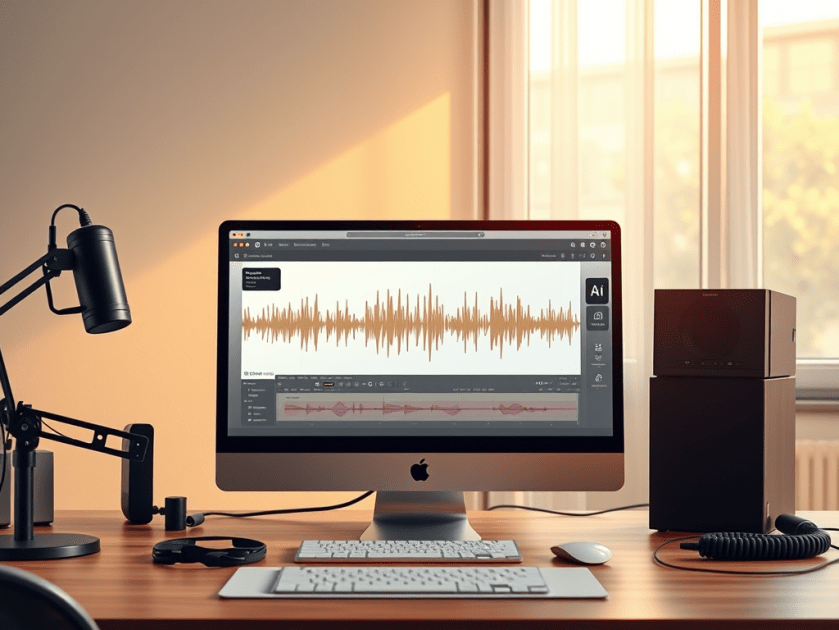
This week’s cool tool recommendation is Adobe Podcast — a browser-based audio recording, editing, and enhancement tool.

What It Does

Adobe Podcast packs in several features designed to simplify audio workflows:

  • Record & Edit in Browser – No need for complex local DAWs. You can record directly in the browser, edit your audio, manage speaker tracks, and even convert to video if needed.
  • Enhance Speech & Clean-up – Tools for removing background noise, reducing echo, improving clarity. If you don’t have a perfect setup (mic, acoustics, etc.), this helps a lot.
  • Mic Check – A diagnostic tool to test your mic and environment, giving feedback so you can optimise your setup before recording.
  • Transcription & Captions – Automatically generate transcripts or captions from your audio/video. Great for accessibility or social media snippets.
  • Royalty-Free Music & Sound Effects – Built-in library so you can add intros, backgrounds, and effects without hunting down licensing issues.

Best Use Cases

  • Recording remote interviews, podcasts, or voiceovers without a full studio setup.
  • Repurposing audio into social media content (videos, captions, audiograms) quickly.
  • Educators or health professionals who want to share audio content but need accessible tools.
  • Anyone looking for high-quality voice recordings without incurring significant expenses on hardware or software.

Pricing

The free plan includes:

  • Enhance Speech (audio only) — remove background noise & echo
  • Mic Check — evaluate your mic & setup using AI to detect issues.
  • Studio (browser-record/edit/enhance) with some limits: you can download projects up to 30 minutes, but with limits on how many per day. Files over a certain size/duration / original recordings may not be downloadable.

The free plan is sufficient for small projects, short podcast episodes, or testing out new ideas. Upgrading to the paid plan unlocks additional features.


Note: If you’re interested in exploring similar tools, consider comparing Descript, Audacity (a free, desktop-based option), or Riverside.fm (for remote interviews/video and audio).

Posted in #HCSM

Hashtags at 18: What They’ve Meant for Healthcare and Advocacy

Today is International Hashtag Day, and it also marks the hashtag’s 18th birthday. What began as a niche idea on Twitter in 2007 is now part of how healthcare professionals, patient advocates, and communities connect, learn, and campaign for change.

The Birth of the Hashtag

On 23 August 2007, Chris Messina suggested using the # symbol to group conversations on Twitter. Initially dismissed as “too nerdy,” the idea caught on when people began using hashtags to share updates during the San Diego wildfires later that year. By 2009, Twitter had made hashtags clickable, and soon they spread to Instagram, Facebook, LinkedIn, and TikTok.

Since then, hashtags have become cultural shorthand. They’ve carried lighthearted trends (#ThrowbackThursday), breaking news, and, importantly, social movements (#MeToo, #BlackLivesMatter).

Hashtags in Healthcare

In healthcare, hashtags have served as digital gathering places. Movements like #ILookLikeASurgeon challenged stereotypes and celebrated diversity in surgery. #MedTwitter, #CardioTwitter, and #IDTwitter have connected clinicians and patients across the world, enabling rapid sharing of evidence, insights, and professional solidarity.

Hashtags also underpin #FOAMed (Free Open Access Medical Education), where health professionals use tags to curate and share open educational resources. During the COVID-19 pandemic, hashtags provided real-time access to emerging research and peer commentary.

The Risks

As with any tool, hashtags are not without risks. They can be used performatively, with little action behind them. They can create echo chambers, exclude certain voices, or be hijacked for misinformation. Yet when used with intention, they remain a powerful part of digital health communication.

Hashtags at 18: Coming of Age in Healthcare

Eighteen often marks adulthood — a moment when identity and responsibility converge. Hashtags, too, have reached that stage. Algorithms may increasingly shape what people see, but hashtags still serve as anchors for visibility, belonging, and collective voice.

For healthcare professionals and advocates, they remain one of the simplest yet most effective tools for connecting communities, amplifying trusted information, and driving meaningful change.

So here’s a question to mark the hashtag’s 18th birthday: What hashtag has shaped you the most — whether it made you laugh, taught you something new, or gave you a sense of belonging?

Posted in #HCSM

Getting Health Messages Shared: What Really Works on Instagram

Instagram has evolved far beyond being a hub for fashion, food, and lifestyle brands. With more than 2 billion monthly users, it has become one of the most potent platforms for storytelling, education, and awareness-building. For healthcare communicators, that reach is impossible to ignore.

What makes Instagram especially effective is its ability to translate complex or sensitive health information into visual, accessible, and emotionally resonant content. Reels, carousels, and infographics allow you to distil big ideas into bite-sized, shareable moments. The platform also connects directly with younger demographics — Millennials and Gen Z — who are less likely to seek health information through traditional media or institutional websites.

But here’s the critical insight: shares matter more than likes.

  • A like signals agreement.
  • A comment shows engagement.
  • But a share extends your reach into entirely new networks — multiplying visibility and influence far beyond your existing followers.

For health messages — where the goal is often awareness, education, or behaviour change — shares are the ultimate form of amplification.

So, what makes people hit the share button? Let’s look at five proven types of content that consistently get shared.

1. Motivational or Inspirational Content

Why it works: Inspiration is universal. People share motivational content because it makes them feel uplifted, and they want others to feel the same.

Healthcare examples

  • A resilience story highlighting a patient’s recovery journey (with consent and sensitivity).
  • A reel showcasing the dedication of frontline staff during a public health campaign.
  • A quote graphic emphasising the importance of small, daily habits for long-term health.

Tip: Keep it authentic. Forced positivity rings hollow, but real, human stories resonate deeply. When possible, focus on lessons learned or a hopeful outcome, not just glossy “success.”

👉 Continue reading the full article on my Substack

Posted in #HCSM

Why Listicles Still Work In Healthcare Communication 

In health communication, clarity isn’t just helpful; it’s essential. That’s why one of the most enduring formats in digital communication remains the listicle.

Yes, the listicle. It may carry associations with lifestyle blogs or clickbait headlines, but when done well, it’s an effective tool for building understanding, trust, and engagement across audiences in healthcare.

What Is a Listicle?

A listicle is a structured article built around a numbered or ordered list—typically with subheadings, explanations, or visuals. It offers a clear roadmap through a topic, making it easier to scan, digest, and act on.

You’ve likely used or encountered them before:

  • “5 Signs of a Stroke Everyone Should Know”
  • “10 Things to Ask at Your Next GP Appointment”
  • “7 Lessons from Running a National Health Campaign”

They’re concise, focused, and—when crafted with care—highly effective in reaching busy, distracted, or overwhelmed audiences.

Why Listicles Work in Health Communication

1. They Provide Cognitive Closure

A title like “6 Questions to Ask Before Starting a New Medication” gives readers a straightforward task. It sets expectations and satisfies them. That sense of completion can increase comprehension and retention.

2. They Reduce Information Overload

Especially for patients navigating new diagnoses or caregivers juggling multiple responsibilities, dense paragraphs are daunting. A list offers a manageable way in.

3. They Match Digital Behaviour

Most people don’t read health content from start to finish. They scan for relevance. Listicles cater to that pattern, offering defined entry points that support better engagement.

4. They Support Accessibility

With short sections, bold headings, and bullet points, listicles are easier to navigate, especially on mobile devices or for readers with cognitive or visual impairments.

5. They’re Discoverable and Shareable

Listicles often perform well in search and on social media. Their clear structure is favoured by SEO algorithms and lends itself to being bookmarked, shared, or quoted in other content.

Examples in Healthcare Comms

Patient Education

“7 Questions to Ask Before Elective Surgery”
Used in clinic brochures or hospital blogs, this format empowers patients to participate more actively in their care—and improves shared decision-making.

Public Awareness Campaigns

“6 Myths About Vaccines—Debunked”
Structured myth-busting content can be shared across platforms, from Instagram carousels to printed factsheets. Each point reinforces public trust through clear, evidence-based language.

Internal Communications or Training

“5 Things to Know About the New Referral Process”
Listicles can help clinical staff or administrative teams quickly absorb policy updates without needing to read a full SOP document.

Advocacy and Engagement

“10 Ways to Support People Living with Epilepsy”
Ideal for NGOs or awareness days, these lists can drive real-world action, reinforce respectful language, and make allyship more tangible.

Writing Listicles That Inform—Not Oversimplify

There’s a misconception that listicles are shallow. But in healthcare, the best list-based content doesn’t dilute—it distils. The goal isn’t to reduce nuance but to make key messages more usable.

Here are a few guidelines:

  • Be specific. “7 Tips for Mental Health” is vague. “7 Ways to Cope with Post-Surgical Anxiety” is useful.
  • Don’t overinflate the count. If you have four strong points, stick with four. Padding the list undermines trust.
  • Layer in links or next steps. A good listicle can serve as a gateway to more detailed resources or actions.
  • Design with accessibility in mind. Use bold text, short sentences, and consider screen reader compatibility.
  • Tailor tone to audience. A patient-facing list needs a different voice than one written for policymakers or funders.

Have you used listicles in your work—successfully or otherwise?
I’d love to hear how they’ve worked (or fallen flat) in your campaigns, publications, or patient materials.

Posted in Cool Tool

Monday Morning Cool Tool: StoryArt

This week I’m recommending StoryArt, a freemium app for more creative Instagram Stories and Reels.

StoryArt is an Instagram story editor app that offers over 3,000 customizable collage and animated story templates for Instagram Stories and Reels.  In addition, you can access  500+ post templates for feed posts and 500+ highlight cover templates to beautify your profile.

The app is free but if you want access to extra tools, filters, and layouts, there is a monthly fee of  $2.99 or a full-year subscription for $9.99. 

StoryArt is available for both iOS and Android.

Posted in AI, Cool Tool

Monday Morning Cool Tool: OpenArt.ai

This week I’m recommending OpenArt.ai – an AI-powered art platform that allows users to create, edit, and enhance images using artificial intelligence.

Key Features

AI Image Generation
Create images from text prompts using a range of advanced models, including DALL·E 3 and Stable Diffusion. You can also generate visuals without prompts, offering boundary-free creative exploration.

Advanced Image Editing Tools
OpenArt includes a robust suite of AI editing capabilities to refine your work, such as:

  • Inpainting & Outpainting – Add, remove, or expand elements in your image beyond its original frame.
  • Upscaling – Improve image resolution to produce crisp, detailed artwork.
  • Background Removal & Replacement – Effortlessly swap or eliminate image backgrounds.
  • Find & Replace – Replace specific objects using simple text prompts.
  • Consistent Characters – Generate the same character in multiple poses, styles, and scenes—ideal for storytelling or brand consistency.
  • Facial Editing – Adjust expressions, eye color, or hairstyles for fine-tuned control.

Customization & Creative Control
You can train custom models to reflect your unique style and use “Image Guidance” to steer outputs based on reference images (pose, style, composition, etc.).

Community & Learning Resources
Access a vibrant community feed, Discord support, tutorials, and prompt books to help you get the most from the platform.

Image to Video Tool
Transform static images into dynamic videos in just a few clicks.

Pricing

OpenArt offers a free trial with limited credits for new users. For ongoing or professional use, there are several paid plans—Essential, Advanced, Infinite, and Team—each offering increasing credits, features, and simultaneous generations. Costs vary based on the tools and AI models you use.

Posted in #HCSM

A Strategic Guide to Instagram Stories for Healthcare Communicators in 2025

Instagram Stories aren’t just a social feature; they’re a communication channel with real strategic value. For healthcare communicators, this format is a versatile tool that can carry everything from urgent health updates to nuanced patient education.

Stories allow you to connect in ways that are immediate, visual, and personal. The question is no longer whether to use Instagram Stories—it’s how to use them well.

Why Stories Still Matter in Healthcare

Stories aren’t like regular posts. They disappear after 24 hours, but their impact can last far longer. They’re direct, sequential, and immersive—perfect for walking someone through a quick tip, showing what happens behind the scenes, or debunking a common myth.

Done well, Stories can turn passive viewers into active participants: clicking links to book a screening, watching a tutorial on inhaler technique, or submitting a question to a specialist. That kind of engagement is hard to come by—and it’s worth building for.

From Swipe to Substance: Making the Most of the Format

The Stories format is fast, but that doesn’t mean your strategy should be rushed. Success comes from combining thoughtful design with genuine purpose.

Here’s how to approach it:

  • Keep it clean: Avoid cramming too much into one slide. One idea per frame works best. Use icons, colour cues, and simple language to guide people through your message, whether it’s a flu vaccine update or a healthy eating tip.
  • Put a face to the facts: Audiences respond more positively to real people. A brief clip of a nurse explaining when to go to urgent care, or a physiotherapist demonstrating a stretch, does more for credibility than any stock image ever could.
  • Be consistent, not flashy: Templates and visual identity matter, but don’t get lost in the aesthetics. What matters most is clarity, tone, and rhythm. Use the same fonts, colours, and voice across Stories to build trust and recognition over time.

Formats That Work: Proven Story Structures for Healthcare

There’s no one-size-fits-all formula, but some formats lend themselves naturally to healthcare communication. Here are a few to start with:

  • Quick Series: Break a larger message into smaller chunks. For example, “3 ways to support someone with epilepsy” could run across three slides—each one focused, clear, and actionable.
  • Myth vs Fact: Tackle misinformation head-on. Start with a bold claim on Slide 1 (“You can’t exercise if you have a heart condition”), then swipe to the evidence-based clarification with a trusted source.
  • Behind the Scenes: Show your human side. A look inside a vaccination centre, an introduction to a midwife team, or a day-in-the-life view from a community health worker builds transparency and warmth.
  • Call to Action: Don’t forget to guide your audience. Whether it’s “Swipe up to check symptoms,” “Tap here to book,” or “Share with someone who needs this,” make your ask clear and easy to follow.

Continue reading for free on Substack

Posted in Cool Tool

Monday Morning Cool Tool: Bitly

This week, I’m recommending Bitly – a handy URL shortener tool.

How we share information in healthcare is just as important as what we share. The link itself is part of the message, whether it’s an educational resource, a campaign sign-up link, or an event registration page. Here’s where Bitly comes in.

What Is Bitly?

Bitly is a platform that takes long, often unwieldy URLs and shortens them into compact links that are easier to share and track. It’s one of the most widely used URL shorteners in the world and is trusted by organisations ranging from global brands to local nonprofits.

Let’s say you’re running a digital campaign for epilepsy awareness. You’ve created a resource page that lives at: https://yourorg.org/programmes/epilepsy-awareness-week-2025/download-resources
That’s a lot to include in a tweet, an Instagram bio, or a printed flyer. With Bitly, you could shorten it to: https://bit.ly/epilepsyweek2025
Much better, right?

But more importantly, you can track how that link performs. How many people clicked it? Where were they located? Did one social platform drive more traffic than another?

What Else Can You Do with Bitly?

Once you’re inside the platform, you’ll find several additional features that make Bitly especially powerful for healthcare communication and outreach.

🔹 Link Customisation
You can edit the end of a Bitly link to make it more descriptive or branded, like:
bit.ly/CaregiverGuide2025
This improves trust and helps people understand what they’re clicking on.

🔹 Analytics Dashboard
Bitly provides real-time data on link performance, including:

  • Click volume
  • Geographic location of users
  • Referral sources (e.g., Twitter, email, WhatsApp)

🔹 Branded Domains (Paid)
With a paid plan, you can use your own short domain (like yourclinic.org/guide) to create even more trust and continuity in your communications.

🔹 Link Management Tools
You can organise links into folders, label them by campaign, and even set expiration dates for time-sensitive URLs (paid feature)

🔹 QR Codes

Every time you shorten a link with Bitly, you also have the option to create a QR code with a single click. That means you can easily place your link on:

  • Clinic posters
  • Flyers and leaflets
  • Event banners
  • Conference slides
  • Prescription inserts or appointment cards

QR codes make it effortless for patients, staff, or the public to scan and access information using just their phone – no typing required. For example, a hospital running a flu vaccination campaign uses a Bitly link to direct patients to the booking form. They place the QR code version of that link on posters in waiting rooms, allowing patients to scan and schedule right from their seats.

Is Bitly Free?

Yes—and no. Bitly offers a free plan that allows basic link shortening, custom back-halves, and limited analytics. For more advanced features like branded domains, deeper analytics, and team collaboration, they offer tiered paid plans.

For small teams or individual professionals, the free plan is often enough. For hospitals, health systems, or nonprofits running large campaigns, the paid options can be well worth the investment.

Posted in #HCSM

How a Tiny Link Can Make a Big Impact: The Surprisingly Powerful Role of Short Links in Healthcare Communication

A few weeks ago, I sent a patient education link to a colleague via WhatsApp. It was long, so long that it broke into two lines on her screen, making it difficult to click, especially on mobile. “What is this?” she messaged back, hesitant to open something that looked confusing and, frankly, suspicious. Her response made me reflect on how something as mundane as a URL—the link itself—can either support or undermine trust in a healthcare setting.

Why Short Links Matter in Healthcare

In clinical practice, public health campaigns, and health education, we often think about what we say, but not always about how we share it. Clarity, confidence, and usability matter, especially when you’re dealing with sensitive health topics or time-pressed readers. A shortened URL isn’t just tidier. It’s more accessible, more user-friendly, and often more trustworthy—if used wisely.

Let’s say you’re linking to a new vaccination clinic schedule or a sign-up page for a mental health webinar. Here are your two options:

https://healthsystem.gov/community/events/primary-care/mental-health-week-2025/register-now-form.html

or

https://yourclinic.org/mhweek2025

Which one feels easier to trust and click?

Beyond the Aesthetics: What Shortened URLs Actually Do

A URL shortener takes a long, complex link and generates a much shorter one that redirects to the same destination. But the best tools offer more than just a cosmetic makeover—they provide tracking, branding, and behavioural insight.

Many shorteners (like Bitly, Rebrandly, and TinyURL Pro) allow you to:

  • Track click-through rates (how many people actually click your link)
  • See geographic data and referral sources (helpful for outreach campaigns)
  • Customise the back-half of the link for clarity and brand alignment

In other words, shortened links don’t just look better—they help you communicate better.

Continue reading this article for free on Substack