Posted in AI, Cool Tool

Monday Morning Cool Tool: MagicRoll.ai

This week’s tool cool recommendation is TextJam – an AI-powered writing editor.

Features

  • Pen vs. Pencil editing model — You can “lock in” parts of your draft (pen) that are final, and mark other parts (pencil) for the AI to polish or rework. It’s a neat way to preserve your unique voice while getting help.
  • Inline prompting and co-writing — Instead of pasting chunks into a separate chat or prompt box, you can leave notes directly in your document. That makes the workflow more fluid and context-aware.
  • Flexible collaboration — Whether you’re working solo, with co-authors, or with AI, TextJam supports a multi-user, real-time editing environment. Great for team writing, co-writing books, or peer-review workflows.
  • Smart editing + reflow capabilities — You can resize sections (sentences, paragraphs, entire blocks) and ask the AI to rework them to match the new length/flow — useful for trimming, summarising or expanding without losing clarity.

Pricing

TextJam offers a free trial. Paid plans start at US $10/month (Starter), which gives access to AI-assisted words, real-time dictation, narration, and a limited number of real-time collaborators.


Posted in #HCSM

Illness in the Digital Sphere: Rethinking How Social Media Shapes Health Communication

For much of modern medical history, health communication followed a familiar path: information moved from clinicians to patients, supplemented by family narratives, pamphlets, and the occasional media report.

The expansion of the Internet — and particularly the rise of social media — disrupted this model not simply by increasing access to information, but by changing the social and emotional dynamics through which people engage with illness.

A 2017 study examining Iranian online health forums provides a useful lens for understanding this shift. Its insights, though modest in scale, highlight a pattern that resonates beyond a single national context. What emerges is not merely a description of digital information-seeking but a portrait of how individuals use social platforms to compensate for structural gaps in healthcare communication and emotional support.

The study identifies five consistent functions that online spaces now serve in the experience of illness: social support, encouragement, education, information-seeking, and experiential knowledge-sharing.

Continue reading on Substack

Posted in AI, Cool Tool

Monday Morning Cool Tool: MagicRoll.ai

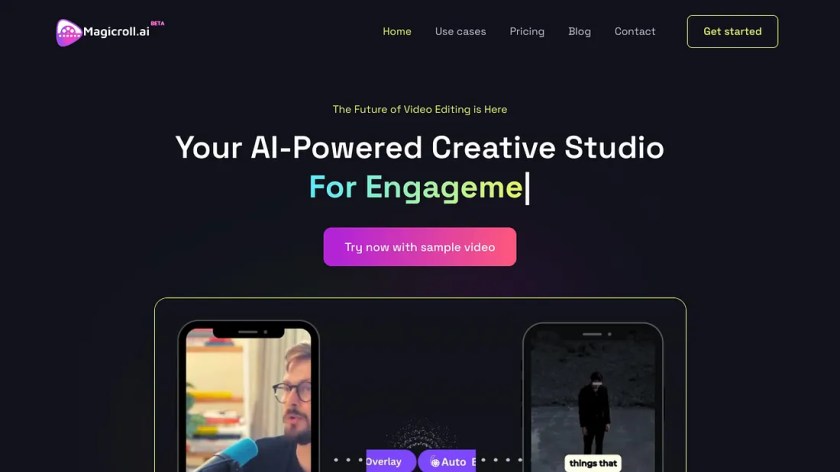
This week’s tool cool recommendation is MagicRoll.ai – an AI-powered video editing tool that automates video creation.

If you often film talking-head videos, short explainers, reviews, tutorials, or social clips, this is very much the type of tool built for you.

Features

  • Adds b-roll for you — The tool automatically selects and inserts complementary footage (B-roll) into your main video (A-roll)
  • Swaps your background — you can change your backdrop with a single click.
  • Generates subtitles automatically — in multiple languages, which is great for accessibility and reach.

Pricing: There’s a 30-day trial with credits, so you can see whether it fits your workflow before paying for anything.


Posted in #HCSM

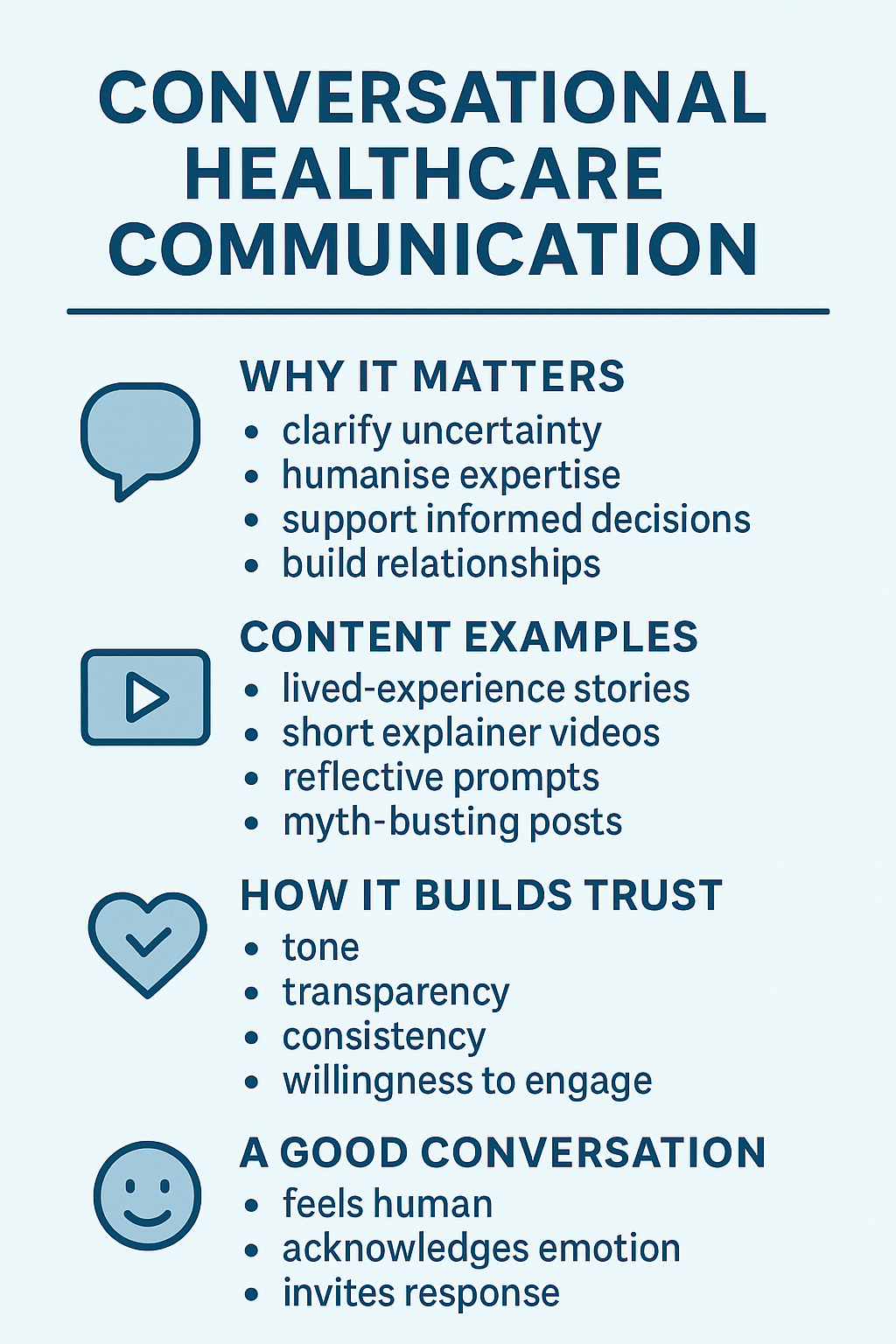
Why Your Health Content Needs a Conversation Strategy — Not Just a Publishing Plan

Healthcare communication has always mattered — but audiences’ expectations have changed dramatically.

People now move fluidly between clinic visits, search engines, peer communities, and social platforms. They cross-reference, compare, question, and seek reassurance in places far beyond formal care.

In this landscape, a message is no longer enough. People don’t want to be spoken at. They want dialogue, clarity, and the sense that someone is genuinely listening.

If you’re still creating content for people rather than with them, you’re missing the shift already happening in healthcare. I break down the change — and what to do next — in my latest Substack.

Posted in #HCSM

Dr Google Has Become Dr ChatGPT: What This Shift Means for Health Communication

I’ve been thinking a lot about how people look for health information now — and how quickly things have changed without most of us fully noticing. For years, “Dr Google” shaped what people knew (or misunderstood) about symptoms, treatments, and diagnoses.

But that era has shifted.

Today, people don’t search the way they used to.
They ask.
They describe their concerns in plain language.
And increasingly… they ask an AI.

In many households, Dr Google has already become Dr ChatGPT — a tool that doesn’t just retrieve information but also interprets, organises, and presents it as guidance.

This has huge implications for healthcare communication:

  • how patients form first impressions,
  • how they prepare for appointments,
  • how they evaluate risks,
  • how they find trusted organisations in the first place

I wrote a new piece exploring what this shift means for all of us who work in health, advocacy, or patient communication.

If you’re curious about how the health information journey is being rewritten, you can read it here.

Posted in AI, Cool Tool

Monday Morning Cool Tool: Lummi

This week’s cool tool recommendation is Lummi, an AI-powered stock image site.

Lummi offers free (and paid-upgrade) stock visuals: photos, illustrations, and 3D assets. Their free images are available for both personal and commercial use. The licence allows for editing and combining, meaning you can adapt images to your brand/style (colour palette, etc.). However, while Lummi states broad rights, you still should review the specific licence version applicable at download time.

Posted in #HCSM

The Rise of the Niche: Why Health Conversations Are Moving from Mega Platforms to Micro Communities

For over a decade, health communicators were told that reach was everything. Post widely, engage broadly, and the message would find its audience. But the tides have turned. Today, people are stepping away from crowded public feeds and moving into micro-communities, such as closed groups, condition-specific forums, and peer-led chats, where genuine connections can occur.

For health communicators, this shift changes everything. It’s no longer about broadcasting messages — it’s about belonging, trust, and dialogue.

Social media isn’t dying — it’s reorganising around the timeless human need for connection. The question is: are we ready to meet audiences there?

Read the full piece: The Rise of the Niche: Why Health Conversations Are Moving from Mega Platforms to Micro Communities

Posted in AI, Cool Tool

Monday Morning Cool Tool: getimg.ai

This week’s cool tool recommendation is getimg.ai – an AI image generator.

Features

  • Image Generator – Create images from text.
  • Video Generator – Create short videos from images or text prompts.
  • Image Editor – Edit images with AI (great for retouching, background tweaks, or adding new elements).
  • AI Resizer – Resize or upscale images intelligently without losing quality.
  • Uncrop – Expand images beyond their borders (handy for banner or social post layouts).
  • BG Remover – Instantly remove or replace backgrounds.
  • Vector Generator: Convert raster images into crisp, editable vector files.
  • Mockup Creator: Drop your designs into real-world settings instantly.
  • Recolouring & Text Remover: Adjust tones, palettes, or typography with ease.

Pricing

The free plan includes 40 credits per day and access to three image models — more than enough to experiment and explore its capabilities. Paid tiers unlock higher limits and advanced features for power users.

Posted in AI, Cool Tool

Monday Morning Cool Tool: Subtitle

This week’s cool tool recommendation is SubtitleBee- an auto caption generator.

Captions don’t just make your content accessible to people who are deaf or hard of hearing—they help everyone. They keep viewers watching on mute, boost comprehension for non-native speakers, and even improve SEO.

Healthcare is global, and so are its audiences. Captions and subtitles bridge not only hearing differences but also language gaps, literacy levels, and learning styles. Captions don’t just improve accessibility; they improve performance. Most people scroll social media on mute—especially in healthcare spaces where privacy matters. Captioned videos hold attention longer, encourage shares, and boost recall. They also help algorithms index your content for search and translation, extending the life of your message online.

Luckily, a wave of AI-powered caption tools can now generate subtitles for us. SubtitleBee also includes translation in over 100 languages. It also offers editing of timing, styling (fonts, colours, backgrounds) and branding (logos/custom overlays) so your captions look professional.

Key things to look out for

  • Check the free-plan limits (e.g., number of videos, video length) so you don’t hit an unexpected paywall.
  • Make sure your translations are accurate (even with AI support you may need to tweak terminology).
  • When styling captions, ensure readability: font size, background contrast, sufficient on-screen duration.
  • For training/advocacy, make sure captions are not an afterthought: they’re part of the message.
  • Consider exporting both burnt-in captions and separate caption files (SRT/VTT) for different uses.
  • For inclusive accessibility: include captions even when sound is on; helpful for learners with hearing differences, non-native speakers, and those watching without audio.
  • Don’t forget to review/edit to ensure accuracy (especially technical terms, names, medical/advocacy vocabulary).

Posted in AI, Cool Tool

Monday Morning Cool Tool: Recraft

This week’s cool tool recommendation is Recraft – an AI image generator.

Recraft turns your text prompts into high-quality visuals in a consistent, customisable style. You can define your own brand palette, adjust colours and composition, and even refine outputs with built-in editing tools such as background removal and upscaling.

Unlike many AI image generators that only produce raster files (pixel-based images that blur when enlarged), Recraft also creates vector graphics (SVGs) — images built from shapes and lines rather than pixels. That means they stay sharp at any size and can be easily edited or recoloured later in tools like Illustrator, Canva, or Figma.

Features:

  • AI image generator & editor – Create, refine, and enhance visuals from text prompts.
  • AI vector generator & image vectorizer – Turn raster files into clean, editable vector art.
  • Mockup generator – Instantly visualise designs in real-world settings.
  • AI photo editor, upscaler, background remover, eraser, and image combiner – Edit, sharpen, or expand your images with simple, intuitive controls.
  • Recolouring and text remover tools – Quickly adjust tones, palettes, and typography.
  • Image expanding – Extend the boundaries of an existing image without losing composition.

It also supports a full range of format conversions — from JPG to SVG, PNG to SVG, WebP or JPG to Lottie, and JPG to TIFF, with custom DPI and CMYK options for print-quality output.

Pricing

  • Free plan: Get started at no cost. Daily credit allowance; images appear in the public gallery.
  • Pro plan: From around US $10/month (billed annually). Includes full commercial rights, private image generation, and ~1,000 monthly credits.
  • Higher tiers: Up to ~US $48/month for heavier use with larger credit allowances.
    (Free plans have limited rights and credits don’t roll over each month.)