
// < ![CDATA[// < ![CDATA[// < ![CDATA[// ]]>
// < ![CDATA[// < ![CDATA[// < ![CDATA[// ]]>
See on Scoop.it – Health Care Social Media Monitor
Building social networks for health promotion in high-poverty areas may reduce health disparities. Community involvement provides a mechanism to reach at-risk people with culturally tailored health information.
See on www.cdc.gov
Medical student Eve Purdy, has made this video which highlights three important ways that social media is influencing her learning as a medical student.
See on Scoop.it – Health Care Social Media Monitor
What is an effective way of educating men at high risk for HIV about the importance of home-based HIV testing and prevention? Talk to them where they hang out, on Facebook and other forms of social media.
A team of researchers, led by Sean D. Young, assistant professor of family medicine and director of innovation at the Center for Behavior and Addiction Medicine at the University of California at Los Angeles, set out to do just that.
“We created communities from scratch,” said Young, referring to the invitation-only Facebook groups that were designed to provide health information, and to increase the rate at which men used HIV testing kits.
Their findings have been published in the Sept. 3 issue of the journal Annals of Internal Medicine. The National Institute of Mental Health and the Center for HIV Education, Prevention and Treatment Services at UCLA paid for the study.
In a world where social media continues to evolve, one of the key aspects about using it is making sure that the platform is something that people still use.
See on www.cleveland.com
See on Scoop.it – Health Care Social Media Monitor
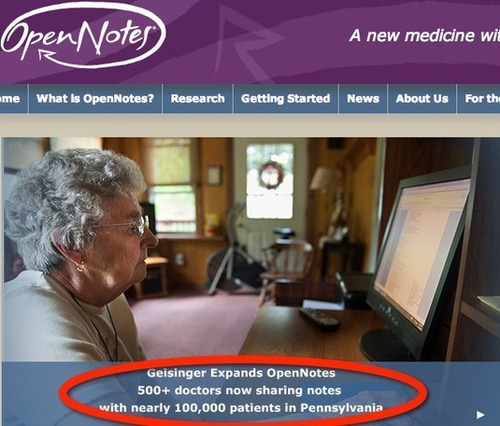
Cleveland Clinic announced open access adding a half million patients to the total. Big news
Big news is emerging from the OpenNotes® project: big institutions are making patient access to the medical record Standard Operating Procedure.
See on e-patients.net
See on Scoop.it – Health Care Social Media Monitor
for physicians frequently focus on the need for doctors to separate their personal from their professional identities, but those types of policies get social media all wrong, according to a viewpoint recently published in JAMA.
See on Scoop.it – Health Care Social Media Monitor
Communication has been disrupted through social media but how has the health care industry faired? Dive into an analysis of 24 statistics on the subject.
See on getreferralmd.com
An example of how social media is changing the healthcare dynamic – but not everyone is sure how to handle this new frontier.

Emergency physicians can be an ornery bunch, often opinionated and not afraid to speak out on a wide variety of issues. As emergency room (ER) overcrowding in Canada is seen as an early-warning signal for more wide-ranging problems within the health care system, having ER doctors who are willing to be vocal about their concerns is not necessarily a bad thing. (It’s worth noting that arguably the most high-profile media physician in Canada – Dr. Brian Goldman @NightShiftMD, host of the Canadian Broadcasting Corporation’s White Coat Black Art is an ER doc).
Combining an ER physician with Twitter, as you can imagine, can be a potent mixture.
Nowhere…
View original post 414 more words
See on Scoop.it – Health Care Social Media Monitor
Discover 5 ways hospitals and other health providers are integrating social media into their healthcare marketing mix on the TopRank® Online Marketing Blog.
See on www.toprankblog.com





 Health Care Social Media