Posted in #HCSM, Pharma

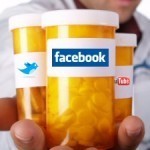
Why Health, Medical and Pharma Can No Longer Afford to Be Antisocial

See on Scoop.itHealth Care Social Media Monitor

For a long time, Health, Medical and Pharma have shied away from Social Media. Social Media has evolved to be ubiquitous in the world of successful business. And yet Pharma has tiptoed away from it, reasoning that it is too big of a liability to justify Social Media participation. It’s true that there are legal complications that can arise. The FDA has yet to release a formal set of guidelines regarding the use of social media and HIPAA compliance, in addition to other medical regulatory issues. Despite this, some pioneering medical companies have led the way forward with successful social media engagement. It’s definitely possible. It’s more than possible. It’s imperative.

Pharma and medical marketers need to adopt Social Media in order to survive. Companies that refuse to adopt social media assume a glaring red sticker identifying a looming expiration date. Brands must meet people where they are: online. “Social Media is a more effective way of reaching healthcare consumers because you are connecting with them while they are actively seeking you out,” advises Richard Morrow, the ParkerWhite branding agency’s digital director and user experience specialist. Morrow has worked with various B2B and B2C corporations to develop comprehensive online strategies. Brands must evolve to the new ways of communicating with consumers. Shouting from the recesses of traditional media won’t bring consumers back.

Obviously Medical and pharma companies will have to do their homework before taking the Social Media plunge. It wouldn’t be wise to jump in before learning the nuances of using social media for pharma from a legal perspective. But this isn’t rocket science. Medical marketers are already familiar with legal regulation for marketing – social media is just one more channel. Companies already have legal departments in place that are experts in mitigating risk. They just need to work with the right people who understand how social media works, in order to bridge the gap needed to apply known practices and knowledge to the social media channel.

The greatest risk in the gamble of social media for healthcare companies isn’t legal regulations. The overwhelming risk to healthcare social media is a complete absence of medical and pharma companies. Healthcare companies who don’t engage with patients and caregivers on social media will risk losing customers, tarnishing a brand image, eroding brand awareness, missing insights for product development, and failing to ignite potential brand advocates. At the end of the day, it’s business. You’ve got to communicate how you’re going to serve a customer’s needs to the right customers, at the right time, so that they choose to purchase your product or service. Communicating your product offering, connecting with the right customers, and making the conversion to a sale is the lifeblood of your business. With careful planning, you can utilize social media to achieve your business goals and avoid the pitfalls of an antisocial business.

Here’s why your company can’t afford to be antisocial:

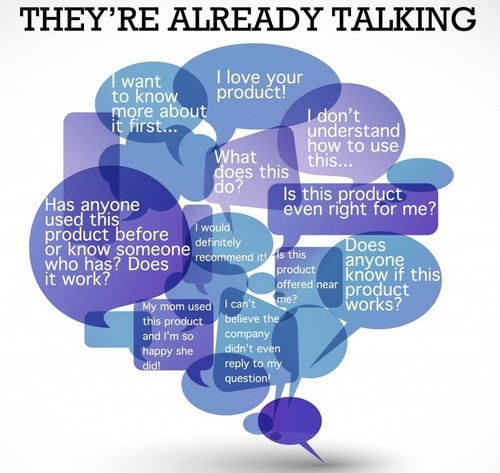
1. The Conversations Are Happening Whether You Like It Or Not

2. This is 21stCentury PR

3. There is no risk management without social media

4. You Say Your High-Tech But It’s All Talk No Action

5. No One Ever Likes the Silent Treatment

Read in detail by clicking on title

See on www.parkerwhite.com

Posted in #HCSM

Looking forward to hearing 3GDoctor David Doherty @mHealthInsight – keynote speaker @Health2Dublin February meet-up

David Doherty's avatarmHealth Insight

Health 20 Dublin

On Wednesday 6th Febraury 2013 I’m looking forward to presenting at the Health2Dublin meetup at the O’Callaghan’s Mont Clare Hotel, Dublin, Ireland.

Health 2.0 Dublin only launched in November 2012 but is generating a lot of buzz and has already become a focal point for those in Ireland who are using web tools to personalize health care, collaborate, and promote health education. It’s completely free to attend (the organisers rely on the generosity of sponsors who want to be supporters of the Health 2.0 movement) and you can read about previous events here on the Health 2.0 Dublin Blog.

Program:

6.00 – Networking (Get to know new members and grab a refreshment at the bar)
6.30 – Health2Dublin news and upcoming events
6.45 – Keynote Speaker: David Doherty
7.15 – Panel Discussion: David Doherty (3G Doctor), John Dinsmore (Trinity College Dublin – Health Innovation Lead), Niall O’Neill (Deloitte…

View original post 321 more words

Posted in #HCSM

How Social media has transformed the way we think about disease, its treatment, and the connection between those who develop treatments and those who are treated

See on Scoop.itHealth Care Social Media Monitor

Tasteless comments about the growth of social communication often fall back on the hackneyed metaphor of “spreading like a cancer.” The growth is uncontrolled, we are told, metastasizing in unexpected locations with ruthless speed. The body politic, we are told, is being rotted within by mutation. The traditions of the past are under siege, and we require radical surgery for a cure.

The panic is unwarranted, but the metaphor may be more apropos than we realize.

The astonishing (and Pulitzer Prize–winning) The Emperor of All Maladies describes the halting progress made in the fight against cancer since it was first identified by the Egyptian physician Imhotep 4500 years ago. For most of that grim history, cancer has been misunderstood, misidentified, and a hopeless diagnosis for its victims. Research was driven by a small number of obsessed, charismatic individuals, many of whom were unaware of related analyses being performed by doctors elsewhere—people didn’t know things, and when they did it was not disseminated quickly or effectively. Social and intellectual stigmas slowed research. Nearly every advance in the treatment of cancer, from radiation therapy to chemotherapy and beyond, has come about within the lifetime of my grandparents.

And speaking of my grandparents, my grandmother was diagnosed with breast cancer in the late 1960s, but passed away in 1997—30 years later. She was part of the first generation of cancer patients who expected to survive. Yet she and her contemporaries whispered the word “cancer” as though to speak its name would give it a totemic power. Her battles were unmentioned, a private war fought behind closed doors, alone and largely silent.

Contrast that approach to the story of Xeni Jardin, one of the editors of Boing Boing, among the top sites on the Internet. She live-blogged her first mammogram, which returned a diagnosis of breast cancer. She has a Pinterest Page entitled “my life, now, with breast cancer” showing pictures of her medication, the ginger ale she uses to prevent chemo-induced nausea, and various inspirations for her feelings on a given day. And this open approach isn’t limited to patients: Researchers now collaborate across electronic networks and borders, sharing information, ideas, and case studies. There is no isolation anymore in the fight against cancer. Even the best young adult novel of 2012, The Fault in Our Stars, was a dark romantic comedy about teenagers with cancer—the critical moment in the book comes when a group of teens get together to talk about their afflictions.

What do all of these stories have in common? They are all about cancer, but they are also about communication and the way that communication has transformed the way we think about disease, its treatment, and the connection between those who develop treatments and those who are treated. The story of cancer in many ways mirrors the story of the life sciences more generally, and how social interaction—and the legal implications for that social interaction—are shaping a different world.

Once upon a time, there were patients, and there were doctors. Patients were sick, doctors tried to repair them. For many centuries, that involved putting their humors back into balance through a variety of ineffective techniques that ranged from blood-letting to therapies best not mentioned before eating. Some doctors were also intellectuals, and engaged in some variety of research, or writing, or teaching. But there was no class of research institutions, and no infrastructure for solving problems. Information moved slowly, when it moved at all, and only a small number of people were sufficiently aware to do anything with that information even if they received it.

Today, there are patients, there are doctors, there are drug companies, there are university researchers, there are academic medical centers, there are government researchers, there are patient advocacy organizations, there are charitable foundations, there are social media platforms, there are large databases of clinical information, there are computer software modeling companies, there are regulators, there are investors, and so many other types of participants in the world of the life sciences that to name them all would be an exercise in futility. They all want information. They all want to know the latest facts. They all want everything to happen immediately, and they want to know about it as soon as it happens.

Yet the law is not about immediacy. The law is about considered approaches to a variety of competing interests. Despite many of our preconceptions about free speech, the law does not want us to know everything right away, or to have access to all treatments right away. Regulatory approvals, research, and intellectual property protection all come before treatment. This was fine in a world in which no one really knew what was going on—but with the growth of social media platforms and specialized advocacy groups, information is disseminated at the speed of light. Once on the market, drugs and medical devices are no longer quietly promoted to medical professionals, but are advertised to the public at large. More people think that they are the target audience, and are insulted when they are denied what they want.

What this means is that the law is often seen today as an obstacle to progress, rather than a facilitator. This does not mean, however, that the law can or should be ignored—quite to the contrary; the law and its application to the regulation of communication about the life sciences has never been more important, and regulators have never been more active. Rather, it is instead important for lawyers and marketers and researchers and businesses alike to recognize the meaning of this change, and to take that meaning into account in how they engage in their legal clearance, which is no longer taking place in a vacuum. Ironically, we are all under a microscope.

Every step of the process of researching, developing, clearing, marketing, and using any medication or device is now subject to a meta-conversation, a discussion about the wisdom of every path taken, of every decision made, by every participant in the chain. I have often spoken of the internet and social media as “the end of forgetting,” as all things said online rapidly become your permanent record. This means that our words are promiscuous, merging with other communications from other sources, and swirling around platforms that we have never seen or engaged with. The brands we create develop lives beyond the basket of associations we assign to our products, and we must participate in the conversation or allow the discussion to turn against us.

So what does all of this really signify? Most discussions of the law by lawyers talk about specific changes in the law, and how they can be addressed by their clients. But for a lawyer who works in social media, that perspective is far too limited. The technology changes too quickly, and the culture shifts every day (to feel profoundly behind the curve, just ask a 13 year-old about the technology choices she makes, and why). Instead, clients and lawyers must focus on trying to become more aware of the context for these discussions, and the technological advances that give them momentum. A life sciences company that is not profoundly sensitive to the social media environment and to the legal implications of their participation (and the participation of their ultimate customers, whether doctors or patients) is not only potentially getting into trouble (the lawyer voice inside me is screaming “what about the adverse event reporting? What about the privacy considerations?”), but also missing out on incredible opportunities.

My grandmother didn’t want to speak about her illness, even as she fought it successfully for decades. Today, everyone has a megaphone, and they want to talk. So don’t pretend that the world is the same. Figure out how to join in the conversation.

The content of this article is intended to provide a general guide to the subject matter. Specialist advice should be sought about your specific circumstances.

Specific Questions relating to this article should be addressed directly to the author.

See on www.mondaq.com

Posted in #HCSM

Beyond statistics – how personal narratives shared through blogging provides a new framework for a richer understanding of cancer survivorship : ASN Events

See on Scoop.itHealth Care Social Media Monitor

Beyond statistics – how personal narratives shared through blogging provides a new framework for a richer understanding of cancer survivorship

Marie Ennis-O’Connor‘s insight:

A cancer diagnosis is not just a single event with a defined beginning and end, but rather a diagnosis initiates a survival trajectory characterized by on-going uncertainty, potentially delayed or late effects of the disease or treatment, and concurrent psychosocial issues that extends over the remainder of a person’s life. Improvements in the early detection and treatment of cancer have increased the periods of survival following a breast cancer diagnosis. However, statistics give no indication of the quality of life experienced in the months and years that follow the end of treatment. Amongst emerging research on the physical and psychosocial aspects of cancer survivorship, some questions still need to be answered. For instance, how does a person transition to survivorship and integrate the cancer experience into their lives over the long term? And what support structures are needed to facilitate this process of integration? If healthcare providers are to adequately prepare patients for cancer survivorship and assist them in their recovery, then they must achieve a deeper understanding of what surviving cancer is like.  Personal narratives shared through social media are an area of rapid development in communication among breast cancer survivors. Many are turning to blogs to tell their stories. These blog narratives provide a framework for a richer understanding of the lived experience of cancer survivorship and a means of exploring how they integrate the cancer experience into their lives over the long term.

See on fcic-2013.m.asnevents.com.au

Posted in #HCSM

Social media has already changed the healthcare landscape irrevocably

See on Scoop.itHealth Care Social Media Monitor

As patients increasingly turn toward social media to access healthcare and self-diagnose, the patient-provider relationship is changing, the book argues. The first step in this change came when patients gained access to medical information online. Now they’re adding the power of crowd sourcing, which means the healthcare industry isn’t just seeing a more educated patient but also patients interpreting information and, essentially, becoming a member of their healthcare team.


“Patients are becoming our colleagues,” said co-author of ‘Social Media For Nurses’ Ramona Nelson. “It’s changing relationships and the kinds of questions and services a patient asks for.”


With healthcare becoming increasingly virtual, said Wolf, it’s becoming the provider’s responsibility to direct patients to the best online resources.

Looking ahead, Wolf advises that nurses and practitioners need to incorporate social media into a strategic plan to determine how they’re going to use different platforms and extend services through them. This plan, she said, should be created from a clinical perspective as well as an IT perspective, allowing for an interdisciplinary approach.


“Clinicians in services may not understand websites or synchronized information versus unsynchronized information,” she said. “They need help to get them out there virtually.”

See on www.informationweek.com

Posted in #HCSM

For @seattlemamadoc, a stirring social media journey | Articles | Main

See on Scoop.itHealth Care Social Media Monitor

Dr. Wendy Sue Swanson dishes about her most controversial blog posts, her partnership with Seattle Children’s Hospital, and how she manages to spend more than 30 hours a week on online networks.

Marie Ennis-O’Connor‘s insight:

Meeting patients where they are online

See on www.healthcarecommunication.com