See on Scoop.it – Health Care Social Media Monitor
This is a preview of some of the exciting mHealth research being presented at the upcoming Medicine 2.0 Congress in September.
See on www.imedicalapps.com
See on Scoop.it – Health Care Social Media Monitor
This is a preview of some of the exciting mHealth research being presented at the upcoming Medicine 2.0 Congress in September.
See on www.imedicalapps.com
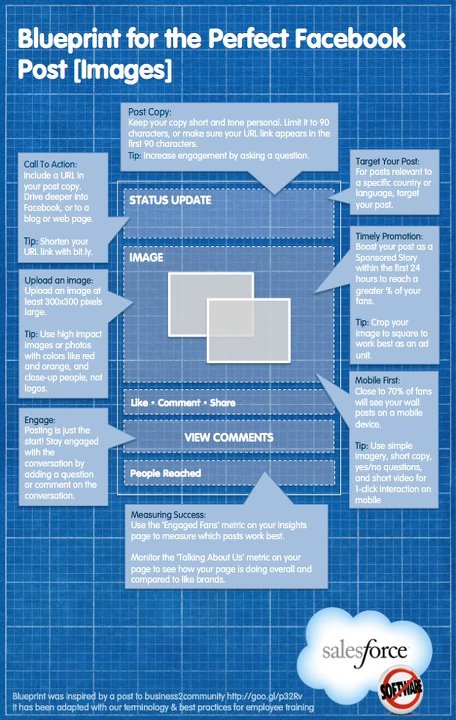
Blueprint for the Perfect Facebook Post
A few days ago, I came across an article entitled “Calling Dr. Google” by Jeff Jarvis. The writer describes his experience “googling” his symptoms and finding that the internet brought him the correct diagnosis. He uses his personal story of appendicitis to point out that physician fear of information on the internet is overblown.
One would hope that the argument that you cannot find any trustworthy information on the web is an old, tired one by now. In just the short time that I have been involved in social media and medicine, internet search results have improved significantly. In fact, nowadays, I often refer patients to specific websites for information after I’ve made a diagnosis.
But diagnostic Google is still evolving; symptom checklist websites, as I have tested them in the recent past for myself, have brought up the most benign to the scariest of things. Jarvis had…
View original post 455 more words
See on Scoop.it – Health Care Social Media Monitor
88% of caregivers with internet access are using the Web as a way to connect with other caregivers and research health information, according to the latest research by Pew Internet.
See on www.seniorhomes.com
In this video John Sharp of the Cleveland Clinic, Ohio, outlines the clinic’s healthcare social media experiences.
See on Scoop.it – Health Care Social Media Monitor
Social media is emerging from its adolescent phase and is rapidly maturing. Facebook , Twitter, Google+, YouTube and the fast emerging Pinterest have all been embraced by the top companies as they find ways to leverage their brands globally.
See on www.jeffbullas.com
See on Scoop.it – Health Care Social Media Monitor
Michigan State University researchers say a popular video game is helping patients recover from lung cancer surgery.
See on michiganradio.org
See on Scoop.it – Health Care Social Media Monitor
Mobile health applications may be the next wonder of the world, but only 10% of smartphone users download them.
See on mashable.com
Do you want your website to be referenced on the first page of google? Do you want people to be able to find your online presence easily and quickly?
Why blog? Why spend time writing blog posts? How will a blog benefit my business? To what extent will a blog help my business?
 If you have a website, you want people to be able to find it easily and ideally, you’d like it to be on the first page of google. However, unless you are prepared to pay for google advertisements, your website will not necessarily feature on the first page throughout good website optimisation alone. An effective blog is invaluable in improving your SEO to the extent of achieving the top of page one.
When I started blogging in early 2008, there were two blogs that I became aware of very quickly. Why? Because everyone (in related fields)…
View original post 779 more words

Dave Levy (@levydr)
I don’t love the word gamification, but rather than fight the jargon, it’s much more interesting to spend the time figuring out exactly what the concept means and how it relates. I won’t pretend that I’m anywhere close to an expert on game theory, but if we boil it down to a simple concept – basic, clear objectives that match incentive with accomplishment – hopefully we can at least explore the application to health mildly-academically.
The example I always think of when it comes to general tech adoption of gamification was the initial appeal of Foursquare‘s badges and, of course, mayorship honors. Even in its earliest stages at SXSW at 2009, the motivation to get into using the app came a lot from these early, completely non-tangible rewards. Obviously, Foursquare has become a force to be reckoned within the LBS space since then, and…
View original post 498 more words