See on Scoop.it – Health Care Social Media Monitor
iMedicalApps attended the Health:Refactored conference where the key messages shared by leaders from Microsoft, Allscripts, FDA are discussed
See on www.imedicalapps.com
See on Scoop.it – Health Care Social Media Monitor
iMedicalApps attended the Health:Refactored conference where the key messages shared by leaders from Microsoft, Allscripts, FDA are discussed
See on www.imedicalapps.com
See on Scoop.it – Health Care Social Media Monitor
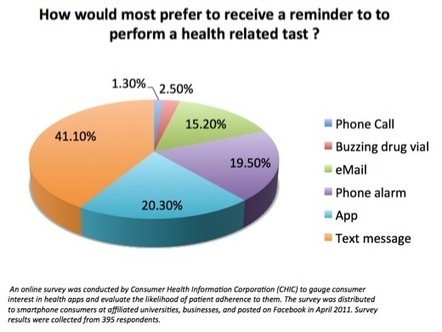
Smartphone apps have a high rate of dropouts with 26% being used only once and 74% being discontinued by the tenth use. A CHIC survey shows that the availability of a better app (34.4%) and lack of user friendliness (32.6%) are the top reasons for discontinuation of smartphone apps. However what the survey isn’t showing is that some people do not like to be reminded that they have a health condition that needs monitoring.
Some very interesting observations in this article.
See on worldofdtcmarketing.com
See on Scoop.it – Health Care Social Media Monitor
Mobile devices are enhancing patient and doctor communication in ways that improve overall health outcomes. New Study: Mobile Health Improves Engagement, Outcomes
See on transformativehealth.info
See on Scoop.it – Health Care Social Media Monitor
Through content marketing healthcare brands have a responsibility to empower patients with accurate information to guide their health & wellness decisions
See on www.wordviewediting.com
See on Scoop.it – Health Care Social Media Monitor
At a time of societal fascination both with transparency and the explosion of health information technologies, a growing number of hospitals are offering, or will soon offer patients and their family instantaneous access to their doctors’ and nurses’ notes. What will this new opportunity for patient engagement mean for the hospitalist? Today, state and federal government regulations either encourage or require healthcare providers to grant patients access to their clinical information. But despite the rules embedded in the federal Health Insurance Portability and Accountability Act (HIPAA), patients often face time-consuming obstacles in their quest for access, and many providers view compliance as a burden. We suggest an alternative view: Over time, we anticipate that inviting patients to review their medical record will reduce risk, increase knowledge, foster active engagement, and help them take more control of their care. The OpenNotes trial provides clues as to how such practice will affect both patients and providers (1, 2). We anticipate that transparent records will stimulate hospitalists, PCPs, and other caregivers to improve communication throughout the patient’s hospital stay. OpenNotes offers a special opportunity for improving the patient experience after leaving the hospital as well. Open notes will be viewed by many as a disruptive change, and the best strategy for adapting will be to move proactively to create policies that establish clear guidelines, for which the authors offer some suggestions. Journal of Hospital Medicine 2013;8:414–417. © 2013 Society of Hospital Medicine
See on onlinelibrary.wiley.com
See on Scoop.it – Health Care Social Media Monitor
I can’t say for sure that the fictional Google Glass instruction in the headline has happened but it’s a safe bet it either has – or will soon.
See on www.thedoctorweighsin.com
See on Scoop.it – Health Care Social Media Monitor
We must all work together to realize the untapped potential of social media in medicine.
See on www.kevinmd.com
See on Scoop.it – Health Care Social Media Monitor
Credibility and trust are essential in online health care communities. Find out how health care companies build online engagement and safeguard their credibility in online communities.
See on Scoop.it – Health Care Social Media Monitor
Today’s health care consumers — baby boomers in particular — are hungry for reliable health content, and more than ever they are using the web to educate themselves. The Pew Research Center reports that nearly 80 percent of internet users go online for answers to health questions.
See on Scoop.it – Health Care Social Media Monitor
When an outbreak of pneumonia sickened 83 Georgia Tech students last fall, campus officials blanketed the campus with information about how to stop the infection’s spread.
See on www.npr.org