See on Scoop.it – Health Care Social Media Monitor
Starting you own band, writing your first novel, or re-publishing your favorite ‘80s tabletop RPG are all cool goals. You can do them all on Kickstarter. What would be cooler?
See on www.forbes.com
See on Scoop.it – Health Care Social Media Monitor
Starting you own band, writing your first novel, or re-publishing your favorite ‘80s tabletop RPG are all cool goals. You can do them all on Kickstarter. What would be cooler?
See on www.forbes.com
See on Scoop.it – Health Care Social Media Monitor
In order to be an influencer, any social media strategist must recognize the need to understand how to cut through the clutter with apt usefulness, real-time information and yes, sometimes a wee bit of humility.
See on healthworkscollective.com
See on Scoop.it – Health Care Social Media Monitor
It appears that people feel competent to take on a greater role in shared decision making, self-diagnosis or assessment of symptoms, and information collecting on conditions – even before seeing the doctor.
See on healthpopuli.com
See on Scoop.it – Health Care Social Media Monitor
The introduction of social media tools such as Facebook and Twitter allow people to take communication with them into situations that previously may have been taboo, private and inaccessible to others.
See on www.ehospice.com
See on Scoop.it – Health Care Social Media Monitor
Telehealth creates unique health information management challenges for various reasons, including: aggregating large data sets (i.e. remote monitoring); using and storing numerous file formats (video, audio, text, digital images, film); establishing safeguards for sharing data with virtual providers and distant sites; determining the appropriate location for data storage (if more than one provider or entity is involved); and more. All of these challenges create issues relating to medical record management, maintenance, ownership, and storage.
In the past, it was easier to define what was and was not considered the “medical record” for a patient. Typically, the medical record was the patient’s paper file and/or a basic electronic medical record (EMR). With the addition of the internet, telehealth, and other electronic means of data transmission, the question remains: What new mediums must be included in a patient’s medical record?
See on Scoop.it – Health Care Social Media Monitor
A Twitter summary of our presentation to Baylor College of Medicine first year students on July 29, 2013. Tweets were preloaded and sent to coincide with the presentation.
Lots of interesting insights and perspectives shared in this presentation. Well worth checking out.
See on 33charts.com
See on Scoop.it – Health Care Social Media Monitor
Do not be afraid that being on social media will inundate you with useless information and eat up any and all free time.
One of the most daunting challenges facing any newcomer to social media is the volume and scope of information that is available. Once one starts following other social media accounts, the incoming “stream” of information can quickly become overwhelming. A number of social media participants have likened it to drinking from a firehose.
In many cases, these streams of information are also not uniformly useful: friends’ updates may be personally important, but can make it harder to find relevant clinical or policy information. It can also become quickly apparent that trying to keep up with every update on Twitter or Facebook is an exercise in futility and will take up the better part of your life.
See on www.kevinmd.com
See on Scoop.it – Health Care Social Media Monitor
One of the hot topics in medical sociology is the use of social media for communication in the medical community. Physicians are becoming more comfortable using blogs and social media sites, such as Facebook and Twitter, for connecting with their patients. Furthermore, patients can comment and question physicians using social media without having to step into their office. This raises several issues in the medical community, starting with patient confidentiality.
See on www.sociology.com
See on Scoop.it – Health Care Social Media Monitor
“Patient engagement” has certainly become a buzz-word in the realm of modern health IT. Medical practitioners as well as hospitals hope to encourage patient
See on robertrowleymd.com
See on Scoop.it – Health Care Social Media Monitor
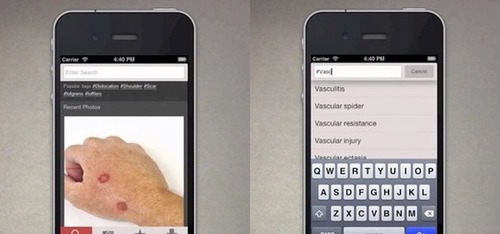
Figure1 enables health professionals to upload and share photos of conditions, creating online discussion as well as crowdsourcing a database of reference images.
See on www.springwise.com