People are forever telling me that I am wasting my time talking to providers about the need to improve their patient communication skills. Naysayers typically cite one of the following reasons for why things will never change:
Reason 1 – Every physician thinks they already have good patient communication skills.
Reason 2 – Physicians don’t get paid to talk to patients
Reason 3 – Physicians don’t have time to talk to patients
Reason 1 is relatively easy to debunk. After all, if all physicians were really such good communicators:
poor communications skills wouldn’t consistently top the list of patient complaints about physicians
patient non-adherence wouldn’t be so high since physician and patients would always agree on what is wrong and what needs to be done
patients would not be walking out of their doctor’s office not understanding what they were told
patients would not experience so many communication-related medical errors
The evolution of how people communicate online is fast becoming the biggest change in how businesses now speak to their customers and how they market themselves
Anne Marie Cunningham has an excellent post on her blog today on physician burnout and it raises an interesting question.While we encourage patients to tell their stories through blogs and other social media sites, is it appropriate for doctors and other healthcare professionals to follow suit?
Cole and Carlin (2009) write in the Lancet, that burnout is “also a euphemism for what many physicians experience as a crisis of meaning and identity”. One of the solutions is for doctors to be able to tell their stories and to be compassionately and non-judgementally listened to. Can social media have a role in this?
It’s an interesting question and while Anne Marie cites Jonny Tomlinson’s blog and his latest post on the impact that loneliness can have on patients as a positive example, she also points to the satirical The Moderate Doctor as one that raises questions about the appropriateness of doctors using social media.
The Moderate Doctor is a new website based on The Rules:
The Rules have come together to try to identify some of the difficulties we face as doctors during the consultation. They have helped me identify some of the blocks and frustrations that we may all face when consulting-whilst at the same time trying to acknowledge the patient’s agenda. The difficult bit is recognising that and still providing good, effective medical care.
This all seems quite laudable but the problem as identified by Anne Marie is that the site appears to be aimed at ” bonding with other doctors through joking about their patients”. However, Anne Marie writes that it wasn’t clear that the focus of the joke was the doctor and that made some people feel uncomfortable.
Screenshot Wishful Thinking In Medical Education
Perception Is Reality
In online social networks, the lines between public and private, personal and professional are blurred. The issue here is one of perception and while we encourage doctors to share their human side and their personality, those who do so also risk exposing themselves to accusations of arrogance and lack of empathy. While Dr Moderate’s blog may have been tongue in cheek and intended for an audience of like-minded doctors, what you publish online is widely accessible and also open to patients to read, comment and form their own opinions on.
I was struck by a comment on Anne Marie’s blog which summed up what many patients will have thought reading The Moderate Doctor blog:
I noticed on Twitter that many doctors think that writing The Rules is an acceptable way to behave, using the usual bully’s tropes “It’s only a joke” and anyone who has a problem with The Rules “lacks a sense of humour”. One day these doctors too will be sick, vulnerable and in need. Let’s hope for their sake that they don’t encounter a Dr Moderate in their time of need.
In the recently published RCGP social media guidelines it is noted that one of the risks associated with social media participation by doctors is the risk of engaging in behaviour which could be perceived as “unprofessional, inappropriate or offensive by others” . While Anne Marie writes that Dr Moderate doesn’t breach any guidelines with respect to breaking patient confidentiality, I wonder does it breach a more intangible code of professional ethics? I would love to hear your thoughts on this discussion. For me it highlights that we still have a way to go when it comes to defining professional use of social media.
The quantified self movement should be closely monitored by all interested in the future of the American health care delivery system. The potential to improve the life of patients with chronic diseases is clearly apparent; whether most people will use the increasingly sophisticated tools being developed is open to debate.
Marie Ennis-O’Connor‘s insight:
According to Wolf four technologic advances made the quantified self movement possible:
“First, electronic sensors got smaller and better. Second, people started carrying powerful computing devices, typically disguised as mobile phones. Third, social media made it seem normal to share everything. And fourth, we began to get an inkling of the rise of a global superintelligence known as the cloud.”
Simple, daily SMS text messages asking pediatric asthma patients about their symptoms and providing knowledge about their condition can lead to improved health outcomes, according to a new study.
The Michael J. Fox Foundation (MJFF) has recently begun to explore how data sourced from mobile phones and analyzed with machine learning algorithms can help improve research into Parkinson’s. The organization held the Parkinson’s Data Challenge, where teams competed for a $10,000 prize with their approaches to analyzing a dataset collected from Parkinson’s patients.
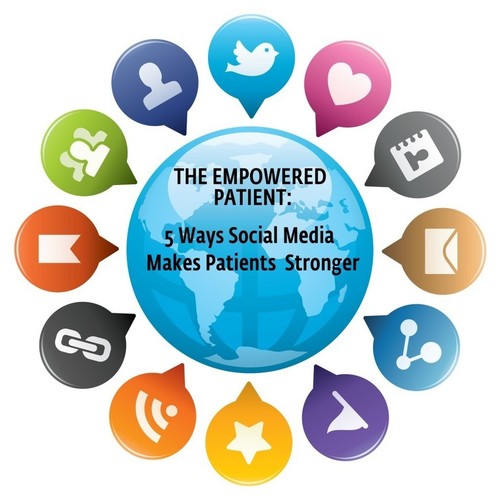
The rise of the internet and social networks means medical marketers must reach the empowered patient: a consumer who knows what they want and will find it.
Reading other peoples stories is very powerful, and people can find a sense of release, when writing their own.The slightly unseen, and so far relatively untapped benefit, is when the professionals get involved. Patient blogs are a wonderful tool of understanding how cancer and it’s treatment, affects people in their lives, and I feel that many health professionals lack even a basic understanding of social media, and there is still a feeling that it is not valid in their work.
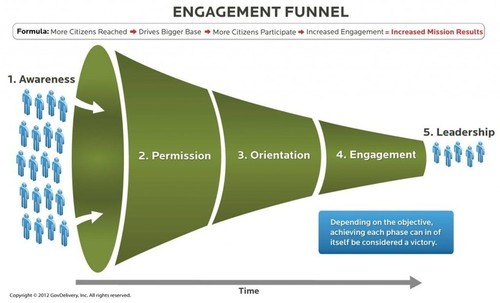
Citizens who use social media already engage digitally. They are more likely to use cheaper online channels and naturally choose digital by default. You’re preaching to the converted so the return on investment is minimal.Some people don’t do digital, and they probably never will no matter how hard they are pushed. These shouldn’t be the main focus of your efforts.Many citizens will do digital with gentle persuasion. They already make basic use of the internet, have mobile phones and many have an email address. This is your target audience.




 Health Care Social Media