Articles

Posted in #HCSM

A Theory-Based Video Messaging Mobile Phone Intervention for Smoking Cessation: Randomized Controlled Trial

See on Scoop.itHealth Care Social Media Monitor

Advances in technology allowed the development of a novel smoking cessation program delivered by video messages sent to mobile phones. This social cognitive theory-based intervention (called “STUB IT”) used observational learning via short video diary messages from role models going through the quitting process to teach behavioral change techniques.

See on www.jmir.org

Posted in #HCSM

Social media policy guidelines for physican-patient relationships

See on Scoop.itHealth Care Social Media Monitor

The boundaries between the physician – patient relationship have always been difficult as the relationship is based on trust, intimacy and the ability to share information from both sides of the desk.  This relationship has grown more complex due to the rise of social media engagement.  Physicians are being friend-ed, followed and reviewed across the digital channel like crazy, placing the doctors that care for them in difficult positions regarding the confidentiality of their patients who often don’t think about the impact of their digital-buddy request.


Similarly, due to the ease of digital communications, the commonly time-stretched doctor also faces temptation to use quick communication methods to reach their audience, in lieu of a more professional path.  No-one really wants their test results Tweeted to them! These examples of digital doctoring to be avoided are covered in the guidance.  Protecting patient privacy and confidentiality is stressed as the main area for focus when using social media.


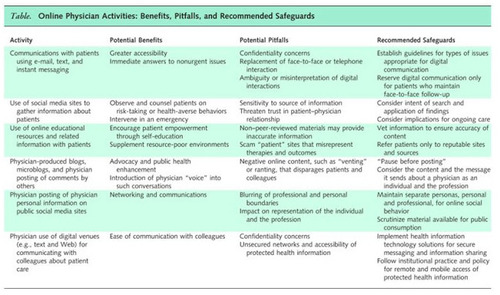
In order to help doctors better understand digital communication best practices and to fill a gap than many medical practice management efforts have neglected, about a week ago, the American College of Physicians (ACP) and Federation of State Medical Boards (FSMB) published a policy paper entitled“Online Medical Professionalism: Patient and Public Relationships.” Some of the highlights from this publication can be found in this helpful table

See on www.business2community.com
Posted in #HCSM

Analyzing Twitter Conversations from Healthcare Conferences – Symplur

See on Scoop.itHealth Care Social Media Monitor

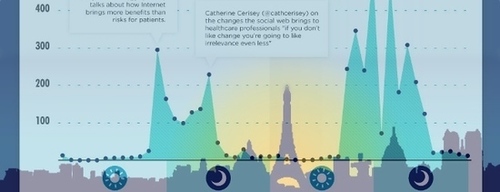
We have witnessed a tipping point in 2012 for leading healthcare conferences like Doctors 2.0 & You where for the first time, the majority of a conference’s audience is not those physically present, but those who were socially present. Healthcare social media analysis is fundamentally changing how conferences think about who their audience is and how to best communicate and share the ideas presented by these great speakers

Marie Ennis-O’Connor‘s insight:

Key Findings By Symplur from Doctors 2.0 & You Conference HashtagThere were more virtual participants (592) than participants that were physically present at the location (400). This illustrates both the power of social media, and the powerful impact the thought-leaders at the Doctors 2.0 & You conference created as their ideas went viral across the globe.The 4,999 total tweets created significant awareness of the ideas shared by the presenters at the conference with a total of 11,969,612 potential impressions in Twitter users’ tweet streams.There was great diversity in languages used by the social participants with English, French and Spanish being the top three, followed by Dutch, Italian, and German.The second day of the conference created the highest volume of social conversations with a total of 2,858 tweets.The social peak of the conference took place at noon the second day when Jen Dyer MD, MPH (@endogoddess) presented on how mobile apps and social media can be a powerful way to improve health literacy. This hour alone generated over 500 tweets.The strength of the presenters and their ideas was clearly revealed in our analysis of who the influencers were. We analyzed the top 3 influencers by number of Twitter mentions and observed a great variety of new faces each morning and afternoon, suggesting a host of dynamic and diverse interests and points of view.Patients were strongly represented at the conference being one of the main segments or social influencers.Looking at the top 50 influencers, we found that Doctors made up the largest group (12). They were followed by Consultants (8), and Patients (7).From analyzing the hashtags used during the conference, we identified some of the main topics discussed including “Healthcare Social Media”, “Mobile Health”, “Pharma”, “ePatients” and “eHealth”.


See on www.symplur.com

Posted in #HCSM

Why Medical Education Should Embrace Social Media

See on Scoop.itHealth Care Social Media Monitor

In this age of technology, healthcare social media is becoming an all new important and emerging part of medicine.  One that until recently, I didn’t even realize existed.  Training programs all across the country, at least in my neck of the woods, are censoring how their residents and fellows are using their resources.  What do you think about unlocking their social media access while at the workplace and opening this up as an avenue for education and growth?  In this new generation of healthcare social media networking, maybe “access denied” isn’t just prohibiting trainees from posting their favorite Harlem shake video on hospital time.  Maybe it is actually prohibiting the the expansion of educational opportunities in the modern age. It’s time that medical education answer the call of this tremendous opportunity.

Marie Ennis-O’Connor‘s insight:

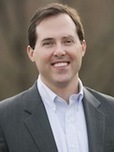
Rebecca Hastings, D.O. is a Pulmonary, Critical Care Fellow.

She is on twitter @RR_Hastings.

See on caduceusblog.com