Articles

Posted in #HCSM

dandunlop's avatarThe Healthcare Marketer

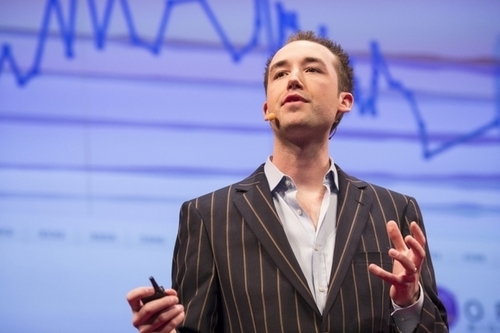
Below is the PowerPoint file from my presentation today at the New England Executive Women in Healthcare Conference in Portsmouth, New Hampshire. My topic was “Take control of Your Online Reputation – and Assert Your Brand.” It was fun putting the presentation together and I was able to leverage a lot of my own experience as someone with a very public online profile. It was also nice to have an excuse to visit Portsmouth, New Hampshire once again. I love this town. On Thursday night I strolled down Market Street, made a quick stop in Portsmouth Brewery (one of my favorites), and then had dinner at Gaslight Pizza Pub. If you’ve got to be away from home and family, you ought to at least treat yourself. That’s my philosophy. My thanks to the Massachusetts Hospital Association for inviting me to speak at the event. Enjoy!

View original post

Posted in #HCSM, E-Patient, Ehealth

The Wisdom of Patients: Health Care Meets Online Social Media

Social media on the Internet are empowering, engaging, and educating health care consumers and providers. While consumers use social media — including social networks, personal blogging, wikis, video sharing, and other formats — for emotional support, they also heavily rely on them to manage health conditions.

The Internet has evolved from the information-retrieval of “Web 1.0” to “Web 2.0,” which allows people who are not necessarily technologically savvy to generate and share content. The collective wisdom harnessed by social media can yield insights well beyond the knowledge of any single patient or physician, writes report author Jane Sarasohn-Kahn. The outcome of this development is “Health 2.0” — a new movement that challenges the notion that health care happens only between a single patient and doctor in an exam room.

Using examples, this report describes how the web is becoming a platform for convening people with shared concerns and creating health information that is more relevant to consumers. Social networks, ranging from Facebook to specific disease-oriented sites, are proliferating so rapidly that new services are already under development to help health consumers navigate through the networks.

The report details how innovative collaborations online are changing the way patients, providers, and researchers learn about therapeutic regimens and disease management. It examines the benefits and concerns regarding Health 2.0 and includes an extensive listing of health media resources. According to the report, the growing demand for transparency will drive the evolution of social media in health. A growing array of tools will become available that are increasingly mobile, as well as personal health data storage in commercial products like Microsoft Health Vault, Google Health, and others. The author concludes that the ongoing demands of a consumer-driven health marketplace will inspire innovation in applications that integrate clinical, financial, and ratings information.

See on www.chcf.org

Posted in #HCSM, Med Ed

The flipped classroom might just be the future of medicine

FOAM is ‘free open-access meducation’. On Twitter, where the #FOAM hashtag can lead one into less educational realms, we call it #FOAMed. For me FOAM is simply medical education available to anyone, anytime, anywhere at no cost. Since Dublin, this banal little acronym has become something of a worldwide mini-movement.  A community has developed around an effervescent collection of constantly evolving, interactive open access medical education resources shared on the web with one objective — to make the world a better place. FOAM is independent of platform or media — it includes blogs, podcasts, tweets, Google hangouts, online videos, text documents, photographs, Facebook groups, and a whole lot more.

See on www.kevinmd.com

Posted in #HCSM

Standard versus prosocial online support groups for distressed breast cancer survivors: a randomized controlled trial

See on Scoop.itHealth Care Social Media Monitor

The Internet can increase access to psychosocial care for breast cancer survivors through online support groups. This study will test a novel prosocial online group that emphasizes both opportunities for getting and giving help. Based on the helper therapy principle, it is hypothesized that the addition of structured helping opportunities and coaching on how to help others online will increase the psychological benefits of a standard online group.

See on www.ncbi.nlm.nih.gov