Articles

Posted in AI, Cool Tool

Monday Morning Cool Tool: Visla

This week’s tool-cool recommendation is Visla—an AI-powered video creation and editing tool.

Visla helps users create professional videos with features such as screen recording, narration assistance, and text overlays. With Visla’s AI capabilities, narratives can be made from a script, a blog post, or simply a few bullet points.

Key Features

  • Collaboration Tools: Streamline feedback and approval processes.
  • Customization Options: Tailor your videos to your brand and message.
  • Easy-to-Use Interface: Create professional videos even if you’re a beginner.

Visla offers a free subscription plan with 50 minutes of video creation per month.

Visit https://www.visla.us for more information.

Posted in AI, Cool Tool

Monday Morning Cool Tool: Bigjpg

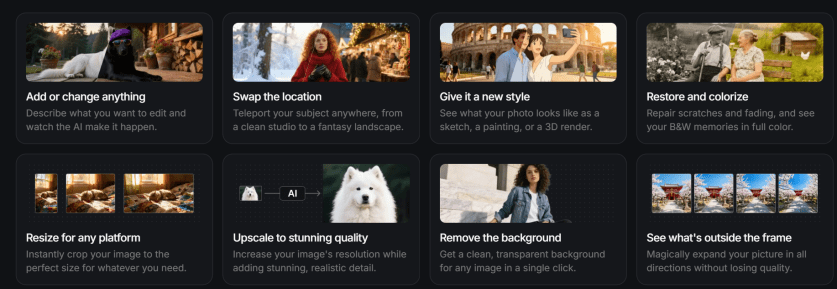
This week’s tool cool recommendation is Bigjpg – a tool that uses AI to upscale images.

Powered by AI, Bigjpg uses advanced neural networks to enlarge images while preserving clarity, detail, and colour accuracy. Unlike basic bicubic interpolation, which often produces blurred edges and pixelation, Bigjpg’s algorithms are explicitly trained to enhance lines and maintain colour fidelity. The result is remarkably crisp images, especially for artwork and illustrations where precision matters.

Why It Stands Out

  • Enhanced Detail Preservation: Reconstructs fine details and prevents the “fuzzy” look typical of conventional upscaling.
  • Superior Colour Accuracy: Retains the vibrancy and tonal balance of the original image.
  • Noise Reduction: Smooths out visual noise, delivering cleaner, more polished results.

Pricing
Bigjpg offers both free and paid plans. The premium tiers allow for larger image sizes, faster processing, and access to advanced enhancement options.

Posted in Cool Tool

Monday Morning Cool Tool: YouTubeToWav

This week’s cool tool recommendation is YouTubeToWav, a free, browser-based converter that lets you paste a YouTube link and download the audio in WAV format (or other formats like MP3, FLAC, OGG, and M4A).

What are WAV files?

If you’ve ever worked with audio, you’ve probably come across WAV files. They’re one of the oldest digital audio formats around. WAV remains a gold standard when you need sound that’s crystal-clear and uncompressed.

WAV (short for Waveform Audio File Format) was created by Microsoft and IBM back in the 1990s. Unlike MP3 or AAC, which shrink audio down by compressing it, WAV keeps every detail intact, making it ideal for recording, mixing, or mastering. This makes it perfect for preserving original sound files without worrying about future degradation.

Common Uses

  • Podcasters grabbing background clips (with permission).
  • Educators saving lecture snippets for offline use.
  • Anyone wanting a higher-quality copy of audio to work with.

Why Use

  • Quick and simple: No registration, no software download.
  • High quality: Offers up to 1536 kbps for clarity.
  • Flexible: Works on desktop or mobile with all major browsers.

⚠️ Copyright Compliance: Downloading audio from YouTube may infringe on copyrights—ensure you have the right to do so.


Bottom line: WAV isn’t the format you’ll use for everyday playlists (unless you have unlimited storage), but when quality matters, it’s the format you want in your toolbox. And if you need an easy way to get started, YouTubeToWav is a lightweight, no-fuss option.

Posted in Cool Tool

Monday Morning Cool Tool: ReadyScriptPro

This week’s cool tool recommendation is ReadyScriptPro — an AI-powered script generator designed to help content creators develop polished scripts for short films, TikToks, YouTube videos, and more.

If you’ve ever struggled with writer’s block, inconsistent dialogue, or finding the right pacing for a short-form video, ReadyScriptPro is like having a creative partner on demand.

The platform streamlines the creative process by:

  • Generating complete scripts from simple prompts.
  • Offering a “script doctor” feature to improve pacing, tone, or clarity.
  • Suggesting scene directions and dialogue flow.
  • Helping creators produce professional-sounding content faster.

The tool works in a browser, with a clean dashboard that makes drafting, editing, and exporting scripts straightforward.

Tool Snapshot

FeatureWhat It Does
Script GeneratorCreates full scripts from simple text prompts
Script DoctorImproves pacing, tone, and dialogue
Creative suggestionsOffers alternative lines, plot turns, or dialogue choices
Freemium modelFree to start, with advanced features possibly in premium plans

Pricing

ReadyScriptPro follows a freemium model. You can get started for free with basic script generation, making it easy to experiment without upfront cost. A paid tier with premium features (such as longer scripts, advanced editing, and expanded creative suggestions) is expected, though official pricing details have not yet been fully published.

Posted in Cool Tool

Monday Morning Cool Tool: Glasp AI YouTube Summarizer

This week’s cool tool recommendation is Glasp AI YouTube Summarizer a free Chrome extension to generate summaries and give you the full transcript of any YouTube video.

Key Features

  • Pulls up transcripts of YouTube videos in multiple languages and summarizes them.
  • Summary can be generated via ChatGPT, Claude, Mistral AI, Gemini.
  • You can set how long or detailed the summary should be.
  • Summaries can include timestamps so you can navigate to specific parts of video.
  • You can highlight parts of the transcript, add notes, and export highlights/notes to tools like Obsidian, Notion, etc., in formats like Markdown, HTML, CSV, JSON.
  • Get the transcript of the video in multiple languages. Watch the video with the transcript on the side and get the content quickly or simply copy the transcript.

How it works:

  1. Install the extension.
  2. Open a YouTube video.
  3. Click the Glasp “Transcript & Summary” bar on the top right.
  4. Copy the transcript with one click.
  5. Paste it into your doc.

Limitations / Considerations

  • You’ll need an internet-connected browser that supports the extension.
  • Accuracy depends on the quality of the video’s transcript and AI summarization.
  • Complex or nuance-heavy videos may lose depth if the summary is too short.

Posted in Cool Tool

Monday Morning Cool Tool: Adobe Podcast

This week’s cool tool recommendation is Adobe Podcast — a browser-based audio recording, editing, and enhancement tool.

What It Does

Adobe Podcast packs in several features designed to simplify audio workflows:

  • Record & Edit in Browser – No need for complex local DAWs. You can record directly in the browser, edit your audio, manage speaker tracks, and even convert to video if needed.
  • Enhance Speech & Clean-up – Tools for removing background noise, reducing echo, improving clarity. If you don’t have a perfect setup (mic, acoustics, etc.), this helps a lot.
  • Mic Check – A diagnostic tool to test your mic and environment, giving feedback so you can optimise your setup before recording.
  • Transcription & Captions – Automatically generate transcripts or captions from your audio/video. Great for accessibility or social media snippets.
  • Royalty-Free Music & Sound Effects – Built-in library so you can add intros, backgrounds, and effects without hunting down licensing issues.

Best Use Cases

  • Recording remote interviews, podcasts, or voiceovers without a full studio setup.
  • Repurposing audio into social media content (videos, captions, audiograms) quickly.
  • Educators or health professionals who want to share audio content but need accessible tools.
  • Anyone looking for high-quality voice recordings without incurring significant expenses on hardware or software.

Pricing

The free plan includes:

  • Enhance Speech (audio only) — remove background noise & echo
  • Mic Check — evaluate your mic & setup using AI to detect issues.
  • Studio (browser-record/edit/enhance) with some limits: you can download projects up to 30 minutes, but with limits on how many per day. Files over a certain size/duration / original recordings may not be downloadable.

The free plan is sufficient for small projects, short podcast episodes, or testing out new ideas. Upgrading to the paid plan unlocks additional features.


Note: If you’re interested in exploring similar tools, consider comparing Descript, Audacity (a free, desktop-based option), or Riverside.fm (for remote interviews/video and audio).

Posted in Cool Tool

Monday Morning Cool Tool: SkyReels

This week’s cool tool recommendation is SkyReels AI Studio, an AI-powered video creation platform.

SkyReels AI Studio enables anyone to create dynamic videos through intuitive, end-to-end workflows from scriptwriting and storyboarding to AI voice-overs, lip-syncing, music, and video editing.

Key Features

Video Tools

  • Import Storyboards & Clips — Import your own storyboards or short clips to jumpstart the creative process and save production time.
  • AI Video Generator — With one click, convert text to video or image to video. Instantly turn ideas into personalised, high-quality videos.
  • AI Image and Video Generator — Generate dynamic sequences from simple text prompts, powered by advanced AI synthesis.
  • Video Editing Tools — Fine-tune every frame, transition, and effect to ensure your video aligns with your creative vision.
  • Video Cutter — Trim, split, crop, resize, compress, or rotate videos effortlessly. Create polished, professional clips in SkyReels’ all-in-one video editor.

Image Tools

  • Image Generator — Create customised AI images from text or reference images with diverse models and art styles. The generator maintains character consistency for a cohesive look across your project.

Audio Tools

  • Text to Speech — Convert text to lifelike speech in seconds with a library of emotive, natural-sounding voices.
  • Lip Sync — Upload a video or image and generate accurate lip-synced results automatically, bringing stills and clips to life with custom voices.
  • AI Sound Effects — Instantly create professional sound effects tailored to your project—no more trawling through stock libraries or worrying about licensing.
  • Music Generator — Produce the perfect soundtrack or song to match your video’s mood. Generate music on demand for shorts, ads, presentations, or creative projects.

Why this tool is a valuable addition to your content creation toolkit

SkyReels stands out by streamlining the video creation process into a few simple steps—all within a single platform. The magic lies in its AI-driven capabilities:

  • End-to-end automation: No hopping between script, visuals, and audio tools.
  • Creative consistency: Maintains character look, motion, and audio styling across scenes.
  • Time-saving: Accelerates content production, particularly for short-form formats like Reels and Shorts.

Pricing

SkyReels is free to try. You get 300 credits upfront plus 50 daily credits to experiment.

If you need more, paid plans start at $7.90/month (Basic), with Standard ($28) and Pro ($76) tiers offering higher credit limits, faster queues, and extra features.

It’s flexible enough that you can dip your toe in without commitment, then scale up if you find it fits your workflow.

Posted in #HCSM

How to Create a Custom GPT in Under One Hour

Step-by-step instructions to build your own AI assistant for healthcare writing, communication, and education.

If you’ve ever tried ChatGPT and felt frustrated by inconsistent results—or found yourself rewriting prompts over and over—you’re not alone. For healthcare professionals, researchers, and advocates, reliability matters: you need outputs that are accurate, professional, and aligned with ethical standards.

That’s where Custom GPTs come in. These are personalised versions of ChatGPT that you can design for very specific, repeatable healthcare tasks—such as drafting plain-language patient leaflets, summarising journal articles, preparing LinkedIn updates for your department, or turning a webinar transcript into teaching slides.

The benefit? Once you set one up, you no longer waste time tinkering with prompts. Your GPT already knows your requirements—style, structure, disclaimers, and audience—and produces consistent, trustworthy results every time. Best of all, you can build one in under an hour.

Here’s how.

Step 1 — Choose one narrow task (5 minutes)

Custom GPTs are most effective when they do one job well. Instead of trying to make a “digital assistant for everything,” pick a single use case you repeat often.

Healthcare examples:

  • Summarise clinical guidelines into a 1-page plain-language handout for patients.
  • Convert academic abstracts into accessible summaries for social media.
  • Draft CPD or teaching materials from journal articles.
  • Turn a conference session transcript into a structured LinkedIn post.

Step 2 — Gather your “source of truth” (5–10 minutes)

Collect the resources your GPT should follow, such as:

  • Your organisation’s style guide.
  • Examples of plain-language explanations you like.
  • Compliance or privacy guidelines (e.g., including “this information is not medical advice” disclaimers).
  • Evergreen references (like terminology guides or advocacy frameworks).

Step 3 — Create the shell (2 minutes)

In ChatGPT, go to Explore GPTs → Create. Use the Create tab to describe your assistant in plain language (the one-sentence task from Step 1). Then switch to the Configure tab to fine-tune the details.

Step 4 — Write clear instructions (10–15 minutes)

This step makes or breaks your Custom GPT. Spell out exactly what you want it to do, who it’s for, and how the outputs should look.

Include:

  • Role: Define what the GPT is (“You are a health communication assistant who creates plain-language resources from research papers”).
  • Goals: The outcomes you expect (“Summarise in one paragraph, extract three key points, add a disclaimer”).
  • Inputs: What the GPT will usually receive (transcripts, journal articles, policy notes).
  • Process: The steps to follow (extract → summarise → format).
  • Voice & Tone: Audience (patients, clinicians, policymakers) and reading level (plain English, no jargon).
  • Output Format: Be precise (“1-paragraph summary + 3 bullet points + disclaimer”).
  • Boundaries: Clarify what not to do (e.g., “Do not give medical advice or fabricate references”).

Continue reading this article on Substack for free

Posted in #HCSM

Hashtags at 18: What They’ve Meant for Healthcare and Advocacy

Today is International Hashtag Day, and it also marks the hashtag’s 18th birthday. What began as a niche idea on Twitter in 2007 is now part of how healthcare professionals, patient advocates, and communities connect, learn, and campaign for change.

The Birth of the Hashtag

On 23 August 2007, Chris Messina suggested using the # symbol to group conversations on Twitter. Initially dismissed as “too nerdy,” the idea caught on when people began using hashtags to share updates during the San Diego wildfires later that year. By 2009, Twitter had made hashtags clickable, and soon they spread to Instagram, Facebook, LinkedIn, and TikTok.

Since then, hashtags have become cultural shorthand. They’ve carried lighthearted trends (#ThrowbackThursday), breaking news, and, importantly, social movements (#MeToo, #BlackLivesMatter).

Hashtags in Healthcare

In healthcare, hashtags have served as digital gathering places. Movements like #ILookLikeASurgeon challenged stereotypes and celebrated diversity in surgery. #MedTwitter, #CardioTwitter, and #IDTwitter have connected clinicians and patients across the world, enabling rapid sharing of evidence, insights, and professional solidarity.

Hashtags also underpin #FOAMed (Free Open Access Medical Education), where health professionals use tags to curate and share open educational resources. During the COVID-19 pandemic, hashtags provided real-time access to emerging research and peer commentary.

The Risks

As with any tool, hashtags are not without risks. They can be used performatively, with little action behind them. They can create echo chambers, exclude certain voices, or be hijacked for misinformation. Yet when used with intention, they remain a powerful part of digital health communication.

Hashtags at 18: Coming of Age in Healthcare

Eighteen often marks adulthood — a moment when identity and responsibility converge. Hashtags, too, have reached that stage. Algorithms may increasingly shape what people see, but hashtags still serve as anchors for visibility, belonging, and collective voice.

For healthcare professionals and advocates, they remain one of the simplest yet most effective tools for connecting communities, amplifying trusted information, and driving meaningful change.

So here’s a question to mark the hashtag’s 18th birthday: What hashtag has shaped you the most — whether it made you laugh, taught you something new, or gave you a sense of belonging?

Posted in Cool Tool

Monday Morning Cool Tool: Text Optimizer

This week’s cool tool recommendation is Text Optimizer – a tool to help you optimize your content to rank better on SERPs (Search Engine Results Pages)

Text Optimizer extracts terms and concepts from search engine results pages (SERPs) and analyzes their semantics to generate a list of questions for inclusion in your articles.

Choose the search engine you wish to optimize for, input the desired search terms, select a target location, and either paste your text or provide a link to your existing content.

And here are just some of my results – the tool returns many more suggestions.

You can use the tool to compare your existing text to the snippets Google returns for that query if you already have a page you want to rank. After scoring your text, it will suggest adding some of those suggested terms to your content.

Why this tool is a valuable addition to your online content strategy

Google generates its search snippets based on which sentences from ranked pages best answer the query. In other words, the search snippets are Google’s best (in its opinion) summary of the topic of the query. The semantic analysis of these snippets and the extraction of related terms and topics will give you a better understanding of what you need to include in your content.