Articles

Posted in #HCSM

The Power of Social Media in Medicine and Medical Education: Opportunities, Risks, and Rewards

Earlier this year I contributed to a paper which explored the use of social media in medicine and medical edution.

Both personal and professional use of social media by medical professionals is increasing. Some medical specialties have quickly adopted and embraced social media, particularly in the fields of family medicine, pediatrics, and emergency medicine.  Emergency and critical care medicine have embraced social media under the free open-access medical education (#FOAMEd) movement that seeks to share knowledge as widely as possible and for free. (Fun fact! The term FOAM was coined in June 2012 in a pub in Dublin, over a pint of Guinness).

Extracted highlights from the paper

Shannon Haymond, Professor of Pathology, sees social media as “a way to stay up to
date on rapidly changing fields and to connect with a diverse set of people who share your interests. This is particularly true for finding those interested in your area
of expertise but from a completely different perspective.”

I continually use social media to find and save ideas for improving the content and delivery of my lectures and educational sessions – Shannon Haymond

In response to the question of barriers to the adoption of social media among medical professionals, Haymond points to lack of time to tackle a steep learning  curve and notes “people are not sure of the value or level of professionalism (i.e., they assume it is all about pop culture and celebrity feuds) and  may be apprehensive to put their opinions out into the public conversation.”

Emergency medicine consultant, Professor Simon Carley considers that emergency medicine has adopted social media at a much faster pace than most specialties “owing to the ability of social media to engage individuals across the breadth of our specialty, despite the chronological and geographical challenges that typify our practice.”

I am more up to date than my peers who do not engage. I am a better physician as a result, and I truly believe that my patients receive better care because of this. Professionally I find it intellectually satisfying, as I am forced to constantly learn and reflect on my current practice. It has created opportunities to join research and educational groups across the globe with interactions through #FOAMed, leading to journal publications and numerous invitations to speak at national and international conferences. My personal learning network of experts is no longer limited to those in my department or hospital, and I regularly learn from those in other countries and health economies – Simon Carley

Although Carley thinks there still exists “a big gap between awareness and involvement”, clinical educator, Jonathan Sherbino, MD says “the novelty of social media as an emerging phenomenon is being replaced with lines of inquiry that take advantage of the principles of social media: open access, interconnectivity, asynchronous dialog, and crowdsourcing.”

We are now at a tipping point from the early adopters to the early majority, largely a function of a generational shift with early career educators promoting and modeling the professional use of social media – Jonathan Sherbino

Sherbino, an avid user of Twitter,  believes social media “allows an individual to participate in a richer community.”  He uses Twitter “as an aggregator to condense numerous online conversations relevant to health professions education into a single stream. He also says  he pays ” more attention to superusers (individuals or organizations with a personally vetted record of high-quality information) than any member within my network.”

Michael Berkwits, editor at The JAMA and JAMA Network also points to social media’s curatorial capabilities.

“Social media allows publishers to distribute information to readers in the workflow and spaces they are already using. With innumerable options, most people direct-access only a handful of website homepages and instead use social media platforms as a way to curate “tables of contents” of people, interests, and sources they want to keep up with – Michael Berkwits

Carley uses personal learning networks, curation sites, and apps to help him track and collate useful content.

I have developed a personal learning network of individuals who collate and curate special interest areas. You cannot follow everyone, so find and follow the high return, high-quality individuals or sites that filter content for you. I also follow sites that act as clearing houses for social media content, which create a weekly digest and e-mail it to your inbox – Simon Carley

Social media is an important mechanism for communicating about science with the public. As Haymond points out, “Despite the tremendous benefits, including free access and wide distribution of information, the quality of online scientific information
is variable.”

Stephen Smith, Professor of Emergency Medicine, is firm that medical professionals should be more discriminating about what they choose to post online.

Because there is so much information, we should try to limit what we post to only those things that are both important and accurate, to the best of our knowledge. We should not be posting things for our own ego, to be able to say how many followers one has, or how many posts one has put up – Stephen Smith

When it comes to risks, Sherbino points to trolling, Smith to patient identification, and Haymond to the risk of posting misleading or inaccurate information. Carley considers that the “risks are overstated.”

The only difference is that social media shares your views with a wider audience. If you act inappropriately and unprofessional in real life, then more people will know it. Similarly, if you are a diligent clinician, researcher, and academic, then more people will find out – Simon Carley

The future of social media in medicine

Social media is changing the ways that patients interact with healthcare providers and the healthcare system. It is increasingly common for patients to use information technology to gain access to information and control their own healthcare.  Increased access to the Internet and mobile communication will bring public health information to many more people, more quickly and directly than at any time in history. Social media will widen access to those who may not easily access health information via traditional methods, such as younger people, ethnic minorities, and lower socioeconomic groups.

Social media is also changing the face of medical education. Sherbino goes so far as to state, “No longer are the giants of the field identified by their textbooks, citation rates, or leadership roles; rather, my residents and fellows are influenced by the scope of an educator’s social media brand.”

Carley quotes Rob Rogers, “we will change from those who give out knowledge to those who coordinate it. Social media will develop us all into “learning choreographers.”


The Power of Social Media in Medicine and Medical Education: Opportunities, Risks, and Rewards, Published May 22, 2018 as doi:10.1373/clinchem.2018.288225

Posted in #HCSM

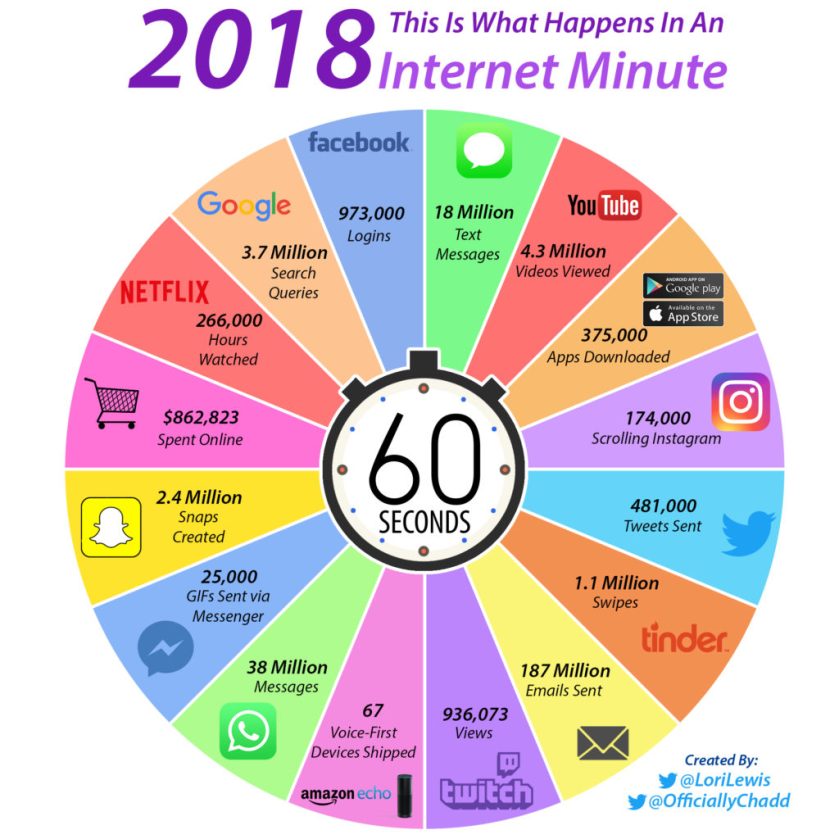
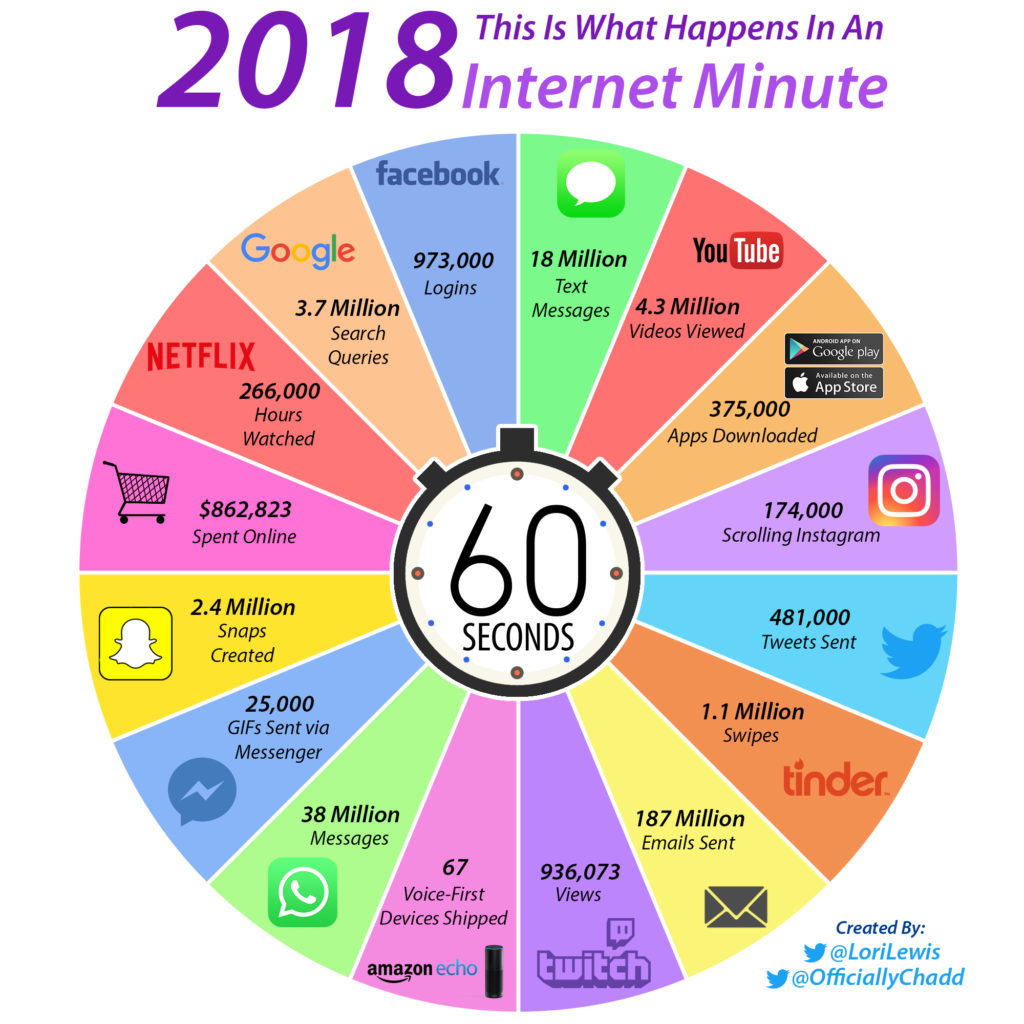
Data Never Sleeps: Here’s What Happens In An Internet Minute (Infographic)

I never cease to be blown away by the sheer scale and acceleration of the Internet. The world is more connected than ever before.

Picture2

But just how much data is generated every minute? This fascinating infographic shows exactly how much data is created every single minute. From tweets to swipes, likes to shares, the digital world is exploding.

Stats At A Glance

  • 42,033,600,000 Facebook logins
  • 159,840,000,000 Google searches
  • 1,641,600,000,000 WhatsApp messages sent
  • 8,078,400,000,000 emails sent
Courtesy of: Visual Capitalist


Posted in Cool Tool

Monday Morning Cool Tool: Portent’s Content Idea Tool

1_eNc_si2txKAEyzq83wicLQ.png

This week’s cool tool recommendation is Portent’s Content Idea Generator tool.

This tool allows you to generate headline ideas with just one keyword. Be prepared that the tool can throw up some quirky suggestions, but don’t let that put you off. Keep playing around with it until you find one you can work with. I also really like how it shows you best practice tips, such as using metaphors in your writing.

For more tools like this read  7 Tools To Find Inspiration For Your Headlines

Posted in #HCSM

Six Tips To Get The Most From Google Search

The Internet is changing the nature and speed of healthcare interaction between individuals and health organizations. Nowadays one in every 20 Google searches is related to health. A basic Google search will usually help you find what you are looking for; but for those times when it falls short, you will need to turn to some advanced search techniques. Here are six tips to help you zone in on the exact information you need next time you turn to Google.

Tip #1 Use The Exact Phrase

Using “quotation” marks around a phrase or name allows you to search for those exact words in that exact order, thereby excluding more common but less relevant results. This is especially useful if you’re trying to find results containing a specific phrase.

Tip #2 Exclude A Particular Term

Try expanding your search parameters by excluding certain words using the minus (-) symbol. This is useful when your search generates a lot of results that aren’t relevant to you. Re-run the search excluding the words that you don’t want to be included.

Tip #3 Search Using “OR”

By using the OR term you can search for web pages that might use one of several words.

E.g. competition OR match

Tip #4 Use An Asterix

The asterisk symbol works as a wildcard within searches. It can be used in place of a missing word or part of a word when you are not sure what the entire phrase is.

Tip #5 Search Between Two Values

By using (..) in between a set of values you can search for results that include numbers within a range.

Tip #6 Search Related Sites

Find sites that are similar to a web address you already know.

Using these Google tricks will lead you to more focused searches in the future.

You might also like to read Dr. Google Turns 20: How Has It Changed Healthcare?

Posted in Cool Tool

Monday Morning Cool Tool: Quuu

toolcool

I love learning about new tools to make social media marketing more creative and effective, so I’ve decided to share some of my favourite tools with you at the start of each week. This week’s cool tool recommendation is Quuu, a hand-curated content suggestion platform that connects to your Buffer queue.

How It Works 

Select from over 300 interest categories to receive suggestions that matter to you and your audience. With the free account, you can choose up to 5 interest categories, get suggestions automatically sent to your connected accounts two times a day (six for a paid account).  Relevant suggestions will be queued to your Buffer where you can choose to manually curate posts yourself or Quuu will post for you.

Check it out at http://www.quuu.co

Posted in Cool Tool

Monday Morning Cool Tool: HubSpot’s Blog Topic Generator 

1_QskWUH45Ro0SZJUKJO8YtA

This week’s cool tool recommendation is HubSpot’s Blog Topic Generator tool.

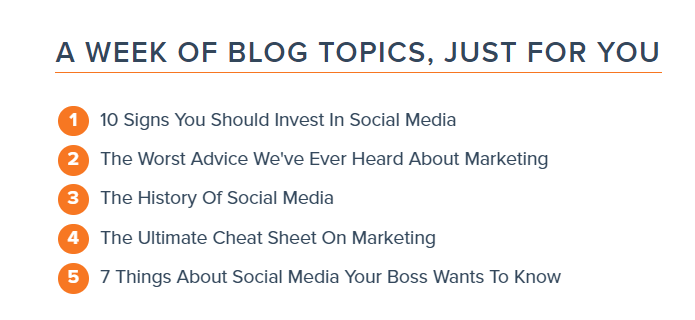
HubSpot’s Blog Topic Generator tool lets you input up to three different nouns and returns five blog topic ideas.

Here are the suggestions generated for me when I input the terms “social media” and “marketing” into the tool.

1_E-S7L4CmtyaE0zF1fTRqzA.png

For more tools like this read  7 Tools To Find Inspiration For Your Headlines

Posted in #HCSM

As Google Turns 20, What’s Next For Health Information Searching Online?

Twenty years ago, two Stanford Ph.D. students launched a new search engine with a bold mission to organize the world’s information and make it universally accessible and useful. Now two decades later, at the first sign of a symptom, patients instinctively turn first to “Dr. Google” to find answers to their health questions.

One in every 20 Google searches is related to health. 

The Internet age has dramatically changed how people seek out and find medical information. In a recent article, Susannah Fox, former CTO for the U.S. Department of Health and Human Services, points out that 87 percent of 14- to 22-year-olds report that they research health questions online.

According to the most recent Pew Research Center’s Internet and American Life Project, thirty-five percent of U.S. adults say that at one time or another they have gone online specifically to try to figure out what medical condition they or someone else might have. 63 percent of online health seekers were looking for information about specific diseases or medical problems. 47 percent were looking for information about a specific treatment or medical procedure. Additionally, 44 percent searched diet information, and 36 percent were looking for information about exercise and fitness.

0 (1)
Pew Research Center’s Internet and American Life Project

Why A Mobile-First Strategy Is A Must

Most people aren’t looking searching for information on a desktop or laptop anymore. They are looking at it on a phone or tablet. Recent studies show 52% of smartphone users gather health-related information on their phones. This means that your website needs to be easy to read no matter where your patient may access it.

1_dij6jczrm4tnd3sjey5haq.jpeg

Just over a year ago, Google announced a major change to the way its search index will rank sites: it will go mobile-first. As the company explained at the time, Google’s algorithms will eventually primarily use the mobile version of a website’s content to rank its pages.

Having a mobile-responsive site (ie one that automatically changes its layout and placements of certain menus and buttons automatically) is important because firstly, not only are over half of patients searching online for health information on their smartphone, but secondly, Google now gives ranking priority to those sites that are mobile friendly.  In fact, Google has stated that it will penalize websites that aren’t mobile-responsive, so if your site isn’t optimized for mobile devices, you’ll likely lose out significantly in the organic search rankings.  To check if your site’s design is responsive, enter its URL into this Google tool.

Optimize Your Content For Google Search

If you want more people to find you online, you need to optimize your website through good search engine optimization practices. SEO (the ability to optimize your site for search engines),  is a detailed and sometimes confusing process, and you may want to hire an SEO expert to do it for you. If you don’t want to hire someone, there are search engine optimization tools available to help you do your own SEO — and many of them are free. I’ve put together this list of the best free SEO tools out there to help you instantly improve your online marketing.

Optimize Your Content For Voice Search

The majority of patients searching for information on the web still trust search engines but the way people search for information online is changing. Increasingly, people are using voice search on their smartphones, tablets or voice assistants (like the Amazon Echo or Google Home devices) to search for information on the internet (yet another compelling reason to make sure that your site is optimized for mobile).

According to comScore’s forecasting, 50 percent of searches will be performed through voice functions in 2020 and the majority will be done without even looking at a screen.

In essence, voice searches are largely about answering questions, not about focusing on individual keywords. SEO is fast becoming AEO (Answer Engine Optimisation).

question-phrases-are-more-searched-1024x449 (1).jpg


To quote NewsCred, “If you’re a marketer, “What’s the Alexa strategy?” will be a question you’ll be expected to answer.”

Here are some tips to consider while generating content for voice activation devices:

  • Write in a conversational tone
  • Use long-tail keywords
  • Account for misspelled/misinterpreted words (sometimes Siri or Alexa can misinterpret what you’re saying).

Optimise Your Website For Local Search

If you want more people to find you online, you need to optimize your website through good search engine optimization practices. And if you want to attract new patients, your website also needs to be optimized for your local area. When someone uses the internet to locate a Medical Practice nearby, it’s critical that your website appears in those results (searches on mobile devices containing the phrase “near me” has skyrocketed in recent years).

internet-trends-report-2018-192-1024-1.jpg

Recommended Reading:  Why and How You Should Optimise Your Medical Website For Local Search

In a relatively short space of time, Google has fulfilled its mission to make information universally accessible and useful. We know of course, that not all of the information on the Internet is useful, and some of it is downright dangerous. All the more reason, therefore, to make sure that the information you provide to patients is accurate, useful and easily accessible. Why not set your own ambitious goal to be at the top of Google’s Search Page when patients google health information. Following the tips in this post will help you achieve this goal over the coming months and years.

Posted in Cool Tool

Monday Morning Cool Tool: Inbound’s Title Generator

1_3xoo14DQWoKbIm9m-vy2jw

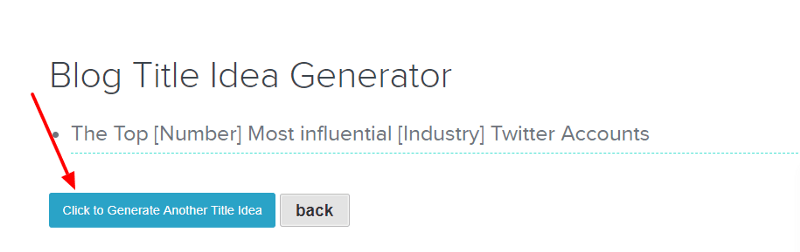
This week’s cool tool recommendation is Inbound Now’s Blog Title Idea Generator tool. 

Sometimes all you need to get those creative juices flowing again is a title and this is where Inbound Now’s Blog Title Idea Generator comes in. You don’t even need to input a keyword — keep clicking on the generate title button until you find the inspiration you need.

For more tools like this read  7 Tools To Find Inspiration For Your Headlines