Posted in #HCSM

Public Disclosure on Twitter of Identifiable Patient Information by Health Professionals

Social media tools provide a unique set of opportunities in healthcare, but with these new opportunities come a number of potential challenges.

As health care professionals (HCPs) navigate the increasingly complex world of social media, concerns have arisen regarding questions of ethics and professionalism and how the use of social media fits within the social contract between the medical profession and society.

In order to maintain the trust of the public and that of individual patients, HCPs increasingly need to understand the limits and risks of disclosure of certain types of information online. 

A study published in 2020 which sought to quantify potentially identifiable content shared on Twitter by physicians and other health care providers found nurses, physicians, and other health professionals may sometimes share more information than patients or families might expect.

The retrospective study describes a physician-initiated event sharing health-related stories and information on Twitter using the hashtag #ShareAStoryInOneTweet. The tweeted stories became widely shared, attracting media attention and disseminating the information widely. Almost none (either explicitly or appear to) confirm consent to share information publicly. HCPs commenting using the hashtag were “more likely to express support for the event and encourage others to participate than they were to raise concerns about patient privacy breaches.”

The study showed a relatively high incidence of sharing stories including details that might make them potentially identifiable to patients themselves or to families and friends in a setting that involved a large number of health care professionals. This finding highlights a lack of awareness about the privacy issues intrinsically connected to interactions on social media. 

The study authors conclude with recommendations for more research to confirm the findings of this study and determine how to ensure physicians, nurses, and other professionals adapt their behavior to maintain medical professionalism in the digital age. This will required greater specification of professional ethical standards in this context along with evidence-based training in ethical digital communications skills for the undergraduate, graduate, and continuing medical education.

Ahmed W, Jagsi R, Gutheil TG, Katz MS
Public Disclosure on Social Media of Identifiable Patient Information by Health Professionals: Content Analysis of Twitter Data
J Med Internet Res 2020;22(9):e19746

Related Reading: Social Media: Professional Boon or Bane? It’s Complicated

Posted in #HCSM, Thursday Tip

#ThursdayTip: How To Create Facebook Collections With Saved Content

Welcome to this week’s social media tip. Today I want you to show you how to use Facebook Collections to curate and organize saved content for easy access and sharing.

Ever come across a piece of content on Facebook but don’t have time to read it in the moment? Did you know you can save that content to view later?  Facebook lets you save content (posts, events, pages, and photos) directly from your news feed and then easily access your saved items from the left navigation menu on the home page.

c52f1658-cac0-40eb-ac33-ef155d619dbd

Here’s how to do it.

To save content to your saved item list, simply click the three dots at the top right of any Facebook post in your news feed, and then simply select the option to save the content.

download - 2019-12-05T082106.892 When you start building a group of saved posts, you can start to organize it into collections, categorizing it by topic.

To create a collection, simply click on Create Collection in the left sidebar.  You’ll then be prompted to name your collection.

e15bd512-52b9-4c51-be29-91d1799482c1

If you want to add a saved post to a collection, simply click the Add to Collection button below the item in your saved list – or create a new collection.

download - 2019-12-05T082916.255

You can also share a saved item directly from your list by clicking the Share button.

download - 2019-12-05T083146.196

I find the ability to save content on Facebook and categorize it according to collections a very useful feature.  I like to share a #MondayMotivation quote each week and many times scrolling through Facebook I’ll find the perfect quote to save. Come Monday all I have to do is access my folder containing quotes to share one quickly and easily with my followers.

Here’s to your social media success!

Posted in #HCSM

A Literature Review of Social Media Use by Health Care Providers

A recently published literature review aims to shed light on social media use worldwide and to discuss how it has been used as an essential tool in the health care industry from the perspective of healthcare professionals.

A literature review conducted between March and April 2020 is the latest most up to date reviews of the uses of social media in healthcare, including the use of social media during the COVID-19 pandemic.

Based on 158 studies, conducted in the United States (61), Canada (12), Brazil (2), the United Kingdom (12), Europe (22), the Middle East (9), India (9), Asia (8), and Australia (7), most of the reviewed articles were published over the past decade.

The findings presented in this review have implications for health care professionals, educators, and researchers.

Key Findings

As of August 4, 2020, 27,546 results appeared when searching for social media on PubMed, demonstrating the growing interest in SM within the health care industry.

Social media (SM) brings a new dimension to health care and is changing the nature and speed of health-related interactions between individuals and health organizations.

Healthcare professionals (HCPs)and health organizations should capitalize on the opportunities provided by SM and update strategies to reach communities and age cohorts at a relatively low cost.

Advantages of using SM in health care include accessibility from a smartphone, prompt content sharing and response generation, two-way communication,ability to forge connections between people, ability to reach large masses regardless of geographic location, age, or education, compared with traditional communication methods.

The most influential advantage of SM remains its cost-benefit feature: it can reach an increasing number of people without the high cost of traditional means and the information remains available 24 hours a day, 7 days a week.

In health care, SM tools can be used for different purposes (health promotion; dissemination of health information; education; professional development; recruitment; communication with the public, colleagues, and patients; and research) and in diverse medical specialties (cardiology, nursing, radiology, dentistry, surgery, pathology, pediatrics, pharmacy, emergency, and critical and palliative care).

Using SM could be a key strategy in addressing some of the challenges and limitations often faced by HCPs in traditional health communication through faster and cheaper dissemination, more accessibility, better interaction, and increased patient empowerment.

Those who choose to use SM should be aware of the potential risks and problems that they could encounter but should not shy away from using SM because it can greatly increase the reach and impact of HCPs’ work and improve patients’ health.

Access the full paper: Farsi D.Social Media and Health Care, Part I: Literature Review of Social Media Use by Health Care Providers J Med Internet Res 2021;23(4):e23205

You might also like to read:

What’s the Influence of Patients’ Internet Health Information-Seeking Behaviour on the Patient-Physician Relationship?

Posted in #HCSM

Write Better Headlines With These 9 Winning Formulas

“The purpose of a title is to get potential readers to read the first line of your content.” – David Ogilvy

David Ogilvy, the original Mad Man of advertising, once famously said, “On the average, five times as many people read the headline as read the body copy. When you have written your headline, you have spent eighty cents out of your dollar.”

Ogilvy’s remark reminds us never to underestimate the power of the humble headline.

Even in this digital age, headlines count.

Think about how many headlines you read every day while searching online or browsing social media. What makes you actually click on an article or post to read it?

Quite often it’s the headline.

According to Copyblogger, on average, 8 out of 10 people will read headline copy, but only 2 out of 10 will read the rest.

Your headline is the first (perhaps only) impression you make on a prospective reader.

And yet many content creators treat their titles as an afterthought. The good news is that writing captivating headlines is a skill you can learn and hone to perfection.

Over the years, I have developed some tried and tested formulas for writing headlines which compel readers to click and read more.

In this post, you will learn nine secrets to writing great headlines that work every time.

My Post Copy 6 (5)

There’s no absolute rule on how long your title should be, but try not to make it any longer than it needs to be.

As a rough guide aim for 6-10 words or 50-60 characters.  It’s worth remembering that when the length of your headline exceeds 62 characters, search engines ignore the remainder of the headline (which may decrease your click-through rate).

CoSchedule has some good information on optimal headline length here: What Really Is the Best Headline Length?
My Post Copy 6 (6)

People love number-style articles. Our brains are attracted to numbers because they automatically organize information into a logical order.

Several research studies have shown that headlines with numbers tend to generate 73% more social shares and engagement (interestingly, research shows that headlines that contain odd numbers have a higher click-through rate than headlines with even numbers).

When adding numbers to your title, use the numeral, not the word. Web users scan headlines and using a numeral makes your title more scannable.

My Post Copy 6 (7)

Question headlines have two benefits. Firstly, they leverage a reader’s curiosity.   Secondly, a question headline boosts your SEO efforts.

Increasingly, people are using voice search on their smartphones, tablets or voice assistants (like the Amazon Echo or Google Home devices) to search for information on the Internet. It’s estimated that by 2020, 50% percent of all searches will likely be voice searches. In essence, voice searches are largely about answering questions, not about focusing on individual keywords.

Question headlines help future-proof your content for SEO. To quote NewsCred, “If you’re a marketer, ‘What’s the Alexa strategy?’ will be a question you’ll be expected to answer.”

My Post Copy 6 (8)

It’s important to include keywords in your titles if you want to rank higher for particular search terms. Adding them at the start of your headline can have a greater SEO-impact than if you include them at the end of a title.

When researching keywords I like to turn to Google Related Searches. You’ve probably noticed that Google displays related search results at the bottom of the first page when you type in your Google search query. This is a helpful resource as it returns ideas that are relevant to your topic based on user interest and contextual words.
My Post Copy 6 (9)

Personalizing your title by adding a “You” or “Yours” makes your headline more effective since it speaks to your readers’ concerns and sounds more conversational. It’s important to use the words and language your audience actually uses. If you’re not sure what that language is, use social media as a listening tool to find out.

My Post Copy 6 (10)

All great headlines are benefit-driven. David Ogilvy said that the headlines which work best are those that promise the reader a benefit. Keep the benefit upfront and specific in your title. Will your readers learn something new? Are you offering actionable steps for them to take?

Including words like tips, ways, strategies, etc. in your headline promises your readers that they will know more and do more after they have read your post. Be sure you deliver on that promise. Ask yourself: “As a reader, what would I expect to read if I clicked through to this post?”
My Post Copy 6 (11)

Research by CoSchedule found that content with emotional value gets shared significantly more than content that contains little emotional value. Emotion is a key driver for making people click and share your content, with positive emotions driving more clicks and shares than negative or neutral content.

If you want to test this theory for yourself, plug your headline into the Advanced Marketing Institute’s Emotional Marketing Value (EMV) Headline Analyzer. This tool scores the EMV of your headline with a breakdown of why it scored that value. A perfect score would be 100%, but don’t despair if yours doesn’t match up. According to the Institute, “most professional copywriters’ headlines will have 30%-40% EMV Words in their headlines, while the most gifted copywriters will have 50%-75% EMV words in headlines.”

My Post Copy 6 (12)

All words are not created equal. Although I’m no fan of hyped-up phrases, the judicious use of power words in your headline will grab a reader’s attention fast.

Try reading the title of this post, omitting the adjective “Winning”, and it’s not quite so compelling. The key here is to make sure the choice of word is justified. Don’t say your solution is “easy” if it clearly involves a lot of work. Download a list of 90 headline power words here.

My Post Copy 6 (13)

By nature we are curious beings, so leverage that curiosity in your titles. Learn from the masters of the headline craft, Buzzfeed and Upworthy. A word of caution here—when using this formula, never resort to click-baiting. Always craft a headline that links to authentic and relevant content.

Over to you

Test out the suggestions in this post next time you sit down to write a piece of content. There is no excuse to settle for a “good enough” headline. Keep a swipe file handy for inspiration, adding to it every time you see a great headline. The more you practice, the more skilled you will become as a headline writer.

Do let me know what your favorite headline formula is. Which headlines work best for your audience? Share your best tips with readers in the comments below.


This post first published  Mayo Clinic Social Media Network

Posted in #HCSM

How Does The Facebook News Feed Predict What You See?

At the start of 2018, Facebook announced major changes to the Facebook news feed which means that firstly, people will see fewer posts from Pages and more from personal connections.

What this essentially means, is that Facebook will prioritize content that engages users in their Newsfeed.

But how exactly does the Facebook algorithm determine what to show you? This short video from Facebook explains in simple terms how it decides what you will see when you log in to the platform.

Want to learn more?

Check out my Medium article 7 Ways To Increase Organic Reach and Create Engaging Content on Facebook.

Posted in #HCSM

How To Handle a Healthcare Social Media Crisis

Knowing how to maintain an online reputation is an essential component of healthcare marketing. In this blog post, I will show you how to put an effective crisis response strategy in place for your healthcare brand.

Having an online presence has so many advantages when it comes to healthcare marketing, but it also comes with some risks. With the click of a mouse, patients can share their experiences online – good and bad – and their comments travel at lightening-speed through their social network. A social media crisis can escalate rapidly and you must be ready to step in and remedy the situation without delay. The only way to do this is to have a crisis plan already in place.

Crisis management involves dealing with threats before, during, and after they have occurred. Let’s look at these three stages in more detail.

crisis plan
Image: HCSMMonitor

Stage 1 Preparation

Proactively prepare by developing a crisis response plan. The following elements are involved.

#1 Crisis Definition

First, define what constitutes a crisis. Three elements are common to a crisis (a) a threat to the organization, (b) the element of surprise, and (c) a short decision time.

A crisis can fall into several categories including:

(a) Technological (eg; your website has been hacked);

(b) Confrontation (disgruntled employee, client, or patient attacks you online);

(c) Rumours (eg; spreading false information about you, your product or service online);

(d) Malevolence (eg; In 1982, a murderer added cyanide to some Tylenol capsules on store shelves, killing seven people).

#2 Monitor Online Chatter

An effective social media strategy requires active listening to the online chatter about your healthcare organization. Should a crisis occur, listening to the conversation will help you shape a more insightful and effective response. Responding in real time to issues strengthens public perception that your focus is firmly on patient satisfaction. In addition, use monitoring to find the healthcare conversations you can add value to. Investing in community building online now will pay dividends in the form of support should a crisis hit you.

There are many free and paid monitoring tools available to you. These tools vary in scope and range across a number of sites, real-time or delayed searching, the sophistication of analytics, the flexibility of data presentation, integration with other applications, and of course, price. When it comes to reputation management, choose a tool that does more than just track mentions of your name. You need to be able to evaluate the sentiment (the ratio of mentions that are positive to those that are negative) attached to the mentions. Mention is a freemium monitoring tool that includes sentiment. Tweets that include words like “not working,” “fail” or “poor experience” should be resolved immediately.

#3 Create a Written Plan

Your written plan should include the following:

  • Clear guidelines on how to respond to each of the different situations outlined above in #1.
  • Links to your terms of service.
  • Who should respond – establish a clear chain of command and list contact information.
  • Make sure every member of your team knows this plan is in place, how to access it, and how to put the plan into action.

Stage 2:  Action

Now’s the time to put your carefully crafted crisis plan into place. The following are key considerations:

  • Determine the exact nature of the crisis. How and where did it originate? How is it affecting your patients or clients?
  • Go to the source. Find where the complaint originated and with whom. Determine their sphere of influence. If a blogger has published something that is untrue or misrepresentative of you, ask them to remove, amend, or modify the piece if this is appropriate.
  • Be respectful, polite and engaged. Never get into a public argument or talk down to anyone.
  • Be as transparent as possible as quickly as possible. Acknowledge that you are aware of the situation and that you are dealing with it straight away.
  • Respond swiftly and appropriately. Every moment counts on social media. The longer you wait, the more the conversation will heat up. Twitter, in particular, is a place where people expect a quick response no matter what time of day.
  • Don’t lie or try to hide the truth; admit when the fault is yours.
  • Use the same channel on which you were criticized to respond.
  • Don’t censor or remove the critical comments that appear on your social media platforms. Tempting as this may appear, it will only fan the flames of the social media fire.
  • Channel communication to your own website. Develop an area on your website or blog that houses the information about the crisis and what your organization is doing about it.
  • Communicate your story. A story gets out of control when you haven’t told your side and people begin to speculate. While you can’t control the story, you can provide the facts, information, and access to key people that allow journalists and bloggers to help you frame it in the right way.

Stage 3: Review

When the crisis has passed, go over what happened. Ask yourself the following questions:

  • How well did you handle the situation?
  • Did it escalate to a bigger problem than it was?
  • What could you have done differently?
  • Prepare to deliver on your word. Make changes based on feedback if those changes are warranted and if you have promised to put them in place.

If handled well a crisis may even turn out to be an opportunity to show your commitment to your patients and consumers. Remember the Tylenol example above? Johnson & Johnson recalled and destroyed 31 million capsules at a cost of $100 million. The CEO appeared in television ads and at news conferences informing consumers of the company’s actions. Tamper-resistant packaging was quickly introduced, and Tylenol sales bounced back to near pre-crisis levels.

While you can’t control everything that happens on social media, you can control your response. The best way to handle a crisis is to have your response plan in place. If you haven’t already made one, then do it today.

Related Reading

Posted in #HCSM

6 Content Marketing Lessons I Learned From A Simple Thanksgiving Tradition

Although I live outside the US, Thanksgiving’s one of those holidays I celebrate in spirit, if not in person. I’m always curious to learn more about Thanksgiving traditions and being a foodie I’m fascinated by what people eat at the dinner table.

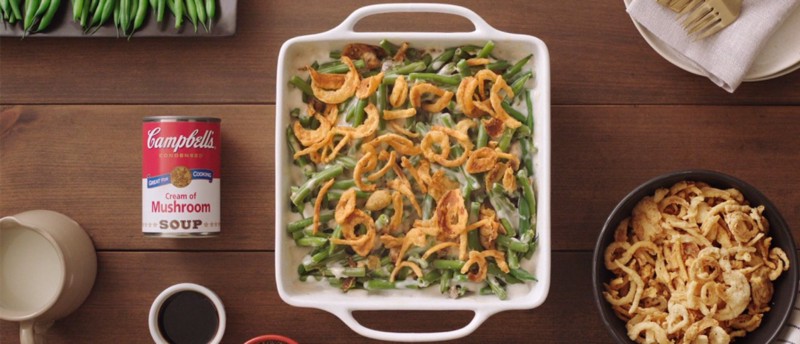
While I still can’t get my head around that sweet potato and marshmallow combo, a green bean casserole is something I might be tempted to try. If you live in the US I guess you already know the story of how this dish came to be a Thanksgiving dinner staple, but for those who aren’t familiar, it’s such a great marketing story with lessons for all of us who want to improve our content marketing.

The casserole originated over 60 years ago in the test kitchen at Campbell’s Soup, where Dorcas Reilly worked as a home economist. Dorcas invented a Green Bean Casserole recipe in response to a question from the Associated Press: “What’s a good Thanksgiving side dish that uses ingredients found in most American kitchens?”

1_Htp8OhhVXP35Q1qRA3BS4g.jpeg
First demo kitchen, Campbell’s, 1941

The dish Dorcas invented went viral. Millions of Americans made the casserole that year. And today, over 60 years later, it’ll be served on an estimated 30 million Thanksgiving tables across the US, earning its place as one of the most beloved recipes in America.

So what lessons can this simple recipe teach us as content marketers? Over on LinkedIn, I share six valuable lessons we can learn from Dorcas’s green bean casserole.

Click here to read

Posted in #HCSM

7 Essential Elements Of An Effective Healthcare Digital Marketing Strategy

If you’re looking to reach more patients online, then digital is an essential tool in your marketing strategy. The following list contains the essential elements you need to have in place to ensure your digital marketing is effective.

1. An Easy-To-Navigate Website

In the online world, your website is a virtual office location and the face of your practice. It acts as the initial “touchpoint” for potential patients. It showcases who you are and what you do.

A well-designed website can:

  • Boost your online reputation
  • Increase search engine visibility
  • Attract new patients

When visitors land on your medical practice website, they’re typically looking for something specific.  You may be surprised to learn that research has revealed that easy navigation and accessibility are more important to patients than reputability.

Users should be able to use your website intuitively. Put yourself in the shoes of your visitors and ask yourself how easy it is to find key information on your site. How many clicks does a visitor have to make to get to the information they are looking for?

Think about the information someone is searching for when they visit your site—and make it easy for them to find it. If your site contains a lot of information (as some hospital websites do) consider creating separate landing pages for specific conditions.

Further Reading: Digital Health Checkup: 10 Signs It’s Time To Redesign Your Medical Practice Website

2. Include A Blog

Want to increase your influence among healthcare consumers? Start blogging.

Blogs written by physicians, nurses, researchers, patients, and allied healthcare professionals add much to the richness and diversity of the online healthcare conversation. Blogs are a super way to educate patients and keep content on your website fresh.  Marketing to patients with a blog can be one of the most effective ways a new medical practice can reach more patients. Blogging regularly increases awareness of your practice, as well as help your website rank better in search engine result pages (SERPs) thereby increasing its organic traffic.

Further Reading: 3 Places To Find Interesting Ideas For Your Healthcare Blog

3. Content Marketing

If you’re serious about marketing your business online, you need a strategy and a plan to execute it. A content marketing strategy is a roadmap that not only tells you what you’re going to create but how you’re going to create it, when you’re going to publish it and how you’re going to promote it. It helps you create more meaningful, engaging and sustainable content.

According to the Content Marketing Institute, having a documented (i.e. written down) strategy means:

  • You’ll feel significantly less challenged by every aspect of content marketing.
  • You’ll generally consider yourself more effective in your use of all content marketing tactics and social media channels.
  • You’ll be able to justify spending a higher percentage of your marketing budget on content marketing.

4. Search Engine Optimisation (SEO)

SEO is the process of earning traffic from search engines organically — meaning you aren’t paying for ads or sponsored content placement.  If you want more people to find you online, you need to optimize your website through good search engine optimization practices. SEO (the ability to optimize your site for search engines),  is a detailed and sometimes confusing process, and you may want to hire an SEO expert to do it for you. If you don’t want to hire someone, there are search engine optimization tools available to help you do your own SEO — and many of them are free. I’ve put together this list of the best free SEO tools out there to help you instantly improve your online marketing.

5. E-Mail Marketing

With the explosion of social media marketing in recent years, the traditional email format may appear outdated. But nothing could be further from the truth.  Even with the pervasiveness of new technology, email still remains a persuasive digital marketing channel for building awareness, boosting acquisition, and increasing conversion.

Use email personalisation and segmentation based on a recipient’s interests and needs so they’re receiving information relevant to them. Send out a video, a current blog post or provide industry news that will give readers information on various topics. Be sure to plan these ahead of time so they are timely according to what’s going on at your organization or in the health industry.

6. Video Content

Video has become the predominant way people want to consume information and this goes for patients too. Information delivered via video vs. print equates to a much higher retention rate. In addition, patients who watch videos featuring a physician feel a greater level of trust. The type of video content you can create includes Q&As with physicians, patient testimonials, explainer videos, and live streaming.

Further Reading: How To Create A YouTube Channel for Your Medical Practice

7. Social Media Marketing

In the past decade, social networks have evolved from “a nice to have” add-on to a necessity for healthcare marketers.  With currently 2.8 billion social media users globally, expected to rise to almost 3 billion users by 2020, social media’s influence has still not reached its peak. It’s a dynamic environment in which new networks emerge, old networks evolve, and user bases continue to grow exponentially.

If you haven’t yet integrated social media into your marketing mix, it’s time to do so. Not only is social media marketing more affordable than traditional forms of marketing, but it’s also more accountable, with specific tracking and monitoring options at your disposal.

Further Reading: How To Develop A Social Media Strategy For Healthcare Marketing

Tying It All Together

Digital marketing in healthcare is dynamic and constantly evolving  — there are many different elements to consider. If this list feels overwhelming to you, don’t feel you have to do everything all at once. The best place to start is with your website – prioritise it in your strategy and build out your digital marketing from there. As always, if you have any questions, feel free to reach out to me.

Here’s to your digital marketing success!

Posted in #HCSM

YouTube: A Missed Opportunity For Patient Education

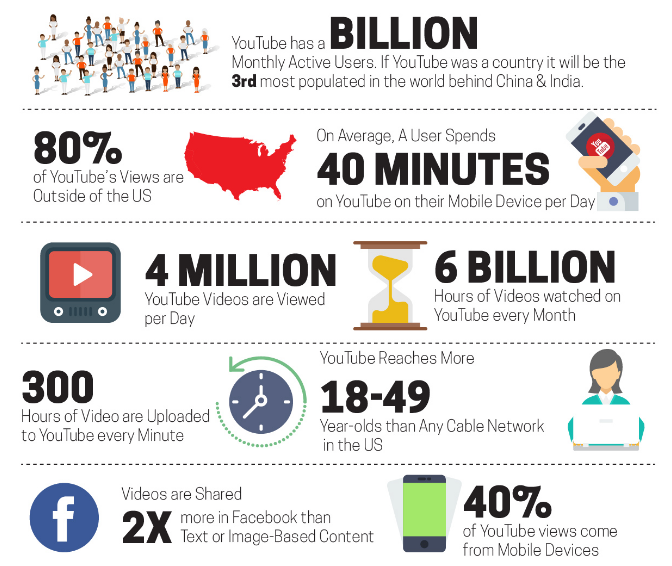
YouTube has more than 1.8 billion monthly active users, and remains the online video leader. 

People around the world are now watching a billion hours of YouTube’s content every single day.  That’s a huge amount of time spent watching diverse content on the channel.  Here are some more staggering stats to consider.

download.png

YouTube is the second largest search engine in the world with added SEO potential due to its Google connection.  YouTube also has live-streaming options and social tools, which it’s expanding as it works to keep in line with evolving consumer trends.

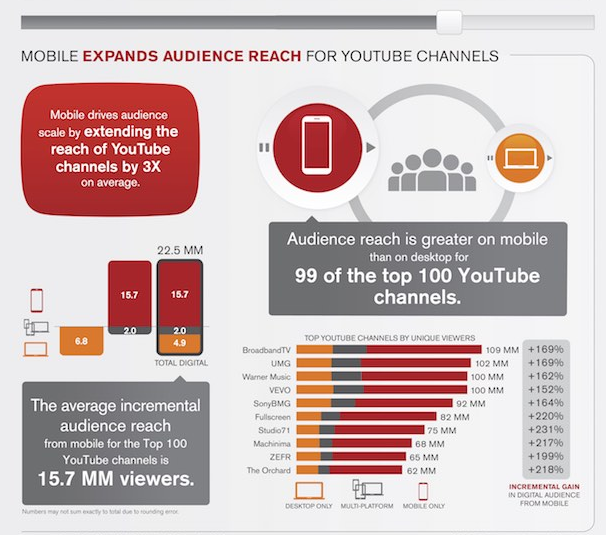
Mobile devices now account for 70% of all time spent on YouTube by adults in the US, according to research from comScore. Audience reach is bigger on mobile than on desktop for 99 of the top 100 YouTube channels in the United States.

download.png

Mobile viewing is especially popular with younger adults (age 18-34) and women, the analysis found. YouTube mobile viewers tend to watch shorter-form videos than desktop viewers do. However, mobile viewers watch nearly three times as many videos per month, on average.

download.png

YouTube is a platform that people are searching every day for how to solve their problems and get their questions answered. As a form of patient education and health promotion, it has great potential but recent studies show it is not being used to its full potential.

A 2013 study which examined the effectiveness of YouTube as a source of medical information on heart transplantation found it time-consuming to find high-quality videos and recommended that more authoritative videos by trusted sources should be posted for the dissemination of reliable information. Similarly, a 2015 study found that in YouTube videos related to skin cancer, there was a missed opportunity for cancer prevention and control.

These findings notwithstanding, there are some good examples of medical organizations who are already using YouTube to communicate health information. Mayo Clinic, in particular, stands out, with 50,917 subscribers to its channel and over 31,000,000 video views. 

If you don’t already have a YouTube channel for your practice, perhaps now is the time to consider it. Check out this article by Sendible which has some useful tips on how to optimise your YouTube channel for success.

Related Reading

Posted in #HCSM

Twitter Adds Context To Trends

I’m a huge Twitter fan. So many interesting healthcare conversations are happening everyday on the platform.

One of my favourite ways to use Twitter is to take part in Twitter chats. These are great networking and learning opportunities and a super way to engage in meaningful conversations about shared topics of interest. Think of it as a virtual meet-up for people with common interests.

When I teach social media classes, I do sometimes hear that Twitter is a confusing place for those new to the platform. It can take a while to learn the ropes and it’s not uncommon for new users to hesitate to ask about the meaning of some of Twitter’s features.

“What’s Trending” is one of those features that may not immediately make sense – even to those of us who are seasoned tweeters. It’s not always obvious why something is trending.

Twitter aims to fix this (hat tip Amanda Webb).

They are testing adding context to trends by attaching a ‘representative tweet which will give you a clue to the trend and they are also adding descriptions.

The representative tweets will be selected both by the algorithm and human beings.

Testing on mobile in Argentina, Australia, Brazil, Canada, Colombia, Egypt, France, India, Ireland, Japan, Mexico, New Zealand, Saudi Arabia, Spain, the United Kingdom, the United Arab Emirates, and the United States.


You might also like to read

7 Data-Backed Tips To Drive More Engagement on Twitter

What To Post on Twitter: A Cheat Sheet For Healthcare Tweeters