Posted in #HCSM

Master the Art of Instagram Stories in Healthcare Marketing

Stories are a popular Instagram feature that lets users share temporary, short-lived content. Unlike regular Instagram posts that stay on your profile indefinitely, Stories disappear after 24 hours.

Stories let you share moments, updates, and engaging content with your followers in an ephemeral way. You can use photos, videos, boomerangs (looping videos), or text-based slides that include stickers, GIFs, filters, emojis, polls, quizzes, and more. You can post stories in real time or upload them from your camera roll, giving you flexibility and spontaneity.

One of the defining characteristics of Instagram Stories is their temporary nature. After 24 hours, the Stories disappear, so there’s a sense of urgency and exclusivity for viewers. However, if you want to keep your Stories, you can save them as Highlights. Highlights are collections of Stories that you can customize and keep for longer than 24 hours.

Stories provide an effective platform to promote your healthcare services, events, or special campaigns. You can highlight new treatments, procedures, or facilities. Using swipe-up links (if available) in your Stories, you can drive traffic to specific landing pages or appointment booking platforms.

Stories can also offer a glimpse behind the scenes of your healthcare organization. You can highlight training sessions, research projects, or even the day-to-day operations of your facility. This transparency builds credibility and instills confidence in your patients.

In my latest Medium article, I share some effective tips and techniques to help your Insta Stories stand out from the crowd.
Click here to read it

Posted in #HCSM

10 Key Questions to Ask When Choosing a Web Hosting Provider For Your Healthcare Website

Finding the right web hosting provider is an essential step in establishing and maintaining a successful healthcare website. With countless hosting options available today, it’s crucial to arm yourself with the right information and ask the right questions to make an informed choice. By doing so, you can ensure that your website operates smoothly, experiences minimal downtime, and provides a positive user experience.

In my latest Medium article I’ve published ten key questions you should ask before signing up for web hosting.

Click to read

Posted in #HCSM

10 Design Tips for Creating Visually Appealing Social Media Graphics

When it comes to social media, creating visually appealing content is crucial to cut through the noise and grab the attention of your target audience.

A picture can capture people’s attention more readily than text, and in today’s crowded online environment, images can break through the clutter of online content to quickly communicate your marketing message.

In my latest Medium article, I share some essential design tips for creating social media graphics that will help you stand out from the crowd.

Click to read

Posted in #HCSM

Unlocking The Secrets to Writing a High-Performing Blog Post

Healthcare blogs are an effective tool for medical professionals and healthcare organizations to convey their message, educate patients, and promote their services. However, creating a blog post that resonates with readers and garners substantial traffic and engagement can be challenging, especially in the crowded healthcare industry. In fact, most healthcare blog posts fall short of capturing their readers’ interest.

Thankfully, there are actionable steps that can be taken to craft a successful blog post. My latest Medium article delves into the components of a high-performing blog post, drawing on insights from an analysis of 700,000 posts from blogs with an average monthly unique page view count of 50,000 to 500,000. Although written with a business audience in mind, the insights contained in the article can equally apply to healthcare blogs.

The study suggests that long-form content, particularly those with 3000+ words, tends to perform better in terms of traffic, social shares, and backlinks. In addition, articles with longer headlines (14+ words), and list headlines, also perform better than their counterparts.

Click here to read.

You might also like to read:

Posted in #HCSM

Falsehood Flies; Truth Comes Limping After: Misinformation in the Social Media Age

Johnathan Swift once wrote that falsehood flies and truth limps after it. As the COVID-19 pandemic progressed, we saw the spread of disinformation on social media as an “infodemic”. An infodemic is when there’s too much information, some of it accurate and some not, that makes it hard for people to find trustworthy sources and reliable guidance when they need it. Public health can be negatively affected by confusion and mistrust of health officials.

Although conspiracy theories surrounding COVID-19 are novel, infodemics are not new and have been around for a long time. Even the term “fake news” was first coined in 1925, when an article in Harper’s Magazine, entitled “Fake News and the Public” mourned how newswires were allowing misinformation to disseminate rapidly.

However, the growth of the internet has enabled misinformation to spread rapidly, causing concern about potential “digital wildfires” of intentionally or unintentionally misleading information. With ideas no longer limited by geography, what was once spread locally can quickly become global.

Continue Reading

Posted in #HCSM

How healthcare organizations can improve patient support and communication with messaging apps

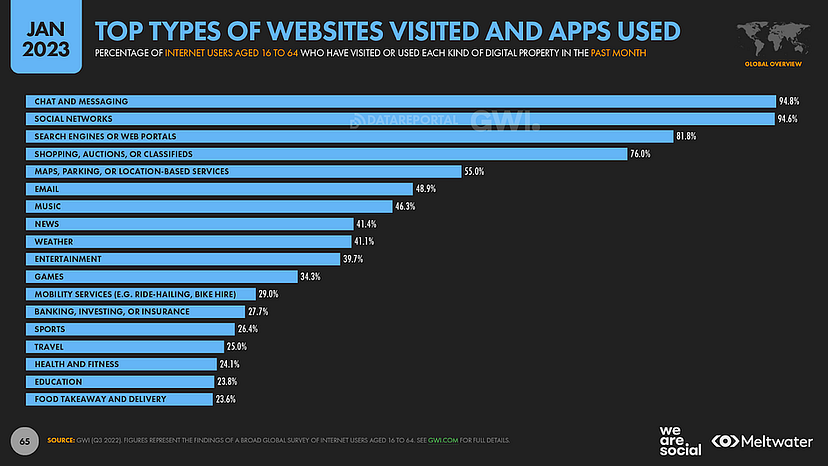
I was struck reading the latest Digital 2023 Global Overview Report to see chat and messaging top the list of most used websites and apps.

In recent years, messaging apps like WhatsApp, Facebook Messenger, WeChat, and Instagram Direct have become increasingly popular. For healthcare, this shift towards private messaging opens up new opportunities for personalized audience engagement.

Read more

Posted in #HCSM

12 Tips to Create an Educational and Inspiring Roundup of Healthcare News

Keeping up with healthcare news is crucial, but the vast amount of information available can be overwhelming. That’s where healthcare newsletters or roundups come in, as they curate the most relevant and impactful news by topic, allowing readers to stay informed about the latest scientific breakthroughs, research, and policy developments without spending hours scouring the internet.

By creating a well-crafted healthcare news roundup, you can establish trust and credibility within your community while positioning yourself as a reliable source of healthcare news. In my latest article for the Patient Empowerment Network, I’ve shared some best practices for creating a regular news roundup that educates, informs, and inspires your readers.

Read it here

Posted in #HCSM

Beyond Fact Correction: A Path Forward For Health Care Professionals To Address Patient-Held Misinformation

Although most patients trust their doctors, they also look for medical information outside of the exam room. Many resources offer accurate information (e.g., government health agencies, professional groups, and patient advocacy groups), but not all are dependable. Medical misinformation can be found online from various sources, which can have serious health consequences. The wrong information can lead to patients making bad decisions, delaying or avoiding necessary treatment, or even harming themselves by taking the wrong treatment.

The internet and social media have simplified the access and sharing of health information, but this has also led to the spread of false or misleading information. There are various ways in which patients can encounter medical misinformation, including social media posts, blogs, online forums, and videos.

In order to provide high-quality care, healthcare professionals must address patient-held misinformation. Misinformation cannot be effectively addressed by discrediting misperceptions alone. Patients’ misinformation can provide clinicians with insight into their values, preferences, comprehension, and information diet.

Systematically training healthcare professionals to address patient misinformation with empathy and curiosity while acknowledging time and resource constraints will be crucial to reducing medical misinformation in the future.

Continue reading

Posted in #HCSM

Digital 2023 Report Reveals Dynamic Shifts in the Digital Landscape

The past twelve months have brought about significant changes in the way we use digital technology, and these changes continue to evolve in unexpected ways. That’s according to the latest Digital 2023 Global Overview Report, an eagerly anticipated publication each year.

What can you expect to see in this year’s report?

  • Global internet users have changed significantly
  • Online activity is declining in a variety of ways
  • Insights into evolving social media platform preferences
  • Changes in how people access digital content and services
  • Changes in online search behaviour around the world

Continue reading

Posted in #HCSM

Sharing and Collaborating: Healthcare Knowledge on Twitter

Twitter, with its vast network of users, has become an indispensable tool for healthcare professionals seeking to share knowledge and collaborate with their peers. The platform allows healthcare professionals to connect with one another, stay up to date on the latest industry news, and engage in conversations about healthcare issues and trends.

In my latest Medium article, I explore some of the advantages (and barriers) of using Twitter as a medium for healthcare communication and knowledge exchange.

Click to read