See on Scoop.it – Health Care Social Media Monitor

Physicians and office managers should encourage their coworkers to engage social media, but not without a healthcare social media policy and HIPAA guidance.
See on www.symplur.com
See on Scoop.it – Health Care Social Media Monitor
Physicians and office managers should encourage their coworkers to engage social media, but not without a healthcare social media policy and HIPAA guidance.
See on www.symplur.com
See on Scoop.it – Health Care Social Media Monitor
Twitter provided an important forum for quick and open discussion about NHS reforms, say researchers at Imperial College London.
The network allowed “conversations across barriers of hierarchy and profession” and “may have fostered discussion and collaboration between groups that rarely talk”, according to a study looking at over 120,000 tweets about the Health and Social Care Bill which was recently passed into law in England.
See on www3.imperial.ac.uk
About eight in 10 psoriasis patients who use health care social networks say they do so primarily to learn how others manage their disease, and get practical tips and advice they couldn’t find elsewhere, according to a survey conducted by the National Psoriasis Foundation, Manhattan Research and Inspire, a company that builds and manages online patient communities.
The millions of people with psoriasis, including the one million visitors to Talk Psoriasis in 2012, are not alone in their use of social media for health. A 2011 Pew Research Center study found that one in four Internet users living with a chronic ailment have gone online to find others with similar health concerns.
See on www.biotech-now.org
See on www.mddionline.com
I’m sharing this story as it shows how discussing a topic on Twitter can give us an opportunity to consider alternative perspectives and to learn from each other.
Interesting storify by AnneMarie Cunningham on how we can learn more by thinking about systems than individuals
See on storify.com
An article from GP focuses on the link between social media and health care as more medical practitioners embrace social networking.
The Royal College of General Practitioners is encouraging practitioners to make social networking a bigger part of their lives with the release of a guide titled the RCGP Social Media Highway Code to give professionals a better understanding of how social media can be integrated into their work.
See on technorati.com
Pretty soon, not being involved in social media will be just as implausible as not having a telephone.
“Hand-wringing about the merits and dangers of social media is as productive as debating gravity. In any case, social media isn’t some wild thing you do for its own sake, it’s what you do to do your job better.” Lee Aase, Director, Mayo Clinic Center for Social Media at Mayo Clinic
See on theconversation.edu.au
Ángel Gonzalez (@angel189), Founder & CEO, Ideagoras reviews three pharma web presences: Erectle Dysfunction (Lilly), Exposed (Leo), and Psoriasis 360 (Janssen)
See on www.thedirectorylive.com
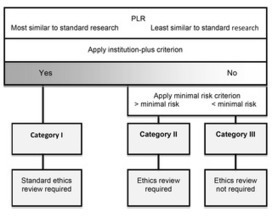
There is a growing concern that ethical oversight risks undermining the credibility of participant-led research, fails to protect the participants and I fear that it may lead to a backlash of over-regulation in the future. This study addresses these issues.
See on www.plosmedicine.org