See on Scoop.it – Health Care Social Media Monitor

Online networks can offer support but can be a source of added stress, too.
See on www.forbes.com
See on Scoop.it – Health Care Social Media Monitor
Online networks can offer support but can be a source of added stress, too.
See on www.forbes.com
See on Scoop.it – Health Care Social Media Monitor
Social media has become a force to be reckoned with. Three experts share their thoughts on why and how radiologists can leverage social media to better their practices and connect with their patients.
See on www.healthimaging.com
See on Scoop.it – Health Care Social Media Monitor
How social media can lead to better quality of life for patients
See on www.hsj.co.uk
See on Scoop.it – Health Care Social Media Monitor
Many tools that could help us carry out our own complicated treatments are only available online.
See on www.kevinmd.com
See on Scoop.it – Health Care Social Media Monitor
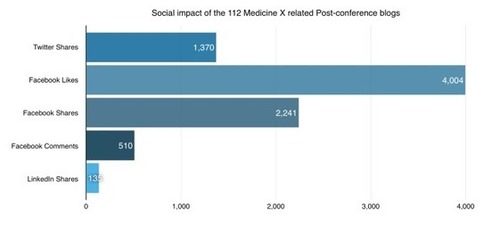
What happens when a healthcare conference is over? Not all healthcare conferences are created equal. Some conferences leave a lasting impact with stories t
Fantastic insight into what makes the impact of a great healthcare conference last. According to the author, stories are at the heart of a powerful conference – they get our attention, they get shared and they go viral. And where do we get the best stories? From patients of course. "It should perhaps be no surprise that when you include patients in your conference, you get more stories–Stories that engage us and compel us to share it with those close to us. And those close to us happen to be followers on Twitter and friends on Facebook. No one has better stories that we need to hear than patients. Conferences with their sponsors, presenters and attendees will benefit from including these stories."
See on www.symplur.com
See on Scoop.it – Journeying Beyond Breast Cancer
A type of mindfulness meditation has a moderate to large positive impact on the mental health of women affected by breast cancer, a recent analysis published in Psycho-Oncology suggests.
Researchers examined data from several published studies to determine the effectiveness of mindfulness-based stress reduction (MBSR)—a kind of focused, non-judgmental attention on the present—at reducing stress, anxiety, and depression in persons diagnosed with breast cancer.
If you are struggling with anxiety, depression or stress, MBSR may be a practice worth trying. Talk with your healthcare providers to learn how you can get involved in a MBSR program during or after your treatment for breast cancer.
See on www.lbbc.org
See on Scoop.it – Journeying Beyond Breast Cancer
Information to help people think about whether taking part in a cancer clinical trials is right for them.
See on www.cancer.gov
See on Scoop.it – Journeying Beyond Breast Cancer
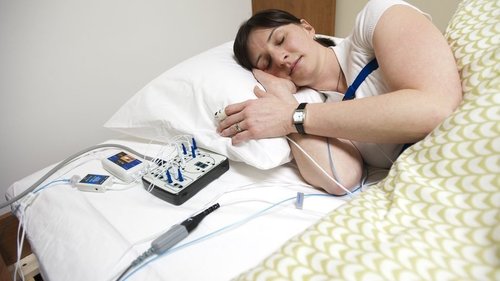
The first of four studies on the special relationship between sleep and depression suggests that when antidepressants and insomnia therapy are used together, recovery happens faster.
As cancer survivors we can suffer from the tandem tiredness of depression and sleep disturbance. Both seem to feed off and exacerbate each other. Good to see new research that shows improving insomnia improves depression in some patients.
See on www.nytimes.com
See on Scoop.it – Journeying Beyond Breast Cancer
Are military metaphors such as “battling” appropriate when it comes to cancer, asks Andrew Graystone.
See on www.bbc.co.uk
See on Scoop.it – Journeying Beyond Breast Cancer
Are military metaphors such as “battling” appropriate when it comes to cancer, asks Andrew Graystone.
See on www.bbc.co.uk