See on Scoop.it – Health Care Social Media Monitor

Pascal Lardier, Director, International Events of Health 2.0, answers questions about the co-production of health by patients and physicians today and in the future.
See on thehealthcareblog.com
See on Scoop.it – Health Care Social Media Monitor
Pascal Lardier, Director, International Events of Health 2.0, answers questions about the co-production of health by patients and physicians today and in the future.
See on thehealthcareblog.com
See on Scoop.it – Health Care Social Media Monitor
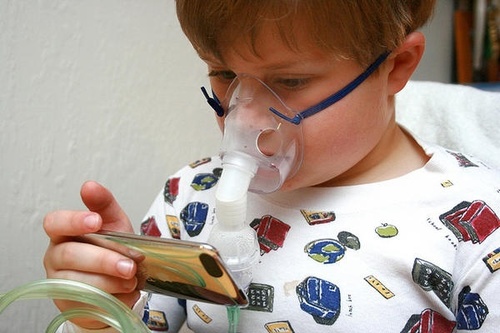
A study has found that sending a text every day to asthmatic children, asking about their symptoms and offering more information about their condition, can have a positive effect.
See on www.mobileworldlive.com
See on Scoop.it – Health Care Social Media Monitor
Every weekday, I tweet a carefully curated stream of new evidence, analysis and commentary that covers all the health we might need to know about.
See on www.kevinmd.com

I am delighted to be included in the line up of speakers at the forthcoming Doctors 2.0 & You Conference, which will be held at Cité Internationale Universitaire de Paris, June 6-7 2013.
Speakers at the conference come from the 5 continents and from all walks of healthcare: patients, professionals, associations, public sector, payors, industry, tech innovators…. They share a common interest in improving life for patients, and in particular, thanks to the use of collaborative New Technologies….healthcare social media, web 2.0 tools, mobile apps… They will provide informed and personal analysis…and engage with us.
Now in its third year, Doctors 2.0™ & You, is the first international conference of its kind to examine how doctors and patients are using social media, applications and web 2.0 tools to work with peers, governments, industry and payers. The conference draws on the expertise of physicians, patient communities, online and mobile tool providers, hospitals, insurers, pharmaceutical companies and governments to help address the role of new technology in healthcare from both the doctor and patient perspective.
Find out more at http://www.doctors20.com
See on Scoop.it – Health Care Social Media Monitor
From physician to partner The more I listen, the more I hear about the disenchanted, tired and uninspired physician.
See on www.forbes.com
User-created content and communications on Web-based applications, such as networking sites, media sharing sites, or blog platforms, have dramatically increased in popularity over the past several years, but there has been little policy or guidance on the best practices to inform standards for the professional conduct of physicians in the digital environment. Areas of specific concern include the use of such media for nonclinical purposes, implications for confidentiality, the use of social media in patient education, and how all of this affects the public’s trust in physicians as patient–physician interactions extend into the digital environment. Opportunities afforded by online applications represent a new frontier in medicine as physicians and patients become more connected. This position paper from the American College of Physicians and the Federation of State Medical Boards examines and provides recommendations about the influence of social media on the patient–physician relationship, the role of these media in public perception of physician behaviors, and strategies for physician–physician communication that preserve confidentiality while best using these technologies.
See on annals.org
By Fanny Gillet and edited by Colleen Young
On Wednesday May 1st, Nicole Ghanie-Opondo (@todayisbanana) moderated our tweetchat and asked the community how social media can serve behaviour change messages and help track diseases. As an introduction to the discussion she wrote an article in her blog – Behaviour Change, Disease Tracking & Social Media?
T1: People have tuned out of some behaviour messaging – can SM help?
Generally speaking, when it comes to behavior changes there is no miracle and most hcsmca-ers agreed that social media can’t be “the solution”. However, according to some chat participants, social media can provide useful peer support. By sharing real stories people may feel less alone and be influenced by the positive behaviour changes of others in their networks – “if you/they can do it, so can I”.
T1: SM can help folks empower themselves to change behaviours, especially…
View original post 587 more words
People are forever telling me that I am wasting my time talking to providers about the need to improve their patient communication skills. Naysayers typically cite one of the following reasons for why things will never change:
Reason 1 – Every physician thinks they already have good patient communication skills.
Reason 2 – Physicians don’t get paid to talk to patients
Reason 3 – Physicians don’t have time to talk to patients
Reason 1 is relatively easy to debunk. After all, if all physicians were really such good communicators:
View original post 626 more words
See on Scoop.it – Health Care Social Media Monitor
The evolution of how people communicate online is fast becoming the biggest change in how businesses now speak to their customers and how they market themselves
See on www.daniels.co.uk

Cole and Carlin (2009) write in the Lancet, that burnout is “also a euphemism for what many physicians experience as a crisis of meaning and identity”. One of the solutions is for doctors to be able to tell their stories and to be compassionately and non-judgementally listened to. Can social media have a role in this?
It’s an interesting question and while Anne Marie cites Jonny Tomlinson’s blog and his latest post on the impact that loneliness can have on patients as a positive example, she also points to the satirical The Moderate Doctor as one that raises questions about the appropriateness of doctors using social media.
The Moderate Doctor is a new website based on The Rules:
The Rules have come together to try to identify some of the difficulties we face as doctors during the consultation. They have helped me identify some of the blocks and frustrations that we may all face when consulting-whilst at the same time trying to acknowledge the patient’s agenda. The difficult bit is recognising that and still providing good, effective medical care.
This all seems quite laudable but the problem as identified by Anne Marie is that the site appears to be aimed at ” bonding with other doctors through joking about their patients”. However, Anne Marie writes that it wasn’t clear that the focus of the joke was the doctor and that made some people feel uncomfortable.

Perception Is Reality
In online social networks, the lines between public and private, personal and professional are blurred. The issue here is one of perception and while we encourage doctors to share their human side and their personality, those who do so also risk exposing themselves to accusations of arrogance and lack of empathy. While Dr Moderate’s blog may have been tongue in cheek and intended for an audience of like-minded doctors, what you publish online is widely accessible and also open to patients to read, comment and form their own opinions on.
I was struck by a comment on Anne Marie’s blog which summed up what many patients will have thought reading The Moderate Doctor blog:
I noticed on Twitter that many doctors think that writing The Rules is an acceptable way to behave, using the usual bully’s tropes “It’s only a joke” and anyone who has a problem with The Rules “lacks a sense of humour”. One day these doctors too will be sick, vulnerable and in need. Let’s hope for their sake that they don’t encounter a Dr Moderate in their time of need.
In the recently published RCGP social media guidelines it is noted that one of the risks associated with social media participation by doctors is the risk of engaging in behaviour which could be perceived as “unprofessional, inappropriate or offensive by others” . While Anne Marie writes that Dr Moderate doesn’t breach any guidelines with respect to breaking patient confidentiality, I wonder does it breach a more intangible code of professional ethics? I would love to hear your thoughts on this discussion. For me it highlights that we still have a way to go when it comes to defining professional use of social media.
photo credit: caricaturas via photopin cc