Posted in HCSM

Use of health-related online sites

See on Scoop.itHealth Care Social Media Monitor

Bovi AM, et al., Am J Bioeth. 2003 Summer;3(3):W-IF3.

Marie Ennis-O’Connor‘s insight:


Abstract

This report offers recommendations to physicians who provide information or services through online sites. The recommendations maintain that physicians responsible for health-related information should ensure that it is accurate, timely, reliable, and scientifically sound. Also, advice to the online users with whom physicians do not have pre-existing relationships or the use of decision-support programs that generate personalized information directly transmitted to users should be consistent with general and specialty-specific standards. In particular, these standards address truthfulness, protection of privacy, informed consent, and disclosures including limitations inherent in the technology. Finally, physicians who establish or are involved in health-related online sites must minimize conflicts of interest and commercial biases and, if patient specific information is transmitted, they must provide high-level security protections, as well as privacy and confidentiality safeguards.

See on www.ncbi.nlm.nih.gov

Posted in HCSM

The patient-surgeon relationship in the cyber era: communication and information.

See on Scoop.itHealth Care Social Media Monitor

 Blake JH, et al.,Thorac Surg Clin. 2012 Nov;22(4):531-8. doi: 10.1016/j.thorsurg.2012.07.002. Epub 2012 Aug 22.

Marie Ennis-O’Connor‘s insight:


Abstract

From Laennec’s invention of the stethoscope in 1816 to the recently introduced Sapien transcatheter aortic valve replacement, the increasing complexity of health care technology has altered the relationship between patients and physicians, usually for the better. Telemedicine, the provision of medical services through electronic media, has dramatically changed how the patient and physician interact and how medical care is delivered. Many studies of physicians’ perceptions of electronic communication with patients have documented recognition of benefits as well as a co

See on www.ncbi.nlm.nih.gov

Posted in #hcsmbm, HCSM

Brainstorming Health Care Social Media Buddy Mentoring #hcsmbm

tweet-follow1

I am excited to let you know about a Twitter chat on the topic of health care social media mentoring which is happening this Wednesday at 6 pm GMT (12 CST 11 ET 9 PST).

This week’s chat is intended primarily to be a brainstorming session to gauge the level of interest in developing a buddy mentoring system to help those who are in need of assistance to navigate social media sites for healthcare information.

To date suggestions have included:

  • a mentoring tweetchat (reverse of the traditional tweetchat where a moderator asks the specific questions), have those who need help with navigating sm sites ask the mentors in the chat questions.

  • Use tools such as google hangouts to share screens and help those ‘sm buddies’ learn the basics of twitter – to search hashtags, compile lists, advanced search and who to follow for their specific benefit and other sm sites.

It is hoped that Wednesday’s brainstorming Twitter chat will bring many more creative ideas  to the table.

The following are suggested points of conversation to get us started.

T1 What developmental opportunities would you like to see in a social media buddy mentoring system?

T2 Would a mentoring group on specific social media sites work to answer questions on demand?

T3 Would healthcare professionals be involved?

If you have any suggestions for further topics to include please leave a comment below.

We hope you will join us for this unique Twitter chat (hashtag #hcsmbm) and help us brainstorm ideas to get a HCSM Buddy Mentoring system off the ground.

Marie (@JBBC), Vanessa (@Irl4Livestrong),  Patty (@topsurf), Shu (@shumilne)

Posted in HCSM

The Word of the Day is Community

See on Scoop.itHealth Care Social Media Monitor

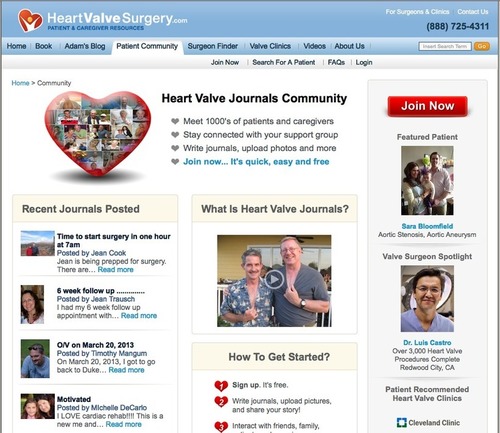
A few weeks ago I gave a talk at the 2013 Pelvic Health Conference in Denver, Colorado, and my focus was on the need for healthcare marketers to build communities of shared interest. These are niche online communities that give patients the opportunity to engage with others who are going through, or have gone through, similar circumstances. When you get a diagnosis, it is natural to want to seek out others who have faced the same set of challenges. Their experience and guidance can be invaluable. And the healthcare provider can inject high quality information and medical expertise, and make available important resources for those visiting the community. The provider is the host and the facilitator, making the interactions possible – helping to create community.

See on thehealthcaremarketer.wordpress.com

Posted in HCSM

Managing Your Online Reputation: The Core Practice Every Doctor Needs to Know

See on Scoop.itHealth Care Social Media Monitor

Digital reputation may have risen to the forefront faster than we’d expected, but only because our lives have digitized more quickly than we’d predicted. Approach your online presence with the same care and integrity that you do your real world one, and you may find that it’s not the stakes that are higher, it’s the opportunities that are greater.

Marie Ennis-O’Connor‘s insight:

.

See on www.thedoctorblog.com

Posted in HCSM, Marketing

Will Google Kill Off Alerts?

hes dead jim macroThere has been no official announcement yet, but the signs are ominous. Following last month’s decision to kill off Google Reader, it seems Google Alert’s days may also be numbered.

Google Alerts are email updates of the latest relevant Google results (web, news, blogs) based on your choice of query –  for example, keeping updated on emerging healthcare trends. You can control how often you receive these alerts (daily or weekly), whether you wish to receive all mentions, or limit it to the most relevant, and you can add new alerts, or delete old ones at any point.

I have certainly noticed less frequent Google Alerts emails in my inbox over the past few months and while this has bothered me less now that I keep up with healthcare industry news via content curation sites such as Scoop.it , it is nevertheless a loss when it comes to using the service as a free brand or term monitoring tool.

So what are the alternatives to Google Reader?

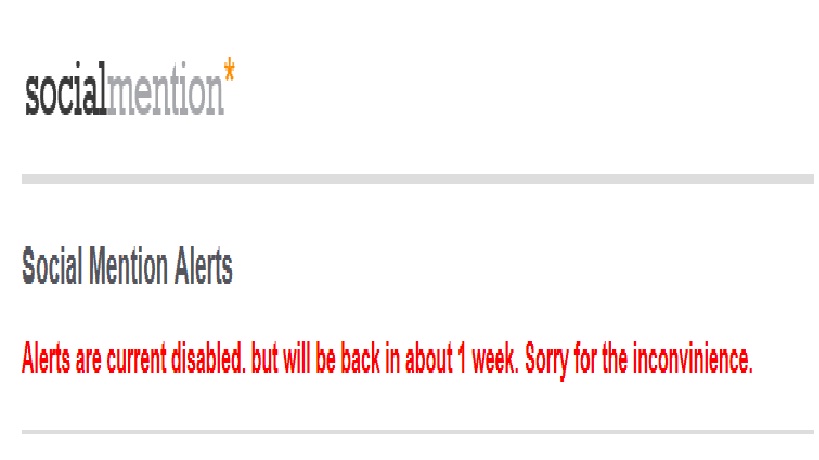
Whilst Feedly proved a good alternative to Google Reader,  no strong viable alternatives to Google Alerts at the same price (i.e. free) have emerged so far as contenders.  For now, I  have decided to trial Social Mention which tracks blogs, blog comments, Twitter, mainstream news, images, video, and audio.  The service promises free daily email alerts of your brand, company or marketing campaign.  Unfortunately when I signed up for an alert with Social Mention today this is the message I received:

social mention

So I will have to wait a while longer to see how it performs as a daily alert service. In the meantime, I will continue to use Twitter hashtags, Twitter search, scoop.it and newsle.

Do you currently use Google Alerts? Will you miss the service if it is retired by Google? Or have you found a viable alternative which you would recommend?