In this guest post, Claire Preston unpacks the latest evidence on ‘digital inequalities’ – how disadvantaged groups can be further disadvantaged in their access to (and use of) the internet.
This year’s Oxford Internet Survey (OxIS) is just out and reports a “striking rise” in the use of the internet by low-income households and disabled people. The numbers of older people accessing the internet are also up; encouraging news for those who seek to lessen the digital divide. AgeUK’s recent Itea and biscuits week is a case in point.
But there is plenty of evidence to support a continued need for such efforts: internet access remains far from uniform across the UK’s population. People in the highest income category are still nearly twice as likely as those in the lowest to use the internet (OxIS 2013)and the cost of the internet is the reason most commonly given…
Social media is part of our culture. From sharing pictures, updates, and professional networking, to engaging customers and organizing political movements, there is no question about the power of social media. Interestingly, social media is still in its infancy and experts believe that the true potential and value of social media has not been tapped. Social media empowers everyone to share their ideas, amplify their voice, and shape the world. Healthcare professionals are using social media to share healthcare knowledge, advance patient care, and influence their professions. We profile 3 pharmacists actively using social media to build their businesses and advance the pharmacy profession. They are actively participating in the social economy.
Students at UCSF can soon get course credit for editing medical Wikipedia articles, joining a group of medical professionals and others dedicated to improving available health information online.
By rebranding what they do on blogs and Twitter, advocates of Free Open Access Medical Education, or #FOAMed, seek to accelerate medical knowledge sharing.
I experienced conference envy this past week as I followed the terrific tweets filling my timeline from both Med.20 in London and Standford’s MedX. It would have been wonderful to have been there in person, but I still managed to learn lots of new things and connect with some great new people from my virtual attendance.
Next time you attend a conference here are 5 things you can do to make the most of your time.
1. Take Notes.
It’s fun to tweet, but don’t neglect the old-fashioned art of writing down key points you wish to remember. Research shows that the act of writing helps you assimilate and remember information better.
2. Interview Speakers
If you have an established blog, website or other social media platform, reach out to speakers before the event and ask if they will allow you to interview them during the event. Do your preparation in advance and keep the interview short. (An iphone app like Vine (6 second video platform) is useful for this). Here’s an excellent example of an interview with Dr Larry Chu of Stanford Medicine X at the Doctors 2.0 & You Conference.
3. Test out new products
Be one of the first to report back on a new product or service you discover at the conference in the form of photographs, reviews or an interview with the company exhibitors.
4. Curate and blog conference content
Using a tool like Storify, curate the best conference tweets and images. If you have a blog, share your impressions, tips and summarize key points after the event.
5. Make and build on connections
Don’t just make connections on the day, follow-up with those people you’ve met and want to stay in touch with via email, Twitter, or LinkedIn. Some of the best connections I have made at conferences have turned into mutually collaborative relationships after the event.
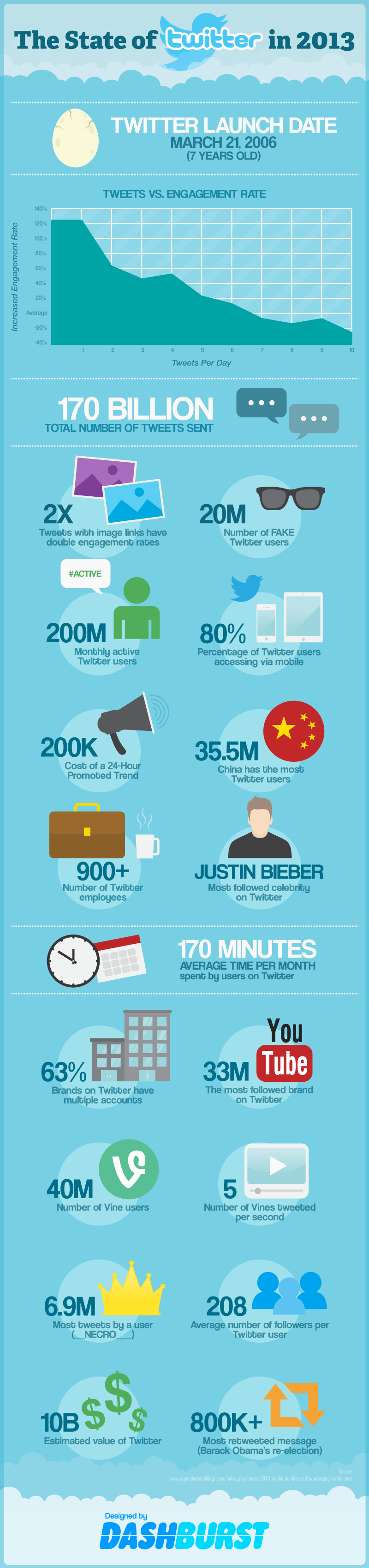
Since its launch in 2006, Twitter has grown to comprise a community of over 200 million monthly active users. Twitter is now undergoing a mobile revolution with 80% of its users accessing the site via a mobile device.
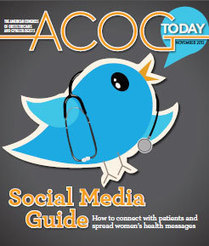
With more and more ob-gyns using social media both professionally and personally, ACOG has developed the following social media recommendations and information for members:
A recent study by Brigham Young University found that more than 60 percent of Internet users in 2013 use social media to find health information. But my experience as a cancer patient and advocate tells me anecdotally that this percentage is even higher within the nationwide cancer community. I know very few cancer patients – even seniors – who haven’t used social media at one time or another.
I was delighted to have the opportunity to share the stage with Dr Kendall Ho, a practicing emergency medicine specialist and founding director of the eHealth Strategy Office of the University of British Columbia, at the Universitas 21 Health Sciences Group annual meeting held recently at University College Dublin. In a lively and engaging presentation Dr Ho spoke to delegates about how medical educators can embrace social media.
Also presenting was consultant rheumatologist, Dr Ronan Kavanagh, speaking on how doctors can use the tools of social media in their practice.
And my own presentation on the digital revolution and the era of the e-patient.

 But there is plenty of evidence to support a continued need for such efforts: internet access remains far from uniform across the UK’s population. People in the highest income category are still nearly twice as likely as those in the lowest to use the internet (OxIS 2013)and the cost of the internet is the reason most commonly given…




 Health Care Social Media