See on Scoop.it – Health Care Social Media Monitor
Author: Editor

How physician practices can stir up Pinterest
See on Scoop.it – Health Care Social Media Monitor

Many doctors’ waiting rooms have a bulletin board where patients can find a copy of a local newspaper story in which one of their physicians was quoted, pictures of new employees or public service announcement posters reminding them to get their flu shots.
If you’re not already familiar with Pinterest, the social media site that had the distinction of being the fastest growing for the first quarter of 2012, it’s basically an electronic version of that bulletin board. While other social media sites allow pictures to be posted, Pinterest is driven by photos and images, with few words. Before you say, “Not another social media site to worry about,” think of this: What can make Pinterest desirable is that its audience, depending on who’s doing the estimate, is 60% to 97% female. That matters, because the Bureau of Labor Statistics notes that 80% of women are the primary health care decision-maker in their families.
For the moment, Pinterest is where Facebook and Twitter were a few years ago for many in health care — a curiosity that might be adapted for professional use if someone on staff happens to use it personally. But health care organizations that have begun using Pinterest say it’s an easy way to burnish their image. Because Pinterest is not a conversational site like Facebook or Twitter, it requires very little time, maybe only a few minutes per day or week, to keep up a presence.
See on www.ama-assn.org
How Social Networks Bring Healthcare Professionals Together
See on Scoop.it – Health Care Social Media Monitor
Ronan Kavanagh, MD (@ronantkavanagh) reflects on how Social Networks bring healthcare professionals together without their having ever met face to face — although that oftens happens later, as this warm, accurate (to my experience) piece concludes:
‘Putting aside my family’s fears that I might be drafted into a highly sophisticated religious cult masquerading as online rheumatologists , I arranged to meet my group for dinner.
Most would probably have considered us strangers. Or were we? A number of times most days, we share clinical observations, links to publications that have interested us, shared frustrations, psychological support and even clinical advice. All of this is mixed in with a funny mix of holiday snap posts, book and music recommendations, Haiku poetry, word game posts and general banter. I had a sense, even before I met them all (I had met two of the group before), that these were already friends.
Despite the simplicity of the technology of Twitter, there is something unexpectedly rich about the social interaction it affords. By simply reading someone’s 140 character utterances over a period, and by swapping ideas and information with them, I had an idea that you got know to know someone reasonably well. But you never know….
What was upliftingly reassuring about meeting them all was that they were exactly as I had expected them to be. As warm, open, enthusiastic and eager to exchange ideas as they were online. One was a bit taller than anticpated, one a little heavier and I expect that they all thought that I was a little balder (than my carefully angled profile picture might suggest).
A stranger sitting close by would have assumed, from the easy conversation, laughter and bonhomie that they were eavesdropping on a group of old friends.
And they would have been right.’
See on www.ronankavanagh.ie
Pinalyzer, Pinterest analytics tool
See on Scoop.it – Leveraging Pinterest For Business Success
Pinalyzer, a Pinterest analytics tool. Your best friend to fully enjoy Pinterest.
See on www.pinalyzer.com
Social Media in Healthcare Engagement
Interesting presentation from the Cleveland Clinic on how they have utilized social media to bring in new patients, increase brand awareness, provide education and promote research.

 Some people win Olympic Medals; I get to host the next edition of HCSM Review on my Healthcare Marketer Blog! That’s right folks. On Wednesday, August 22, 2012, Edition #11 of HCSM Review will go live on my blog and I need your help. Please submit your posts for this special edition of HealthCare Social Media Review — the blog carnival featuring the latest posts and thought leadership on health care social media. (Follow the link for submission instructions via web form or via email to ddunlop AT jenningsco DOT com.) If you’ve recently written a provocative or thought provoking post about health care social media, I’d be pleased to consider it for Edition #11. Your submissions will ultimately determine whether this edition of Health Care Social Media Review is worthy of gold, silver or bronze. I don’t even want to think about not qualifying for a medal!
If…
View original post 105 more words
Ten Hurdles to Patient Adherence
See on Scoop.it – Health Care Social Media Monitor

There are many factors which can influence the level of patient adherence in any given treatment, Jeanne Barnett looks at how social platforms can provide the answers and presents her findings.
See on social.eyeforpharma.com
What do web-use skill differences imply for online health information searches?
See on Scoop.it – Health Care Social Media Monitor

‘Findings related to Web-use skills differences suggest two classes of interventions to facilitate access to good-quality online health information.
Challenges related to attitudes and technical skills should be remedied by improving people’s basic Web-use skills. In particular, Web users should be taught how to avoid information overload by generating specific search terms and to avoid low-quality information by requesting results from trusted websites only.
Problems related to discovery may be remedied by visually labeling search engine results according to quality criteria.’
J Med Internet Res 2012;14(3):e87
doi:10.2196/jmir.2051
See on www.jmir.org
9 Popular Personal Health Record Tools
See on Scoop.it – Health Care Social Media Monitor
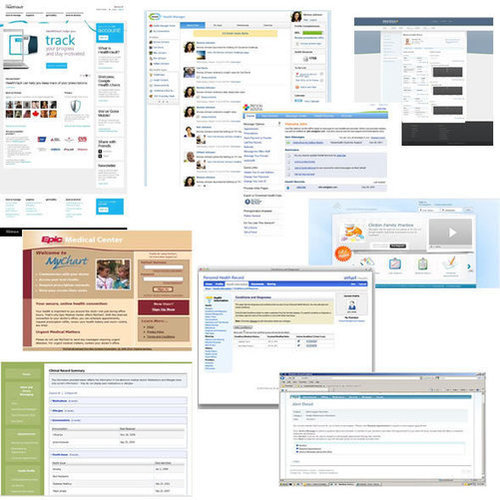
While many consumers remain skeptical of personal health records, advocates say these tools can help patients manage medical data and interact with doctors. Here’s a look at nine popular PHR offerings.
See on www.informationweek.com
How I define patient engagement
See on Scoop.it – Health Care Social Media Monitor

To effectively engage patients and caregivers, it is critical that health care providers engage with empathy.
See on www.kevinmd.com

