Articles
Twitter Chatting And Drug Development
Thanks to the Eli Lilly Clinical Open Innovation team who alerted me to this great companion piece to my own observations on Twitter chats

 So what’s a Twitter Chat?
Juliet Barbara, social media commentator for Forbes, shares in her article “How Twitter Chats Will Open Your Mind and Network:”
…Twitter chats are Twitter-based dialogues that anyone can join just by following and mentioning whatever hashtag is assigned to that chat. Because of the diverse group of people a Twitter chat can bring together in an open, “liquid” environment, there’s potential for those serendipitous connections that just may complete an idea.
The Partnership with Patients Summit was an event focused on assuring the patient is at the center of healthcare policy, care and R&D. I was fortunate to attend, and while there met several patients and advocates who use Twitter chats to connect on disease and health. I learned quite a bit about why patients Twitter chat, and I couldn’t help but wonder if there’s not an opportunity for those involved in drug…
View original post 1,759 more words
AMEE 2013 #FOAMed Workshop

Today I’m running a workshop on #FOAMed with at AMEE 2013, along with my colleagues Annalisa Manca and Ellie Hothersall from Dundee and Laura-Jane Smith from UCL. We’ll be giving a brief introduction to the growing movement of Free Open Access Medical Education #FOAMed. We’ll be asking our participants to identify if if they are already using elements of FOAMed and how. Annalisa is going to go over some of the educational theories that are at play in FOAMed and then Ellie and LJ will be demonstrating how they’ve adopted elements of FOAMed to support undergraduate teaching and in particular how they’ve used to Twitter to support teaching in public health and case-based discussions. We’ll also highlight some of the other FOAMed activities that are going a cross the continuum of education before we get our groups to look at how they might design a #FOAMed approach to some learning…
View original post 72 more words
A healthcare innovator’s guide to must-know tech terms for the next decade of medicine
See on Scoop.it – Health Care Social Media Monitor
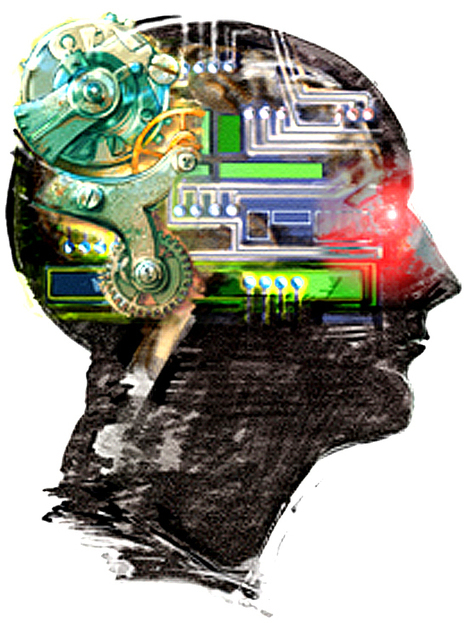
From artificial intelligence to natural language to processing to MEMS, here are some technologies that will change the future of healthcare.
See on medcitynews.com
View The Latest Twitter Statistics
Since its launch in 2006, Twitter has amassed a staggering 500 million users (an estimated 20 million accounts are fake) with China leading the way as the country with the most users – 35.5 million.
170 billion tweets have been sent over the past seven years, with an average of 400 tweets per day. The majority of users access the platform via a mobile device.
View the latest Twitter stats in this Wishpond infographic. Click to tweet this

Digital Health, Informatics and Remote Monitoring
In this short video, Director of the Institute of Digital Healthcare and Professor of Healthcare Technology , Christopher James elaborates on the effectiveness of various types of digital health technologies.
Out of bounds

 Social media tools are– or at least should be – fundamentally rewriting the rule book when it comes to boundary issues for physicians. As one pediatrician who is active on Twitter recently told me “There is only one me.”
While maintaining a distinct divide between professional and personal life has always been a central tenet of the rules and regulations that govern the medical profession (not dating your patients while in a doctor/patient relationship being the prime example), for those physicians using social media it is abundantly clear the issue is no longer clear-cut.
Nowhere has this situation been better stated than in the recent viewpoint “Social Media and Physicians’ Online Identity Crisis” published in JAMA, Aug. 14 (v.310, no: 6, 581-582).
Authors Matthew DeCamp, Thomas Koenig and Margaret Chisolm (@whole_patients) confront the whole professional/personal divide directly and bluntly state attempting to have such a divide when using social media…
View original post 226 more words
How self-monitoring is transforming health
See on Scoop.it – Health Care Social Media Monitor

How self-monitoring could revolutionize healthcare and help us look after ourselves better and lead healthier lives. Our article examines what experts think of the current trends.
See on www.medicalnewstoday.com
Lucien Engelen: Patients not included
See on Scoop.it – Health Care Social Media Monitor

We all know that healthcare faces huge challenges—budget cuts, increasing demand, and a shortage of skilled personnel. To help find solutions to this, conferences are set up to discuss the changes needed.
But most of these conferences happen without the people they are all about—patients. “When people are talking about you and you’re not at the dinner table, this mostly means you’re on the menu,” someone said to me, referring to the lack of patients at healthcare conferences. At conferences about doctors one would expect to meet doctors, so why not include patients in healthcare conferences too?
See on blogs.bmj.com
The Intersection of Health and IT
The infographic below — by the University of Illinois at Chicago’s Online Masters of Health Informatics program — breaks down and describes health informatics and the mashup of technology and healthcare.

 Health Care Social Media