See on Scoop.it – Health Care Social Media Monitor

The motivation on the part of payers is clear: Drive down the cost of care by keeping the population as healthy as possible. So what motivates patients to participate?
See on Scoop.it – Health Care Social Media Monitor
The motivation on the part of payers is clear: Drive down the cost of care by keeping the population as healthy as possible. So what motivates patients to participate?
See on Scoop.it – Health Care Social Media Monitor
I want you to consider how private social networking for healthcare can help you improve the data you get from your patients, how it can save you time and how it can improve patient trust by using social networking for secure communications and connectivity.
See on pathcareblog.com
See on Scoop.it – Health Care Social Media Monitor
There are many ways for medical professionals to use social media in their work lives. Here are a few of the best social media channels and how to use them.
See on blog.healthecareers.com
See on Scoop.it – Health Care Social Media Monitor
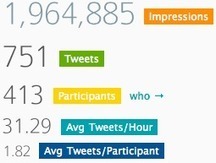
New features for Healthcare Analytics for Social Media. A metric for how many impressions a healthcare hashtag has made in tweet streams.
See on www.symplur.com
See on Scoop.it – Health Care Social Media Monitor
Lay health care consumers’ emergence as active participants in online health care networks is a powerful new technological pattern that promises to take the American health care system through all stages of cultural adaptation–substitution, innovation, and transformation. Soon everyone will recognize the fundamental changes online health has produced in the way we think and act about health care.
See on www.ncbi.nlm.nih.gov
See on Scoop.it – Health Care Social Media Monitor
Mobile Health (mHealth, eHealth) is exploding and social media is an integral part of this explosion. Interactive mobile apps for healthcare abound. HealthCare websites are going mobile, giving patients a chance to discover information and connect with others via phone wherever they are in the world.
See on healthworkscollective.com

Despite a deluge of information about social media over the past few years, many executives still don’t have an idea of what they want to accomplish with their brand’s community management efforts. And as any savvy social media guy or gal knows, it’s pretty hard to prove your effectiveness without some agreement of what you’re trying to do.
This means that your first task will often be to explain to them what the possible goals MIGHT be, and then start from there to identify which ones are important to them.
Find out more in 7 goals of a successful community management strategy
See on Scoop.it – Journeying Beyond Breast Cancer
Are you the only Community Manager or social media practitioner in your company? Allow me to shake your virtual hand. It can be a tough gig. Here are a few tips for “lone wolf” community managers to help make things, well, more manageable.
See on www.thesocialcraft.com
See on Scoop.it – Journeying Beyond Breast Cancer
Online communities offer cancer patients a convenient way to obtain supportive care from peers however, little is known about how or why patients use them for this purpose. Cancer peer support providers are in a unique position to provide insight on the role of online communities in relation to other sources of supportive care. This multi-method study aimed to identify the extent, nature and conditions of online community use among breast cancer survivors, known to be peer support providers.
See on www.medicine20congress.com
See on Scoop.it – Health Care Social Media Monitor
The last decade has seen tremendous growth in the use of communication technology within healthcare. Along with the rise of various eHealth technologies during the early 2000s, the recent increased prevalence of socially-driven Internet technology (social media) has begun to impact the nursing profession in a number of salient fashions.
Nursing education and practice are two areas which have been influenced by the evolving communication modalities that social media technologies can facilitate. Regardless, the nursing profession as a whole has been remarkably slow to recognize and study these new modalities of communication facilitated by the evolution of social media.
See on www.medicine20congress.com