Articles

Posted in social spotlight

Social Spotlight: Terri Coutee

It’s my great pleasure to shine the first social spotlight of the year on this week’s guest interviewee. 

Terri Coutee is the Founder and Director of DiepCFoundation.org, a nonprofit organization providing education and resources to empower women and men with information to make an informed decision about options for breast reconstruction after mastectomy. After a second breast cancer diagnosis and her own successful breast reconstruction, she writes about her experience in a blog, DiepCJourney.com.

Terri is a guest speaker and a strong proponent of the shared decision-making process for patients. When traveling for advocacy, she interviews surgeons, healthcare providers, and patients on topics related to breast cancer and breast reconstruction as another resource to empower those in need of education to find their own voice in their healthcare journey.

I’ve known and admired Terri for several years through our interactions on social media. She is a real force for good through her online patient advocacy and a ray of sunshine with her positive motivational style.

And now here is Terri’s social media story. 


Hi Terri,  I’d like to start off by asking you to tell us something about the role that social media plays in your work.

TC: My platform as a patient advocate for breast reconstruction evolved from using social media. I utilize Twitter, Facebook, Instagram, LinkedIn, Pinterest, and Google Plus to reach a global audience for various purposes.

Twitter is my go-to for connecting with the breast cancer and breast reconstruction community. I search for the latest studies and news to share with those who may not be using Twitter. One of my favorite projects is to report from medical conferences I attend.
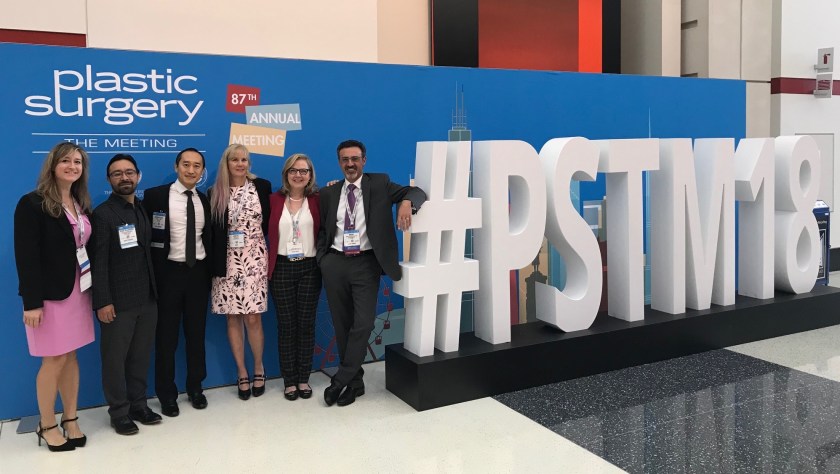
PSTM photo.jpg

The global community becomes more of a family when you meet your Twitter pals at conferences. The energy and ideas are limitless. I frequently receive direct messages on Twitter asking for specific resources, so it has served me well.

You sure do know how to make full use of so many platforms. When did you start using social media – what prompted you to get started?

TC: Oddly enough, using social media started for me in an entirely different way than what I am doing now. At the time of my second breast cancer diagnosis I was in graduate school to get my M.Ed. in Teacher Leadership. I set up a Twitter account using an anonymous name, so I could be one of those “lurk and learn” social media people. I used the handle, @6state, because I taught schools in six different states.

I knew very little about any social media platforms and had no idea the power of social media at the time. Unbeknownst to me, having successful DIEP flap breast reconstruction after a double mastectomy would be the catalyst for starting a blog about my experience utilizing social media to share my story. I suppose I have nostalgically stuck with the handle @6state. Once an educator, always an educator.

One of the things  I love most about these interviews is getting to learn something new about people I’ve known online for a while. I never knew what prompted you  to use @6state as your Twitter name – that’s s a fun fact for me to learn. I probably interact most with you through Twitter, but I know you’re very active on Facebook. How do you like to use Facebook in your work?

TC: Facebook has been a place of support and solace for a growing number of members in a closed group I set up: https://www.facebook.com/groups/diepcjourney/about/. Women and men who are currently in treatment or planning extensive surgery don’t always have the time or inclination to leave their home to attend a support group meeting.

The Facebook group is a safe haven for many. It is another way of connecting globally. We have members from all over the world. Additionally, we are honored to have medical professionals including surgeons, physical therapists, radiologists, and support resources like tattoo artists who are welcome and lend great value to the group. The resource I provide through these professionals is priceless. I feel very strongly it brings great credibility to the site. The emotional, positive support the members bring to the group is what inspires me daily.

I have found great value in setting up a separate Facebook account for the nonprofit group I founded in 2016, DiepCFoundation. It keeps my followers informed of the Foundation’s activities, outreach, and pertinent topics related to breast reconstruction, including my blogs.

Facebook live is another great way to share topics related to breast reconstruction. Viewers can watch, re-watch, and share the broadcasts with others in their own community. One I am most proud was a presentation I made this year. It was recorded at the national medical conference of the American Society of Plastic Surgeons on a topic I focus on in my work as a patient advocate, shared-decision making.
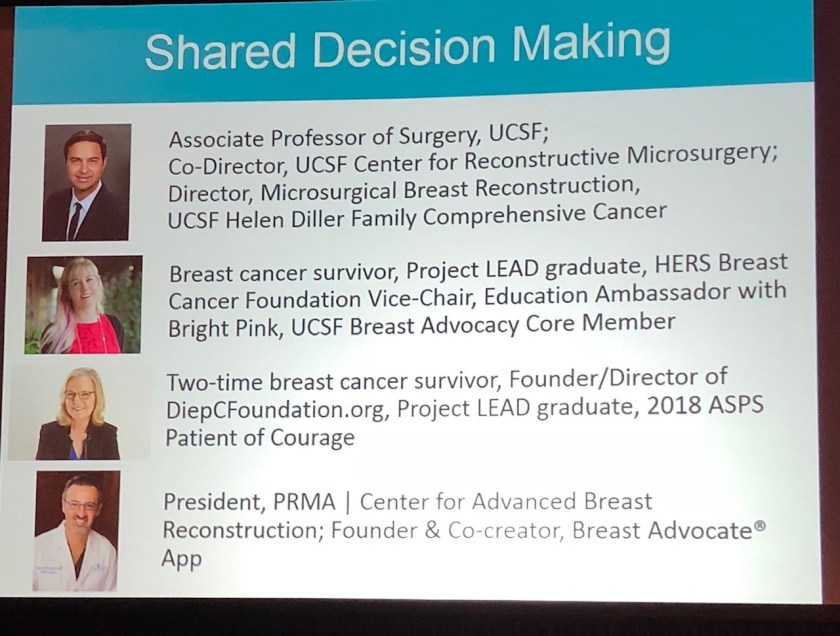
Shared Decision Making.jpg

You really are rocking Facebook! Let me take you back to Twitter for a moment. Do you take part in any health-related Twitter chats? 

TC: I have been a host on #TweetChats providing information for breast reconstruction. They are fast and furious but preplanning your comments and hashtags makes them far more effective. I participated in a #bcsm Tweet with The American Society of Plastic Surgeons and one of their board-certified plastic surgeons. Living Beyond Breast Cancer invited me to a tweet chat with my own plastic surgeon and others in the breast reconstruction community to coincide with National Breast Reconstruction Awareness Day in October.

Social media obviously plays a vital role in your advocacy work so what advice would you give to others who are just starting out with social media?

TC: Take it slow and don’t be overwhelmed by the wealth of information before you or the speed things seem to travel at with constant changes in social media. As I always say, take it one bite at a time!!!

Educate yourself about all social media platforms. They each serve a different audience and purpose. Give them all a go!

Surround yourself with a tribe who will support and believe you are serious about your message.

Read articles and attend seminars to improve your skills. Know you will make mistakes, receive critique, but also get euphorically hooked on a tool that shares a wealth of valuable information to the world and in particular your viewing audience, your true purpose for using social media!

Such great advice Terri. I love your enthusiastic embrace of social media and your championing of the creation of an online tribe.

So, I like to end these interviews by asking for a favorite quote. I know you are a big fan of inspiring quotes and I always appreciate you sharing them on social media. Do you have one you’d like to share with us now?

The most difficult thing is the decision to act, the rest is merely tenacity. The fears are paper tigers. You can do anything you decide to do. You can act to change and control your life; and the procedure, the process is its own reward.

                                                   -Amelia Earhart-             

What a wonderful quote! 

Thanks so much Terri for taking the time to share the many ways in which you are making a difference using social media. 

If you’d like to learn more about the work that Terri is doing in raising awareness of DIEP flap breast reconstruction, you can find more information at DiepCFoundation.


This post is part of an ongoing conversation that explores how patients, healthcare professionals, and researchers use social media to communicate their work. For more interviews, click here

Posted in HCSM

50 Power Words To Super Charge Your Content Marketing


Did you know that on average, 8 out of 10 people will read headline copy, but only 2 out of 10 will read the rest? Your headline is the first impression you make on a prospective reader. An eye-catching headline is a key factor in getting readers to click through to your article.

An attention-getting headline will capture the reader’s attention right away and compel them to want to find out more. Clear, concise, and original content is important, but words that appeal to their emotions is the magic ingredient to giving your visitors a reason to want to diver deeper.
Business2Community

Trigger words can entice readers to your content, but use these words with caution because they can also trigger skepticism and distrust. Make sure your content carries through on the promise in the headline and always avoid click-baiting.  Clickbait headlines typically aim to exploit the “curiosity gap”, providing just enough information to make the reader curious, but not enough to satisfy their curiosity without clicking through to the linked content. Always craft a headline that links to authentic and relevant content.

Download a list of 90 headline power words here.

For a deep dive into which words and phrases drive the most shares and engagement, Buzzsumo analyzed 100 million article headlines and reported their findings here.

Further Related Reading


Posted in HCSM

Middle East Healthcare Social Media Summit

eb7f0a86-38ac-44a4-8bc4-970ec377f86b

I’ve just returned from Dubai where I was part of the teaching faculty for the Mayo Clinic’s first Middle East Healthcare Social Media Summit.  It was an amazing experience and wonderful to see how many people there are already embracing social media in healthcare.

Before the two-day conference commenced, I taught on the social media residency clinic sharing advanced Facebook and Instagram tips. You’ll find links to the slide decks below.

As always, any questions, feel free to contact me via the comments below.

Posted in HCSM

Social Media And Ethical Concerns For Healthcare Professionals

Social media offers innovative ways to enhance health communication, collegiality, and clinical care, but the tenets of professionalism should always guide online interactions.

Professional standards do not change in social media; rather social media proposes new circumstances to which the established ethical and professional principles can still apply. Upholding public trust in the healthcare profession is fundamental to successfully incorporating social media in clinical care.

Posted in HCSM

Tweeting The Meeting: 6 Tips on Live-Reporting From Conferences and Events

dubai

I’m excited to be on the Mayo Clinic teaching faculty for the first Middle East Healthcare Social Media Summit in Dubai next week. I’ll be teaching on the Social Media Residency Clinic which takes place a day before the conference and also delivering a talk on the role of hashtags in healthcare on day two of the conference.

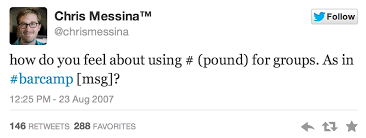
Did you know that the very first Twitter hashtag was prompted by a conference?

download - 2019-12-02T113341.372

So it should come as no surprise that hashtags are super useful for disseminating knowledge presented at conferences. As part of my talk, I will highlight some best practice tips for tweeting the meeting – which I will also share for you here.

1. Tag Your Tweets with the Event Hashtag

Pretty self-explanatory but be sure to use the designated event hashtag which should be displayed by the organizers. If you are organizing the event, keep an eye on unofficial hashtags. Sometimes, people tweet using hashtags that make sense to them instead of using the official hashtag. This shouldn’t be an issue if you have chosen a simple, intuitive hashtag and promoted it in advance, but it is still a good idea to an eye out for rogue hashtags and direct the users to the official one.

Let your Twitter followers know the meaning of the hashtag and why you are tweeting from the conference so that people have some context to what you’re tweeting about. It is good practice to let your followers know in advance that you are live-tweeting so they can mute the hashtag if they aren’t interested in those tweets.

2. Focus on Value

The true aim of live-tweeting is to provide value to others, so avoid tweeting sound-bites that won’t make sense to online listeners. Be selective about the quotes or insights you choose to tweet and only post high-quality photos and videos that your followers will find interesting. No one wants to see a blurry photo of a speaker or a slide.

Strive for originality and context and make it relatable to your Twitter followers.  Tweet links to websites, studies, or other information which will enhance understanding of the topic. It’s fine to highlight your own expertise, but don’t spam. Retweet attendees and speakers who represent your mission and core values. Search for questions being asked using the event hashtag which you can answer.

3. Don’t “Binge Tweet”

Be selective, share key points only and avoid flooding your timeline with tweets. Don’t mindlessly re-tweet what everyone else is already tweeting, unless you can add a unique perspective. When live-Tweeting, one Tweet every five minutes is a good rule of thumb.

4. Give Correct Attribution

Be sure to attribute quotes to the speaker who made them, by using quotation marks. Whenever you cite a speaker, add their Twitter handle and affiliation if known (this is where those pre-prepared Twitter lists come in useful). Separate your own comments/viewpoints from the speaker’s own words.

5. Encourage Engagement

Don’t tweet in a vacuum; engage with fellow live tweeters and contribute to a larger conversation. Involve online listeners by asking questions; e.g. “Speaker X says doctors need to be more empathetic – do you agree/what do you think about this?”

6. Be Social

Finally, don’t restrict yourself to tweeting behind a screen; take the opportunity to network and meet new people face-to-face too. Live-tweeting is a great way to meet like-minded people, so use it to organize “tweetups” at coffee and lunch breaks during the event to further the connection.

39e92ea1-399e-4de8-9379-693ebfa6689c

Bonus Tip

After the event has finished, you can still add value by using a tool like Twitter Moments to archive tweets.  You could also summarise the event in a follow-up blog, embedding selected tweets to illustrate your points.

You might also like to read

 Why You Should Live-Tweet Your Next Conference 

How To Add A Search Stream To Twitter

Posted in HCSM

Why You Should Live-Tweet Your Next Conference

What is Live-Tweeting?

Live-tweeters use the hashtag relevant to the event they are tweeting about (which can usually be located on the conference’s website or Twitter profile). Twitter followers who cannot be at the event in person can follow along using the hashtag and this in turn expands the reach of the conference.

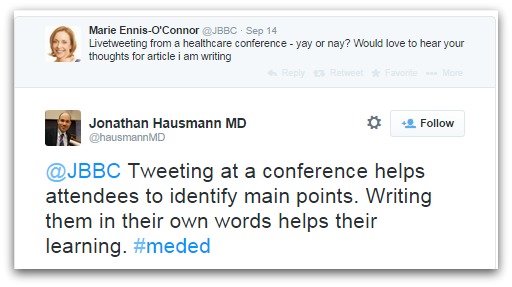
Live-tweeting enhances personal learning

Live-tweeting can also enhance your own personal learning as it requires you to listen more carefully and focus more sharply on the key details of a talk in order to better summarize what the speakers are saying. Furthermore, live-tweeting is a means of amplifying the conference experience, generating global reach and stimulating collaborative potential.

hausmann.jpg

This learning is further consolidated with an archive of tweets on which you can reflect further after the event.  Sarah Chapman, whose work at the UK Cochrane Centre focuses on disseminating Cochrane evidence through social media, observes how this in-the-moment tweeting captures the immediacy and energy of the event: “Live tweeting can convey the atmosphere generated by a controversial or entertaining presentation in a way that will be lost by the time you get to look at the slides uploaded on the internet”.

Many times the original tweet will be supplemented by pertinent comments on Twitter from other conference attendees and also from those listening in online.  For example, someone may respond to a tweet by questioning the strength of the clinical outcomes of a study, or a practicing physician might respond with their experiences treating patients.  As a review published in J. Clin. Med. states: “The diversity of expertise and backgrounds that can communicate on Twitter is unique, and this exchange of information can be extremely beneficial.”

Live-tweeting enhances virtual learning

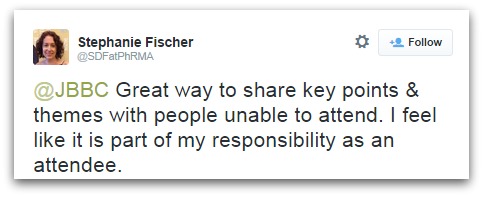
Reporting live from a medical conference or event allows you to provide valuable insights to those who are unable to attend in person.  Due to rising costs, concern about our carbon footprint and increasing time commitments, virtual attendance is becoming more commonplace at healthcare events – hence the rise in live-tweeting.

steph.jpg

There are enumerate conferences and symposia to choose from these days, and that choice often becomes impossible due to the sheer diversity. Following attendees using meeting, hashtags permits in real-time remote access to the meeting, viewed through their interest / opinion spectrum. Wong, Wilkinson & Malbrain, Using social media in medicine to your advantage, with care!

Mark Brown, a UK-based mental health advocate, points out that “There have been many recent publications and events imploring us to have a national conversation about mental health.  Why then do so many fascinating discussions happen at conferences, uncaptured and inaccessible to people wanting to join them?”

susannah.jpg

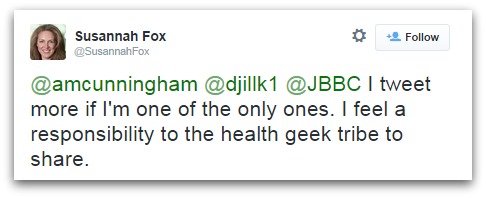
Brown believes “this democratisation of access is vital if we want to broaden our mental health discussions and raise the level of sophistication in our arguments and debates. For this to happen we need some brave souls who know how to cover an event via live tweeting and who are prepared to do so out of a sense of public service.”

You might also like to read Make Your Mark at Medical Meetings with Social Media


This is the first in a two-part guide to live-tweeting.  In part 2,  I will share my tips for best practice in live-tweeting. Whether you are a conference organizer, a speaker, or an attendee these tips will help you make the most of the opportunity to report live from your next event.   

Posted in HCSM

10 Tips To Create More Engaging Content For Your Facebook Page

Worldwide, there are over 2.45 billion monthly active Facebook users and 1.47 billion people on average log onto Facebook daily. Statistically speaking, Facebook is too big to ignore but when it comes to social media marketing, is it actually delivering the results you’d hope to see?

Over 80 million businesses have a presence on the social network which makes it a crowded and competitive landscape. And at a time when organic Facebook Reach is estimated to currently be as low as 1–3%, succeeding on the platform is more difficult than ever.

1_01eS1v_JkT1eq0hH2RR61A

If you’re struggling to make an impact on Facebook, then this article is for you. In it, I will share some best practice tips to help you increase your organic reach and boost engagement.

So let’s get started with Tip #1

1. Grab attention with a compelling visual

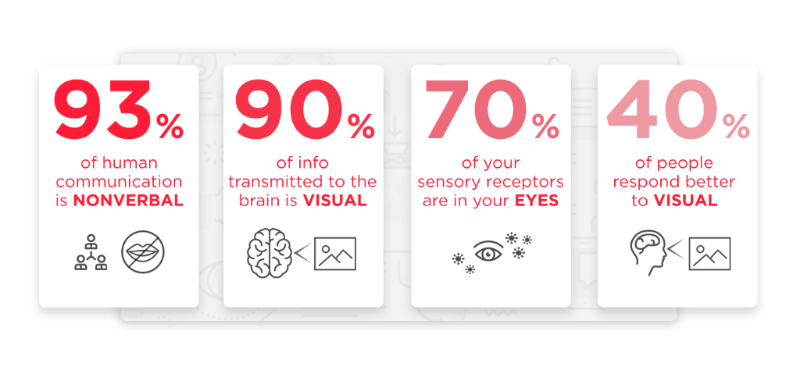
Study after study confirms that how you create and share content matters — with visual content leading the way.

unnamed (2)

According to research by Kissmetrics, photos get 53% more likes, 104% more comments and 84% more click-throughs on links than text-based posts. Facebook recommends each post you create should include some type of creative, like images, GIFs or videos.

43060749_1968821373181950_3618822294081634304_n.jpg

Make sure these creative assets are of high quality. Avoid using blurry images or videos or creative that doesn’t accurately reflect your brand or message. If you post any pictures of your patients, be sure to obtain their permission.

Pro Tip: You can easily create your own images with drag-and-drop tools, like Canva and Ribbet.  They will also automatically create the right sizes for your Facebook page, so you don’t need to worry about it.

2. Keep things simple

Facebook advises that “simple posts with clean creative are best at capturing an audience’s attention” and recommends the following tips:

· Keep your color scheme clean and consistent

· Include images that are recognizable

· Use minimal, concise and impactful text

3. Share a behind-the-scenes photo of your office

People love to see behind the scenes of your practice – so bring your camera to your next staff meeting, lunch or event. Sharing pictures of your employees (with their permission, of course) makes your practice so much more relatable.

download (24)

4. Post about cause awareness events

Whether it’s Breast Cancer Awareness Month, Alzheimer’s Disease Awareness Month or Healthy Weight Week, there is a cause awareness month you can write about at least once a month.

download (23)

5. Create holiday-themed posts

Christmas, Hanukah, Thanksgiving — they all provide an opportunity to share holiday themed advice or send best wishes to your followers.  You could also join in fun holidays like National Donut Day. Check out this calendar to keep you right up to date with ideas.

6. Post news and updates from your practice

Are you rolling out a new program, product or service? Have you acquired a new piece of equipment that affords better care? Let your followers know about it. Patients will appreciate you keeping them informed.

download

7. Share videos

Video has become the predominant way we consume information. The average video post generates 135% greater organic reach when compared to photo posts according to research from Social Bakers.

Here are some tips to use video more effectively on Facebook

8. Go Live

Facebook Live videos get three times the engagement of traditional videos shared on the platform and it draws 10 times as many comments as regular video. Facebook actively prioritizes live video by placing it at the top of the News Feed, as well as sending notifications to potentially interested audience members. Additionally, Facebook Live videos are archived on Facebook and can be viewed and shared after the live broadcast.

download

Tips for going live (via AAP News)

  • Consider making a regular time for your show if you plan on frequent live videos.
  • Choose topics that will engage your audience and provide valuable education.
  • Tell viewers ahead of time when you are going live.
  • Greet your viewers and respond to their questions and comments by name.
  • Promote your live video on multiple social media platforms to increase engagement.
  • Be prepared. Create an outline of key points and questions.
  • Make sure you have a strong internet connection and no institutional firewall blocking your broadcast.

Recommended: Social Media Marketing: How To Master The Art Of Going Live

9. Create Facebook Stories

Facebook Stories — user-generated slideshows and video collections — are short (around 20-seconds) pieces of content created on your smartphone and available for up to 24 hours. After this time your story automatically deletes itself, although there is an option to save your content.

10. Post When Your Followers Are Online

To optimize your engagement and reach, you want to share content when your audience is online. If you search for optimal posting times, you will find many guides online. You can follow these recommendations as a starting point, but it’s best to do your own testing to see which days and times work best for your own audience.

1_fAHzya34yDjuoWBA0w0pSQ

Facebook makes it easy to find out your optimal posting times by navigating to the Insights Tab and selecting Posts. Here you will get data about when your Facebook Page fans are online for each day of the week.  Once you’ve determined your optimal posting times, make use of Facebook’s post scheduling feature to post at just the right time.

To Wrap Up

While I have focussed on increasing organic reach on Facebook, the reality is that Facebook is a pay-to-play environment now. You will need to include paid strategies for a successful Facebook marketing plan. Use organic content to analyze and test to see what works best with your audience. You can then use these insights for paid ads. Your top-performing posts are proven content. With the right ad targeting, these posts can continue to reach and engage more people.


Posted in Cool Tool

Monday Morning Cool Tool: Giphy

I love learning about new tools to make social media marketing more creative and effective, so I’ve decided to share some of my favourite tools with you at the start of each week. This week I’m recommending Giphy  – a source of free animated gifs.

Why use Gifs?

Hootsuite recommends the use of Gifs “to spice up, excite and wake up your social audience.”

A little motion makes your content marketing more memorable. Though use sparingly, otherwise it distracts rather than enhances.

This Friday is #CappuccinoDay  so why not celebrate with a Gif like the one below?

Posted in Cool Tool

Monday Morning Cool Tool: Tweriod

I love learning about new tools to make social media marketing more creative and effective, so I’ve decided to share some of my favourite tools with you at the start of each week.

This week’s cool tool recommendation is Twerioda  Twitter tool that helps you identify the best times to post on Twitter for your audience of followers.

Use the tool to pinpoint the days and times of the week when your followers are online to maximize the reach of your tweets.  Here’s a snapshot of my account showing me that engagement is highest on weekdays between 4 pm and 5 pm; 6 pm and 7 pm and 10 pm and 11 pm.

001556ea-7d85-40c4-9000-690ec6de15e0

Try it for yourself and adjust your tweeting schedule to reflect the results. Use a tool like Hootsuite or Buffer to schedule your tweets according to the optimum times for your audience on Twitter.