Articles
Twitter 101
#LCSM Chat 27-Feb-14: What do cancer patients want from their doctors and online support groups?
A not-to-be-missed chat. Great topic!

The focus for the next #LCSM Chat at 8 PM Eastern (5 PM Pacific) on Thursday, February 27, 2014 will be “What do cancer patients want from their doctors and online support groups?” The moderator will be Dr. Jack West.
Online cancer support groups can provide a wealth of information and understanding for cancer patients, caregivers, and family members. Many in online forums find expertise and credibility among others who have traveled down the same road. “Expert patients” in these forums can provide an understanding and hope that even the best doctor can’t offer, because they’re living proof you can understand your treatment options, and your treatment can work. And online groups are available 24/7, for free.
However, different patients seek out different levels of information, both in these forums and with their doctors. Some want to know all the available facts, including survival data in the tables and figures shared among oncologists. Others prefer…
View original post 235 more words
#HIMSS14: The patient has no clothes
Pat Rich talks sense


Someday, the opening speaker at the Health Information Management Systems Society (HIMSS) annual meeting will not say that this is the best year ever for health information technology. But not this year.
“What a fabulous time it is to be working in health IT,” said Scott MacLean, chairman of the board for HIMSS exclaimed as he opened the world’s largest annual meeting on health IT – with an estimated 37,000 delegates and 1200 vendors in attendance.
MacLean is speaking to the converted, and the boosterism rampant at the meeting makes it difficult not to turn a jaundiced, journalistic eye to the proceedings. This meeting is filled to the rafters (or, in the case of the kilometre-long Orange County Convention Center – skylights) with either those who truly believe health IT is going to transform the health care system or those who want to sell something to the former.
Too…
View original post 313 more words
Guide To The Future Of Medicine (Infographic)
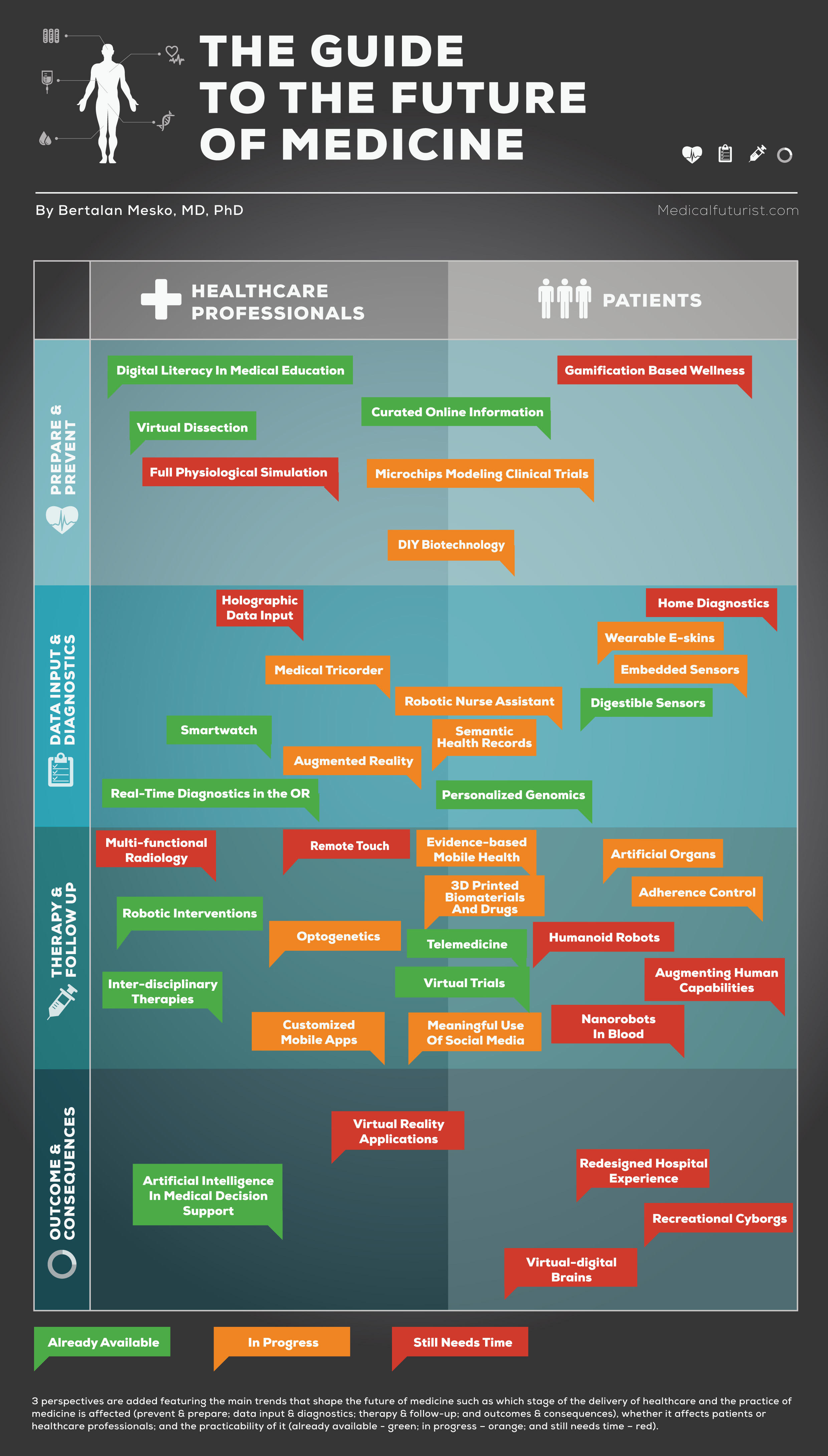
Nice infographic from Dr Bertalan Meskó from his Guide To The Future Of Medicine ebook.
Hangout With Doctors 2.0
I had the pleasure this week of moderating a discussion on e-patient and physician relations for a Doctors 2.0 & You Google hangout.
The panel which included Denise Silber (founder of Doctors 2.0), Jamie Tripp Utitus (MS survivor and health blogger) and Renza Sciblia (diabetes consumer and health blogger) discussed the ways in which new technologies are contributing to the patient/physician relationship.
Relationships in medicine are as important now as they were in the past. The difference is that today’s technology allows physicians and patients to communicate on a different level. The panel listed some of the new technologies that are changing the dynamic between the patient and the physician, and how the balance of power has shifted. This led to a discussion on how some doctors view the empowered, digitally savvy patient as a challenge to their authority and expertise. Jamie suggests leading physicians gently towards a discussion on health technology, while Renza sees this as an opportunity to broaden the relationship between doctor and patient, fostering more openness and honesty in the relationship. She suggests that patients interview their doctors in advance to find the level of collaboration they are happy with.
Speaking to the numbers of doctors who embrace new technologies, Denise suggests that this is a multi-factorial problem, encompassing people skills and financial remuneration. Michael Weiss, listening online to the discussion, asked the panel for their thoughts on the future of medicine being the convergence of ehealth, mobile health and social media. The panel were all in agreement that this is the future of medicine, and spent some time on the important role that social media has to play in supporting and educating patients. Blogs and Twitter chats are great vehicles for healthcare professionals to learn about the lived experience of a condition.
The discussion ended with each panelist offering one piece of advice to physicians to help them prepare for a future where patients are empowered by new technologies. Renza’s advice is to just step in there and offers the reassurance that the majority of patient sites online are very well moderated and provide accurate information. This is not about replacing the doctor/patient relationship, but augmenting it. Jamie refers to Dr. Charles Safran’s quote that patients are the most underutilized resource in healthcare, followed by Denise quoting that the patient is the first member of the medical team. The discussion ends with Jamie’s call to patients to join the healthcare conversations online – to find answers and support and Renza emphasizing the peer-to-peer support and power of community that can be accessed online.
How Can Research Keep Up With eHealth? Ten Strategies for Increasing the Timeliness and Usefulness of eHealth Research
See on Scoop.it – Health Care Social Media Monitor

eHealth interventions appear and change so quickly that they challenge the way we conduct research. By the time a randomized trial of a new intervention is published, technological improvements and clinical discoveries may make the intervention dated and unappealing. This and the spate of health-related apps and websites may lead consumers, patients, and caregivers to use interventions that lack evidence of efficacy.
See on www.jmir.org
Twitter Empowers Patients to Seek and to Speak Out | e-Patients.net
See on Scoop.it – Health Care Social Media Monitor

The ability to write something meaningful in140 characters, including a shortened URL, is the basis of Twitter. Over 500 million tweets go out every day to
See on e-patients.net

The New Era of Digital Health
Lots of great ideas for discussion here

Crystal Chin (@eHealthCareers & @_CrystalChin) and Maheisha Ravendra (@MaheishaR) will moderate this week’s #hcsmca focussed on digital health. Here they describe how they define the new era of digital health.
By Crystal Chin and Maheisha Ravendra
 Crystal Chin
 Maheisha Ravendra
Healthcare is evolving as more processes use and gain insight through technology. Systems such as electronic medical records, picture archiving and communication systems and clinical information systems have been implemented and are now part of the healthcare infrastructure. However, with the arrival of data science, mobile technology, wearable devices, pharmacogenomics and personal health data, a new era of digital health is emerging. These new innovations all aim to achieve better health. But it also means a whole new set of concepts and ideas.
Although there are many ideas of what digital health is, such as the “convergence of the digital and genetics revolutions with health and health care”…
View original post 445 more words
Use of the Internet for health promotion
See on Scoop.it – Health Care Social Media Monitor
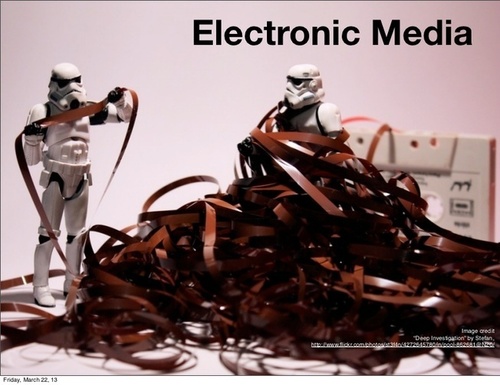
Plenary presentation at the 2013 annual convention of the Philippine Society of Endocrinology & Metabolism
See on www.slideshare.net
 Health Care Social Media