Posted in #HCSM, SEO

Strategies for Successful Healthcare SEO: How to Sidestep Common Keyword Errors

In Search Engine Optimisation (SEO) keywords play an important role in attracting organic traffic. Organic traffic is traffic that comes from unpaid search results. You can, however, undermine your efforts if you make mistakes when choosing keywords.

Let’s explore some common keyword mistakes and how to avoid them.

1. Ignoring Search Intent

A healthcare SEO strategy must understand search intent, also known as user intent. The intent of a search query refers to the purpose behind it, whether it’s such as informational (e.g., symptoms of a disease), transactional (e.g., booking an appointment), or navigational (e.g., finding a hospital’s website).

Actionable Tip: Create content that directly addresses the identified intents. For example, informational content should provide comprehensive insights into medical conditions or treatment options, while transactional content should facilitate easy appointment scheduling or service inquiries.

2. Overstuffing Keywords

Keyword stuffing is a dated and potentially harmful practice. Modern search engines are skilled at detecting unnatural keyword usage, which may result in penalties. Search engines prioritize content that is high-quality, relevant, and meets the needs of users. Instead of obsessing over keyword placement, concentrate on providing comprehensive information, answering common healthcare questions, and addressing patient concerns.

Actionable Tip: Use tools like Google’s related searches or Thesaurus.com to identify synonyms and related terms relevant to your primary keywords. Incorporate these synonyms naturally throughout your content to expand your keyword reach without sacrificing readability. Monitor the performance of these variations to see which terms resonate best with your audience and adjust your content strategy accordingly.

3. Overlooking Long-Tail Keywords

Long-tail keywords cater to users who are further along in their decision-making process. For instance, someone searching for “best pediatric dentist in [your city]” is likely more ready to book an appointment compared to someone searching for just “dentist”. Long-tail keywords often reflect specific patient needs or concerns. By incorporating these keywords into your content strategy, you demonstrate relevance to potential patients who are actively seeking detailed information or specific healthcare services. Because long-tail keywords are more specific, they typically face less competition in search engine results pages (SERPs). This means healthcare providers have a better chance of ranking higher for these targeted queries.

Actionable Tip: Use keyword research tools to identify long-tail keywords relevant to your specialty or services. Look for terms that patients are likely to use when searching for specific healthcare solutions.

4. Failing to Update Keywords

SEO is not a set-it-and-forget-it strategy. User search behaviors and trends change over time. What patients search for today might differ from their queries six months ago. Staying updated with these trends ensures that your content remains relevant and visible. As your healthcare practice grows and evolves, so should your content. Updating keywords allows you to align your content with the latest treatments, services, and patient needs you offer.

Actionable Tip: Set a schedule for regular keyword research and updates, such as quarterly or bi-annually, to ensure your SEO strategy stays aligned with the latest trends and user behaviors.

5. Ignoring Local SEO

For healthcare providers, local SEO is a critical component of a successful digital marketing strategy. Many patients search for healthcare providers using location-based queries such as “dentist near me” or “pediatrician in [your city].” Ensuring your practice appears in these local searches is essential for attracting nearby patients. Optimizing for local SEO can directly drive more patients to your physical location. When potential patients find your practice easily through local search results, they are more likely to visit in person.

Actionable Tip: Claim and optimize your Google My Business profile. Complete all the fields, including business hours, services, photos, and patient reviews. Regularly update your profile to reflect any changes or new services.

6. Not Tracking Website Analytics

Ignoring website analytics is a common pitfall, but without analysing the performance of your keywords, it’s impossible to know what’s working and what’s not. By analyzing analytics data, you can identify which keywords are driving the most traffic to your website. High search volumes for specific keywords indicate potential visibility and demand among your target audience. Analytics also provide insights into user behavior on your website. You can see which pages users visit most frequently, how long they stay on each page, and where they drop off. This information helps you optimize your website for better user engagement and conversion.

Actionable Tip: Ensure Google Analytics is properly set up on your website to track key metrics. Familiarize yourself with the dashboard and reports available.

7. Ignoring Competitor Analysis

Competitor analysis is a crucial aspect of developing a robust healthcare SEO strategy. By identifying and analyzing competitors within your niche, you can gain valuable insights into their keyword strategies, content performance, and overall SEO tactics. This knowledge not only helps you understand your competitive landscape but also enables you to identify opportunities to improve your own SEO efforts.

Actionable Tip: Analyzing competitors’ content helps you identify gaps in your own content strategy. Look for topics or keywords that your competitors are ranking for but you are not. Addressing these gaps allows you to capture additional search traffic and enhance your online visibility.


Effective keyword optimization is fundamental to successful healthcare SEO. By implementing the strategies discussed in this article, you can significantly boost your website’s visibility, attract organic traffic, and ultimately achieve your healthcare practice’s goals. Understanding and targeting the right keywords tailored to patient needs and search intents ensures that your content resonates effectively, driving engagement and conversions. Stay proactive with keyword research, regularly update your strategy based on analytics insights, and leverage competitor analysis to stay ahead in the competitive healthcare landscape. By prioritizing these steps, you can establish a strong online presence, reach more patients, and foster meaningful connections within your community.


Posted in Cool Tool

Monday Morning Cool Tool: UberSuggest

This week I’m recommending UberSuggest – a free keyword research tool that lets you see which keywords are performing best for your competitors/peers.

This truly is a super helpful tool when it comes to Search Engine Optimisation. It generates a list of keywords for you based on what is working for your competitors and based on what people are typing into Google, allowing you to see volume, competition, and even seasonal trends for each of your chosen keywords.

Let’s see it in action.

Type in your chosen keyword (or a domain of a competitor) to see which keywords are ranking for them). In this example, I’ll use the keyword ‘social media’.

The first thing I get is an overview of keyword search volume (the number of searches this keyword has per month) SEO difficulty (estimated competition in organic search – the higher the number the more competitive) paid difficulty (estimated competition in organic search – the higher the number the more competitive) and cost per click (if you are using paid Google ads).

Keyword Ideas

Now I can start to drill down into keyword ideas based on my head keyword.

As you can see from the screenshot above, you can do a lot more, such as identify how popular the keyword is based on its search volume over the last 12 months.  

Content Ideas

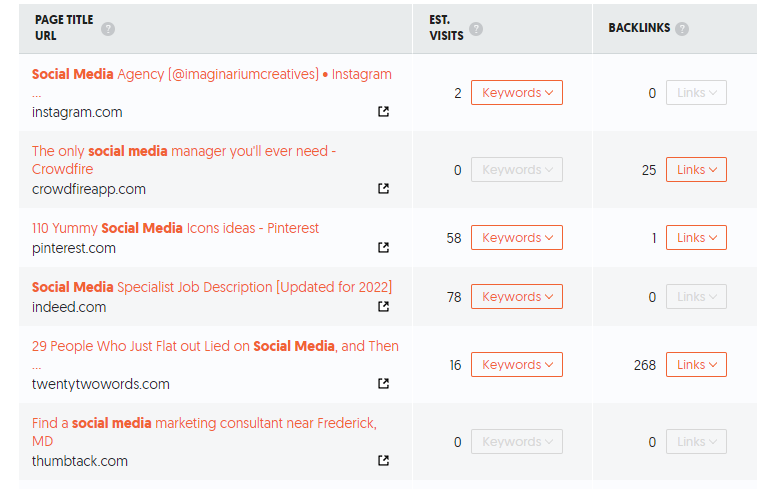
Now let’s look at what we can do with these keywords. Ubersuggest shows you the highest performing content for your chosen keywords.

Backlink Data

Backlinks are one of the most important components of Google’s ranking algorithm. However, there is a problem. They are difficult to build. Ubersuggest lets you see exactly what content people are linking to in your space. You then approach each of these sites and ask them to link to you.  

Pricing

You get three free daily searches with the free version. Before you decide to upgrade, you can try out a paid version for free for 7 days.   

Posted in Cool Tool

Monday Morning Cool Tool: Answer The Public

This week’s cool tool recommendation is Answer the Public – a free keyword research tool.

Answer the Public is a fantastic resource for anyone looking to optimize their website or create compelling content. This powerful tool provides you with valuable insights and data to help you understand what people are searching for online. It offers a unique visual representation of keyword search suggestions, presenting them in an appealing and interactive manner.

When you enter a keyword or phrase into Answer the Public, it generates a range of content ideas based on real searches made by users. It presents these ideas as a web of questions, prepositions, and comparisons related to your chosen keyword. This gives you a clear overview of the most common queries and concerns people have about the topic, allowing you to tailor your content to precisely match their needs and interests.

Answer the Public is particularly valuable for generating long-tail keywords – specific phrases that may have lower search volumes but can be highly relevant to a particular niche or audience. These long-tail keywords can help websites rank better in search results and attract more targeted traffic.

Not only does the tool provide you with a wealth of content ideas, but it also helps you understand the intent behind these searches. By analyzing the different types of questions that arise, you can determine whether people are looking for information, solutions, or opinions. This invaluable insight enables you to create content that addresses these intentions effectively, increasing the relevance and usefulness of your website.

Additionally, Answer the Public allows you to download the generated keyword suggestions as a CSV file (paid feature) making it easier to organize and analyze the data. With this information at your fingertips, you can optimize your website’s SEO by strategically incorporating the most relevant keywords into your content.

Pricing

You get 3 free searches per day; paid subscriptions start at $9 per month

Posted in #HCSM

The Critical Role of Local Search Marketing in Healthcare Marketing

As patients increasingly turn to the internet to seek medical solutions and care, the role of local search has become a critical aspect of healthcare marketing strategies. From enhancing patient engagement to improving online visibility, local search plays a pivotal role in connecting healthcare providers with their target audience.

In this article, we’ll delve into the compelling reasons why local search matters in healthcare marketing and explore the importance of optimizing for local search and its impact on the future of healthcare marketing.

What Are Localized Search Results?

Localized search results, often referred to as Local SEO (Search Engine Optimization), are search engine results pages that display tailored content based on the user’s location or search intent. When users perform search queries on platforms like Google or Bing, search engines take into account various factors, such as the user’s IP address, location settings, and the search term itself, to deliver results that are most relevant to their specific location or query context.

Local search is of paramount importance in healthcare marketing for several compelling reasons. As the healthcare industry becomes more consumer-centric and digital-driven, optimizing for local search can significantly impact a healthcare organization’s online visibility, reputation, and patient acquisition.

Here are some key reasons why local search matters in healthcare marketing

1. Targeting Local Patients

Healthcare services are inherently location-based. People often seek medical care from nearby providers for convenience and accessibility. By optimizing for local search, healthcare organizations can target potential patients in their immediate vicinity and capture a larger share of the local market.

2. Mobile and Voice Search Trends

With the increasing use of smartphones and voice-activated devices, patients are now turning to local searches for immediate healthcare solutions. Voice search, in particular, often includes phrases like “nearest hospital” or “doctor’s office near me.” Healthcare providers that have a robust local search presence can capitalize on these emerging trends and attract patients seeking quick medical assistance.

3. Google My Business (GMB) Visibility

Google My Business is a vital tool for local search marketing. Optimizing and maintaining an accurate GMB listing ensures that healthcare organizations appear in Google Maps and local search results. Patients can find essential information such as contact details, opening hours, patient reviews, and directions, making it easier for them to choose a healthcare provider.

4. Reputation Management

Local search results often display patient reviews and ratings. Positive reviews and high ratings can significantly influence potential patients’ decisions. On the other hand, negative reviews can deter patients from choosing a particular healthcare facility. Actively managing online reputation by responding to reviews and addressing concerns can help build trust and credibility in the local community.

5. Niche Healthcare Services

For specialized healthcare services or medical practices, local search becomes even more critical. Patients often search for specific medical specialties, such as “pediatric dentists near me” or “cardiologists in [city].” By optimizing for relevant keywords and location-specific terms, healthcare providers can connect with patients seeking their particular expertise.

6. Cost-Effectiveness

Local search marketing can be highly cost-effective compared to traditional advertising methods. Investing in local SEO, optimizing website content for local keywords, and maintaining an accurate online presence can yield substantial long-term benefits and a higher return on investment (ROI).

7. Community Engagement

Active participation in local search marketing fosters a sense of community engagement. Healthcare organizations can showcase their involvement in local events, sponsorships, and health-related initiatives, creating a positive image and deeper connections with the local population.

As the healthcare landscape continues to evolve, it is evident that local search will continue to play a pivotal role in shaping patient experiences and driving success for providers. By understanding the significance of local search in healthcare marketing and implementing robust strategies tailored to their specific locations, healthcare organizations can forge stronger connections with their communities and ultimately provide better care to those they serve. Embracing the potential of localized marketing, healthcare providers can navigate the dynamic digital realm and pave the way for a healthier, more accessible future for all.

Posted in Cool Tool

Monday Morning Cool Tool:  Dr. Link Check

This week I’m recommending  Dr. Link Check– a tool to help you identify broken links on your website and fix them.

Did you know that broken links on your website are sending signals to Google that your website is old and outdated and perhaps even untrustworthy?

Broken links or dead links are hyperlinks on a webpage that are no longer functional. They can negatively impact your SEO by impacting bounce rate (the percentage of visitors that navigate away from a particular site after viewing only one page) and time on site, two factors that directly affect SEO.

Finding broken links is the first step to fixing them. This can be done in a number of ways. One is to use a tool like Dr. Link Checker.

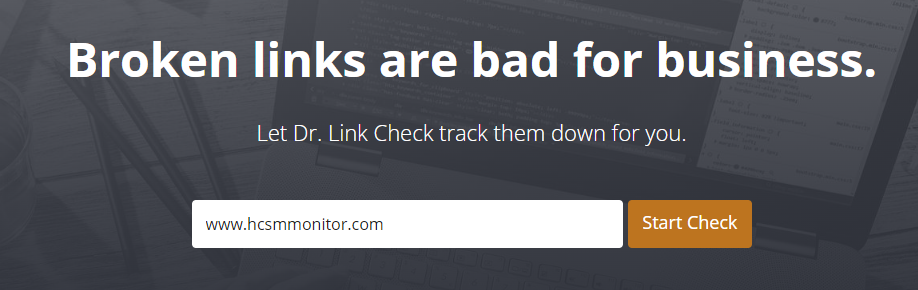
It’s very simple to use. Simply type in the url of your site and let the link checker go to work.

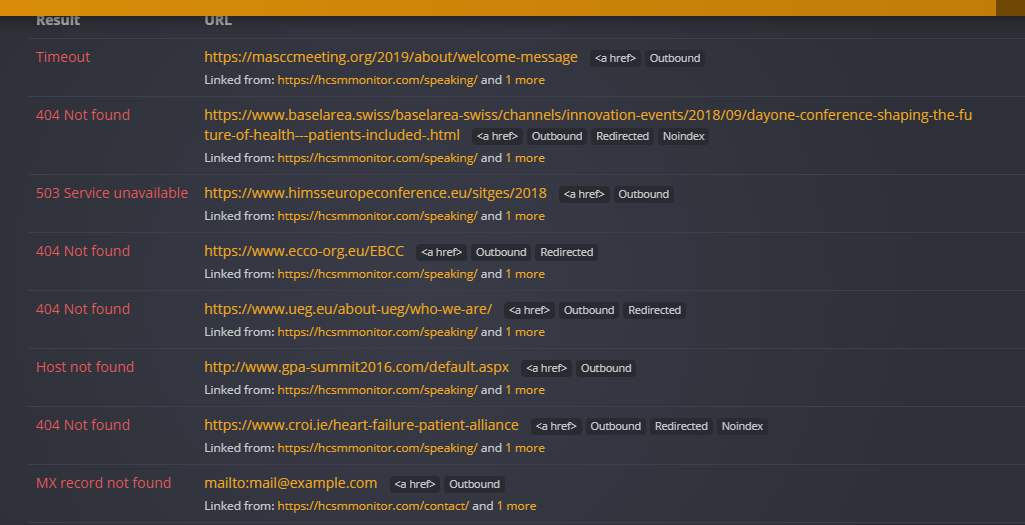
This shows me a list of the broken links on my own website that I need to fix. A majority of these link to dead external sites. This makes sense since I originally linked out to speaking engagements and the conference and meeting sites have been taken down.  In this case, I have no choice but to delete the hyperlink since I have no control over external links.  

When it comes to internal links, I have control over them, and it’s good SEO practice to review content and correct broken links immediately.   

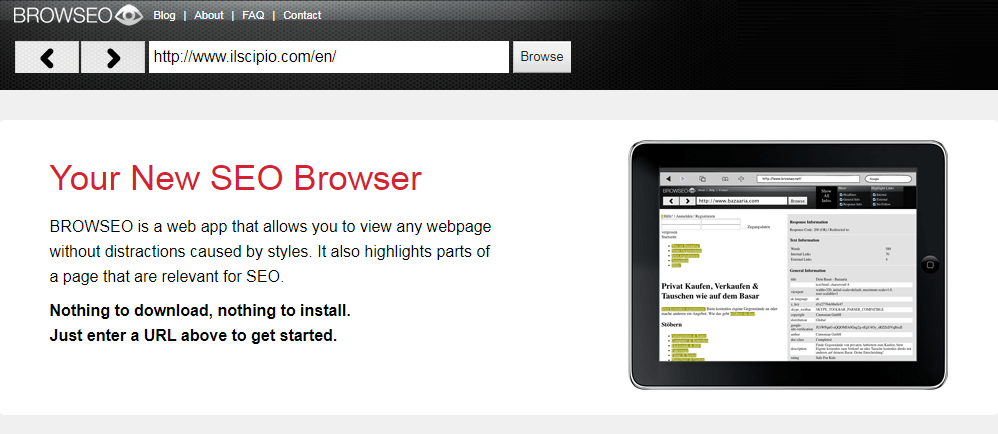
T

Content Ideas

Posted in #HCSM, Infographics

The 11 Most Common Website SEO Issues [Infographic]

SEO (the acronym stands for Search Engine Optimization) is the process of getting traffic from “organic” listings on search engines in order to improve your website’s search engine ranking.

Did you know that 39% of total global web traffic comes from search, with Google receiving over 63,000 searches per second on any given day?

But 75% of users never click past the first page of search results.

In this infographic, you can see at a glance some of the most common on-site SEO issues, with duplicate content being the worst offender.

seoissues-semrush-100816

Want to optimize your website? Check out these tools.

Posted in #HCSM

4 Essential Steps to Healthcare Social Media Marketing Success

Crowd Clip ArtAs the Internet increasingly becomes the medium of choice for researching health information, social media has become an important channel for healthcare marketing.  In today’s social media-connected, content marketing rich environment, healthcare marketeers who are not using social media as part of their strategy are missing out.  In today’s post,  I will outline the four essential steps required for successful healthcare  social media marketing.

The first step is to gain a clearer image of who your audience is and what they are saying about you. Only then will you be able to create compelling, relevant and valuable content to fuel the social media engine.

(1) Identify and segment your online audience

Your healthcare marketing efforts will be much stronger if you can identify your target market and segment it so that you can tailor your content more specifically for them. Unless you take this first step, your social media marketing activities will remain unfocused. If you can clearly identify your target market, then you can plan the best combination of email marketing, social networking strategies, SEO, Pay Per Click, Banner ads, etc. You are looking to drill down deeper to discover their geographic location, their gender, level of education, family status, which social media sites they use, what conversations they are having online, how they are engaging with you, your competition and your online partners.

(2) Plan your social and digital media channels

Armed with this information you will now be able to plan which social media channels are most suited to your target market and direct your efforts accordingly. For example, if you identify that your audience is predominately female, you might direct some of your healthcare marketing efforts to Pinterest, a site whose rapid growth and success has been driven by women.

(3) Join in the online conversation

There is a support and community group for just about any medical condition or interest online.  To further expand their reach and focus on patient care, these groups need the input of qualified healthcare practitioners to help validate the information discussed on their sites and to ensure balanced views that are in the best interest of patients. Participating in these communities by providing advice, educational podcasts, guest contributions to widely read blogs and websites can help you broadcast your brand and build your reputation, while providing valuable support to the group.

(4) Monitor your online reputation

Consistency, credibility and connection are the cornerstones of maintaining your healthcare brand’s integrity.  It is important to listen to what is being said about your brand, not just to know what is going on and whether you are receiving any negative publicity or comments that need to be addressed, but also to know what you are doing right, so that you can do more of it. At a minimum keep an eye on tweets, comments and messages on your Twitter, blog and Facebook accounts. You should also set up Google Alerts for your brand and industry.

There’s no question that social media is growing in importance in the healthcare field and it is no longer an optional marketing strategy.  The conversation is happening online with or without you, so for the sake of your healthcare brand, join it!