See on Scoop.it – Blogging For Business
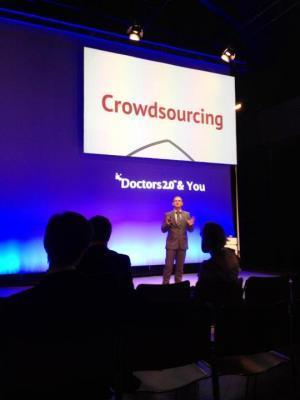
I’ve recently given a keynote at the Doctors 2.0 and You event and the summary is now available. I hope the video will also be available soon.
See on scienceroll.com
See on Scoop.it – Blogging For Business
I’ve recently given a keynote at the Doctors 2.0 and You event and the summary is now available. I hope the video will also be available soon.
See on scienceroll.com
See on Scoop.it – Blogging For Business
Patients increasingly are taking a more active role in their own health care and going online to obtain health information.
See on www.ihealthbeat.org
Ed Bennett manages web operations at the University of Maryland Medical Center (UMMC). He is an active player in #HCSM (Health Care Social Media Community.
Consumer behavior is changing and social media is becoming increasingly relevant for individuals and organizations.
As the social media landscape expands and evolves, Facebook maintains its leadership despite IPO pains and mobile weakness.
Twitter at #2 is becoming a curator and potential media company while Google+ is becoming Google’s SoLoMo layer.
Newer players differentiate and create niches of their own, or seek exits. Despite the “success” of social media, public market investors are skeptical but social media’s impact on human behavior is undeniable.
Mobile is becoming the “first screen,” SoLoMo is growing in adoption, influence and importance and the SMMS industry is consolidating. Social media, and social advertising, is no longer a playground but a priority for major brands.
While marketers continue to experiment, efforts are much more strategic and studies are starting to show connections between leveraging social paid, promoted, owned and earned media, and changes in purchase intent. Ultimately, the social media opportunity lies in enhanced customer experiences.
Note: This presentation is a 2012 mid-year update to the original “State of Social” presentation by Esteban Contreras.
See on Scoop.it – Social Media Marketing For Non Profits
See on digitaldemocracy.com.au
See on Scoop.it – Social Media Marketing For Non Profits
Patient input will continue to increase like a tide that’s coming in. The obvious fact is that patients have the most at stake and in many cases have the broadest base of knowledge about health conditions. Patients will continue to claim more significant seats at the table.
See on rawarrior.com
It’s been a while coming, but it makes me no less proud to present to you #hcsmca’s 18-month report card. A big thank you to Alaina Cyr (@AlainaBCyr) for creating the beautiful infographic and to Yaser Alyounes (@YaserAlyounes) for writing the accompanying commentary below. PS: #hcsmca is 21 months old today.
 Look at how far we’ve come since the inception of the Canadian chapter of the global Healthcare Social Media community. From 511 participants in December 2010 to 4,533 in March 2012, our community continues to exhibit tremendous growth both in numbers and diversity of topics and participants. (Compare to our 6-month report card.) In my opinion, this had a lot to do with the culture of the community as its been open, inviting, and supportive. This can be clearly seen in two points:
View original post 153 more words
See on Scoop.it – Health Care Social Media Monitor
IN A windowless room on a quiet street in Framingham, outside Boston, Rob Goudswaard and his colleagues are trying to unpick the knottiest problem in health care: how to look after an ageing and thus sickening population efficiently.
See on Scoop.it – Health Care Social Media Monitor
See on www.doctors20.com
See on Scoop.it – Health Care Social Media Monitor
The motivation on the part of payers is clear: Drive down the cost of care by keeping the population as healthy as possible. So what motivates patients to participate?