This week’s cool tool recommendation isAnswer the Public – a free keyword research tool.
Answer the Public is a fantastic resource for anyone looking to optimize their website or create compelling content. This powerful tool provides you with valuable insights and data to help you understand what people are searching for online. It offers a unique visual representation of keyword search suggestions, presenting them in an appealing and interactive manner.
When you enter a keyword or phrase into Answer the Public, it generates a range of content ideas based on real searches made by users. It presents these ideas as a web of questions, prepositions, and comparisons related to your chosen keyword. This gives you a clear overview of the most common queries and concerns people have about the topic, allowing you to tailor your content to precisely match their needs and interests.
Answer the Public is particularly valuable for generating long-tail keywords – specific phrases that may have lower search volumes but can be highly relevant to a particular niche or audience. These long-tail keywords can help websites rank better in search results and attract more targeted traffic.
Not only does the tool provide you with a wealth of content ideas, but it also helps you understand the intent behind these searches. By analyzing the different types of questions that arise, you can determine whether people are looking for information, solutions, or opinions. This invaluable insight enables you to create content that addresses these intentions effectively, increasing the relevance and usefulness of your website.
Additionally, Answer the Public allows you to download the generated keyword suggestions as a CSV file (paid feature) making it easier to organize and analyze the data. With this information at your fingertips, you can optimize your website’s SEO by strategically incorporating the most relevant keywords into your content.
Pricing
You get 3 free searches per day; paid subscriptions start at $9 per month
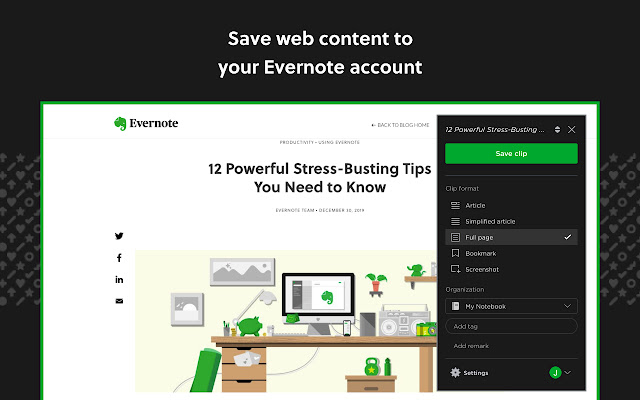
This week’s cool tool recommendation is Evernote Web Clipper – a useful browser extension for saving and organizing web content.
Imagine having a vast library of curated knowledge at your fingertips. With Evernote’s browser extension, you can not only save individual snippets but also capture entire webpages, complete with images and formatting. This is particularly useful when you come across a webpage that you want to reference later, even if its content changes over time. By saving a snapshot of the entire webpage, you can preserve it exactly as you saw it, ensuring that you have a reliable reference point whenever you need it.
If you already use the Evernote tool, this is a handy browser extension to pair with the tool. Once installed, you can click the extension’s icon in your browser to quickly and seamlessly clip the current webpage or select specific text and images to save. With just a few clicks, you can capture and save relevant content from online articles, blog posts, recipes, research papers, and more. Clipped content is automatically saved to your Evernote account, eliminating the need to manually copy and paste information.
This week’s cool tool recommendation is StoryLab.ai- an AI copy generator that helps you generate copy ideas, hooks, outlines and ready-made copy for marketing purposes.
Whether you’re looking to create an Instagram caption, a blog title, or ad copy, this tool is designed to inspire you.
Here’s How To Use StoryLab
Begin by selecting the type of content you want to create.
In the example below, I’ve inputted “social media marketing strategy” as a blog topic and the tool has generated some ideas for headlines.
Here’s what happens when I input the same term into the email subject line generator.
And here’s what is returned when I ask for ideas for a social media post. I have to say this is by far the most impressive result.
I’ve only recently been introduced to this tool, but I can already see I am going to save some time testing out its features over the coming week.
Pricing
You get 25 “runs” per month for free with StoryLab. Upgrade to a basic package to get 250 runs or unlimited runs with the top-tier package.
“Social Media” is more than just a marketing buzzword; as the Internet increasingly becomes the medium of choice for researching health information social media has become a valuable channel for improving the patient experience.
In addition to looking for health information online, patients are also using social media to discuss their doctors, medications, treatment plans, insurance, and medical devices, as well as track and share symptoms. In many cases, social media even influences the choice of a doctor, hospital, or medical treatment.
While social media can have a direct impact on the ability of health organizations to attract and retain new patients, it can also deliver a human touch to the patient experience at scale. Healthcare professionals can connect more meaningfully with patients through social media at every stage of their health journey.
The social media revolution has changed the face of health care, and professionals cannot afford to remain reactive to it. Nevertheless, while it’s tempting to jump straight into social media, a more thoughtful and planned approach is ]called for. There is more to social media marketing than just creating accounts and posting updates occasionally. Nor is it merely a digital tool to broadcast updates. A strategic approach is crucial to making social media an effective means of reaching patients.
Sharpening Your Digital Axe
Abraham Lincoln once said, “Give me six hours to chop down a tree, and I’ll spend the first four sharpening the axe.”
To help you sharpen your digital axe, this article guides you through ten questions that you should ask – and answer – to assist you in developing a social media plan. Whether you are a beginner, or you have been using social media for some time, answering these key questions will help drive your strategy towards success.
#1 What Do You Want To Achieve With Social Media?
Answering this question is a critical first step. Without a clear goal in mind, your social media marketing will remain unfocused.
Would you like to attract more patients? Improve communication with existing patients? Create and maintain an online reputation? There is a good chance that you’d like to accomplish all of these things, but it’s better to focus first on the two to three goals that are most important to you.
Regardless of the goal you wish to achieve, be as detailed and specific as you can. The more trackable your goal is, the easier it will be to see if it has been achieved in a few months.
Take Action: Set S.M.A.R.T. social media goals, i.e. goals that are specific, measurable, and achievable within a defined timeframe. For example, instead of saying you want to grow your number of Twitter followers, set a numerical value and a deadline, such as “grow our Twitter followers by 25 percent by the end of the first quarter.”
It is crucial to understand the people you’re interacting with online so that you can tailor an experience that is relevant to them. Identify your audience, where they go online for research, what issues they care about, and which communities inform or influence them.
Take Action: Start by finding data on your existing audience. Use the Demographics and Interests sections of Google Analytics and the audience analytics features contained within Facebook Insights and Twitter to help you.
#3 Which Social Media Sites Should You Use?
The short answer to this question is to go where your patients already are. While the trifecta of Facebook, Twitter and LinkedIn are extremely popular, newer platforms such as Pinterest, Snapchat and Instagram have gained enormously in popularity in recent times. This doesn’t mean that you have to be everywhere at once. Not all platforms will serve your particular goals and target audience. This is why it’s essential you answer questions #1 and #2 before you decide to invest your time in a particular social platform.
The perception that social media is free is misguided. The days you could make an impact with a few tweets or Facebook posts are long gone. Running a social presence now requires an investment of resources. You may need to buy-in services such as SEO (search engine optimization), analytics software, content or creative support.
Time is also a cost factor. Look at what takes you the most time to do. Can you spend money to make these processes more efficient? You will also need to budget for paid advertising, particularly if you want to make an impact on Facebook, where organic reach has steadily declined over the past few years.
Take Action: Set a realistic budget and create a digital marketing strategy that works within it. Whatever you decide to spend money or time on, be sure to track how your content performs on social media relative to the amount of time and money you put against it. This is your social media return of investment (ROI) and it is closely linked to the goals you set at step #1.
#5 What Style and Tone of Voice Should You Use?
How do you wish to communicate on social media? Do you wish to be seen as authoritative, inspiring, friendly, approachable, or helpful? What values does your organization stand for? What unique qualities make you stand out? Answering these questions will help you develop your own identifiable style and tone of voice.
Take Action:Be human and relatable. Use social media to communicate the “who” and “why” of your practice. Authentic communication and engagement are highly valued traits online as much as offline. Look to build and strengthen trust and credibility in all your online interactions.
#6 What Kind of Content Should You Create?
If patients are searching for health information online you need to be creating and sharing what they are searching for. Tune into the health stories patients are reading about and be ready to provide context, counter misinformation and dispel myths with medically factual information. Keep in mind the content that works best on the social platforms you have chosen to use. Facebook, Instagram and Pinterest require high quality visuals to stand out. A blog on the other hand is better suited to long-form thought pieces. Think about how you can vary your message delivery to complement how people like to consume online information. Alternate between written content, video, infographics, and podcasts to match your audience’s preferences.
Take Action: Create content that truly resonates with your patients. Generally speaking, patients are less interested in your brand, your physicians or your technology, than they are in how you can help them solve their problems. Great content is not about you, but about what you can do for your patients to improve their quality of life.
You can learn a lot by observing what your peers are doing online. Which social platforms do they use? What type of content do they share? How often do they share it? How does their audience respond to them? How have they chosen to use images and videos?
You may wish to take full responsibility for maintaining your social media presence, but if you are giving the task to someone in your organization, or hiring outside help, you need to ensure they are the right person for the job.
Take Action: There are many different roles which make up a social media marketing job (for example content creation, e-mail marketing, social media management, etc.). Clearly define the roles and outline the responsibilities of this position for your ideal candidate.
#9 How Will You Monitor Social Media?
It’s important to monitor social media on a regular basis to keep on top of what people are saying about you, your organization, or topical health issues. From a marketing perspective, social media monitoring will help you determine the impact you are making, and if required, make adjustments to your strategy.
Take Action: One of the main keys to social media success is listening and responding in a timely way. Responding in real time strengthens public perception that your focus is strongly centered on patient satisfaction.
There are many free and paid monitoring tools which vary in scope and range across a number of sites, real-time or delayed searching, sophistication of analytics, flexibility of data presentation, integration with other applications, and cost. Which one you choose will depend on your budget and the level of analytics you wish to achieve. Even setting up a simple Google Alert (email updates of the latest relevant Google results based on your queries) with relevant keywords is a good place to start.
#10 How Will You Measure Results?
How do you know if all the time you’re investing in social media is paying off? A “spray and pray” approach will not help you determine your return on investment. By tying your social media goals to your metrics you will be able to track and measure your activities more strategically. A good way to think about ROI is to measure desired outcomes. For example, if your goal is to attract new patients, think about how you will track the conversion rate from social media.
Take Action: Go beyond vanity metrics such as likes, shares, or retweets to measure reach, audience engagement, sign-ups and conversions. Use Google Analytics, Facebook Pixels (a piece of code that placed on your website that allows you to track conversions from Facebook ads), and UTM parameters (short text codes added to a URL to track important data about website visitors and traffic sources) to track website traffic, conversions, and sign-ups from social media activity.
Conclusion
Social media is a dynamic environment in which new networks emerge, old networks evolve, and user bases continue to grow exponentially. It’s easy to feel overwhelmed by this rapidly moving landscape and unsure of your progress. By building your social media strategy on a solid foundation you are less likely to become distracted by shiny new tools, and more likely to see results over the long-term. Your strategy starts with answering these ten questions; your answers will provide focus for your efforts, grow the reputation of your health experts, attract prospective patients, and ultimately improve the patient experience.
The benefits of planning your social media content in advance can dramatically improve your online presence and help you reach your marketing goals.
Here are six compelling reasons why you should consider adopting this strategy.
1. Consistency
Consistency is a cornerstone of successful social media marketing. Providing valuable and relevant posts consistently establishes your online presence as well as sets expectations for your audience. You demonstrate your expertise and commitment to their needs. Over time, this consistency positions you as a reliable source of information. Your audience is more likely to engage with your content, share it with others, and become loyal customers or followers as trust grows.
2. Trust and Credibility
Building trust with your audience is a fundamental element of any successful social media strategy. Planning ahead will not only help you build trust with them but also grow your online presence. You can establish yourself as a thought leader by providing valuable and informative content, making it more likely that people will seek out your expertise. Additionally, you can build trust and credibility beyond your immediate audience. The more people who share and recommend your content, the more people you reach.
3. Algorithm Visibility
Content that consistently engages users is favored by social media algorithms. Keeping a consistent publishing schedule and planning your posts in advance increases the opportunity to gain more visibility from the algorithms. Another aspect of improving algorithm visibility is engaging your audience. Responding to comments and messages shows you value your followers’ input and encourages them to interact with your posts more often. This engagement signals to the algorithms that your content is valuable and deserving of higher visibility.
This free tool shows you search results from any location — down to the city, town, or even ZIP level.
What Are Localized Search Results?
Localized search results, often referred to as Local SEO (Search Engine Optimization), are search engine results pages that display tailored content based on the user’s location or search intent. When users perform search queries on platforms like Google or Bing, search engines take into account various factors, such as the user’s IP address, location settings, and the search term itself, to deliver results that are most relevant to their specific location or query context.
Local search is of paramount importance in healthcare marketing for several compelling reasons. As the healthcare industry becomes more consumer-centric and digital-driven, optimizing for local search can significantly impact a healthcare organization’s online visibility, reputation, and patient acquisition.
Now let’s dive into this week’s tool and how it works.
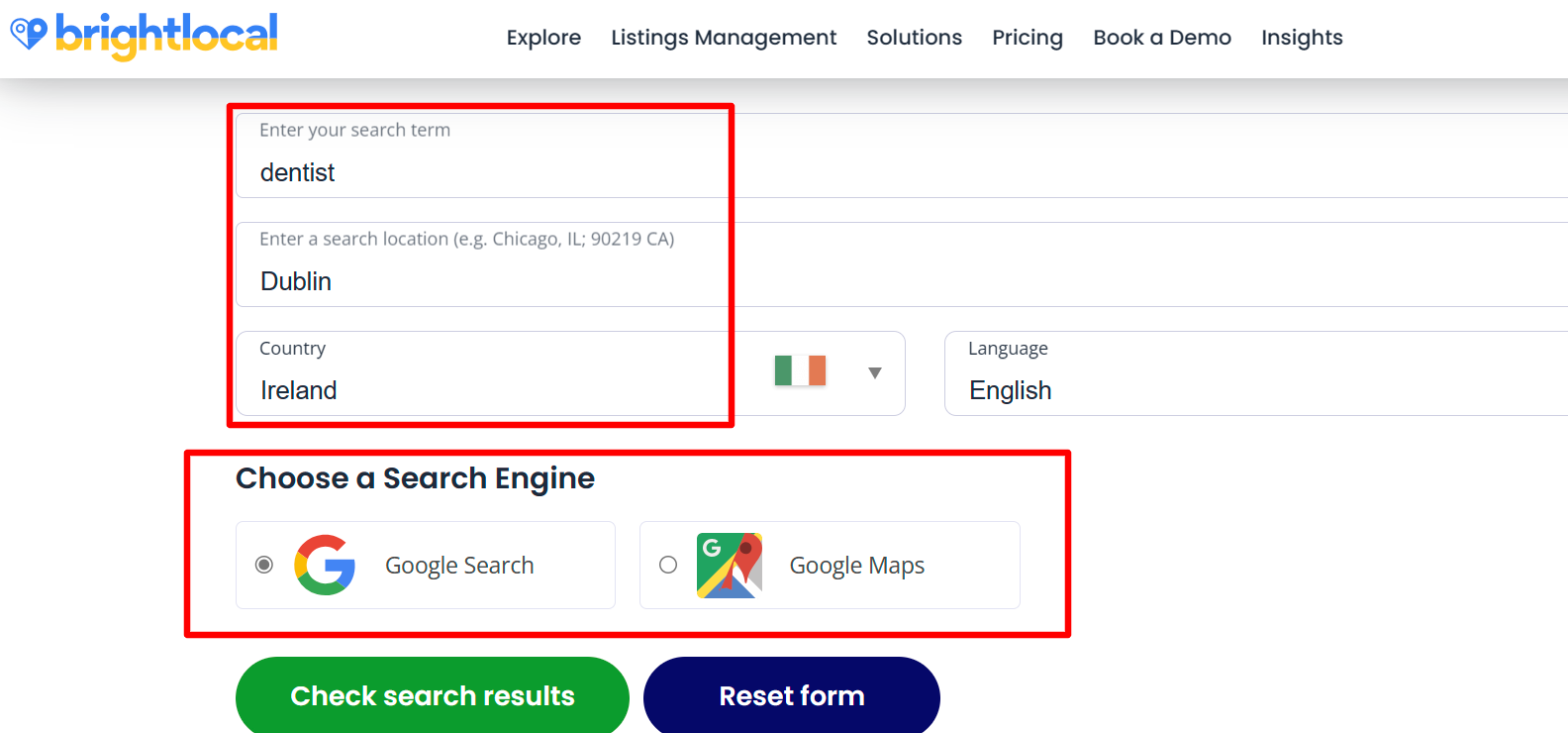
In the example below I’ve entered a search term for “dentists” in Dublin.
I have the option to choose Google Search or Google Maps, but the first page of Google search results should bring up Google Maps automatically as you see below.
You can see from this example how having a well-maintained Google My Business listing and showcasing testimonials is crucial to your marketing efforts.
I hope you enjoyed learning about this week’s cool tool and that it sparked your curiosity. In a fast-paced digital world, staying ahead of the latest trends and tools is vital!
As patients increasingly turn to the internet to seek medical solutions and care, the role of local search has become a critical aspect of healthcare marketing strategies. From enhancing patient engagement to improving online visibility, local search plays a pivotal role in connecting healthcare providers with their target audience.
In this article, we’ll delve into the compelling reasons why local search matters in healthcare marketing and explore the importance of optimizing for local search and its impact on the future of healthcare marketing.
What Are Localized Search Results?
Localized search results, often referred to as Local SEO (Search Engine Optimization), are search engine results pages that display tailored content based on the user’s location or search intent. When users perform search queries on platforms like Google or Bing, search engines take into account various factors, such as the user’s IP address, location settings, and the search term itself, to deliver results that are most relevant to their specific location or query context.
Local search is of paramount importance in healthcare marketing for several compelling reasons. As the healthcare industry becomes more consumer-centric and digital-driven, optimizing for local search can significantly impact a healthcare organization’s online visibility, reputation, and patient acquisition.
Here are some key reasons why local search matters in healthcare marketing
1. Targeting Local Patients
Healthcare services are inherently location-based. People often seek medical care from nearby providers for convenience and accessibility. By optimizing for local search, healthcare organizations can target potential patients in their immediate vicinity and capture a larger share of the local market.
2. Mobile and Voice Search Trends
With the increasing use of smartphones and voice-activated devices, patients are now turning to local searches for immediate healthcare solutions. Voice search, in particular, often includes phrases like “nearest hospital” or “doctor’s office near me.” Healthcare providers that have a robust local search presence can capitalize on these emerging trends and attract patients seeking quick medical assistance.
3. Google My Business (GMB) Visibility
Google My Business is a vital tool for local search marketing. Optimizing and maintaining an accurate GMB listing ensures that healthcare organizations appear in Google Maps and local search results. Patients can find essential information such as contact details, opening hours, patient reviews, and directions, making it easier for them to choose a healthcare provider.
4. Reputation Management
Local search results often display patient reviews and ratings. Positive reviews and high ratings can significantly influence potential patients’ decisions. On the other hand, negative reviews can deter patients from choosing a particular healthcare facility. Actively managing online reputation by responding to reviews and addressing concerns can help build trust and credibility in the local community.
5. Niche Healthcare Services
For specialized healthcare services or medical practices, local search becomes even more critical. Patients often search for specific medical specialties, such as “pediatric dentists near me” or “cardiologists in [city].” By optimizing for relevant keywords and location-specific terms, healthcare providers can connect with patients seeking their particular expertise.
6. Cost-Effectiveness
Local search marketing can be highly cost-effective compared to traditional advertising methods. Investing in local SEO, optimizing website content for local keywords, and maintaining an accurate online presence can yield substantial long-term benefits and a higher return on investment (ROI).
7. Community Engagement
Active participation in local search marketing fosters a sense of community engagement. Healthcare organizations can showcase their involvement in local events, sponsorships, and health-related initiatives, creating a positive image and deeper connections with the local population.
As the healthcare landscape continues to evolve, it is evident that local search will continue to play a pivotal role in shaping patient experiences and driving success for providers. By understanding the significance of local search in healthcare marketing and implementing robust strategies tailored to their specific locations, healthcare organizations can forge stronger connections with their communities and ultimately provide better care to those they serve. Embracing the potential of localized marketing, healthcare providers can navigate the dynamic digital realm and pave the way for a healthier, more accessible future for all.
Our brain is a dynamic powerhouse that continually adapts to the world around us, constantly rewiring itself based on our experiences and interactions. One area that has significantly impacted our brain’s functioning is the rise of social media, reshaping the way we perceive, process, and interact with information and each other.
The cool tool recommendation this week is Seobility– a comprehensive SEO (Search Engine Optimization) tool and website analysis platform.
Seobility provides a wide range of features and functionalities to help users optimize their websites for better search engine rankings and overall website performance.
Some key features of Seobility include:
On-Page SEO Analysis: Seobility performs an in-depth analysis of web pages, identifying potential issues and offering recommendations to optimize on-page elements such as meta tags, headings, content quality, and keyword usage.
Website Crawling and Monitoring: The tool crawls websites to detect and report any technical issues that may impact search engine visibility, including broken links, duplicate content, and issues with site structure.
Backlink Analysis: Seobility evaluates the backlink profile of a website, assessing the quality and relevance of inbound links, and providing insights to improve link building strategies.
Keyword Research: The platform offers keyword research tools, helping users identify relevant keywords and analyze their search volume and competitiveness.
Rank Tracking: Seobility allows users to monitor their website’s search engine rankings for specific keywords over time, enabling them to track progress and optimize their SEO strategies.
Competitive Analysis: Users can compare their website’s SEO performance against competitors, gaining insights into their strengths and weaknesses.
Seobility provides users with comprehensive reports and actionable recommendations to improve their website’s SEO performance. It is a valuable tool for website owners, digital marketers, and SEO professionals seeking to optimize their online presence and increase organic search visibility – and best of all, you can start off with a free plan!
In the arena of Search Engine Optimization (SEO), earning a Featured Snippet is like winning the digital lottery! A Featured Snippet, also referred to as a position zero result, appears at the top of the Search Engine Results Page (SERP), giving users an immediate answer without visiting a website.
If you own a website or create content, optimizing your content for featured snippets can greatly enhance your online visibility. In this article, we will explore some effective strategies to optimize your existing content for featured snippets.
What Are Featured Snippets?
Let’s take a closer look at featured snippets to understand why they are so important. Featured Snippets are used by search engines to provide quick answers to users’ queries. These snippets appear above organic search results and typically contain a brief summary of the search term, the source URL, and the page title.
A Featured Snippet can be a paragraph, a list, a table, or even a video. Earning a Featured Snippet gives your content prime visibility because it occupies the SERPs’ most coveted position. It’s more likely for users to click on featured snippets, which can increase organic traffic and brand awareness.
How to Optimize Your Existing Content For Featured Snippets
Optimizing your existing content for Featured Snippets begins with identifying which pieces are most likely to be featured. You should look for articles or blog posts that already rank on the first page of search engine results for relevant keywords. These pages have a higher chance of being selected for a featured snippet.
Once you’ve identified the pages, look at the content to see if there’s a concise, well-structured answer to a common question. Featured Snippets usually answer specific questions, so make sure your content answers them clearly and succinctly.
Optimize Content Structure and Formatting
A Featured Snippet is more likely to appear when your content is formatted and structured correctly. The first step is to ensure your content is well-structured with clear headings and subheadings. By doing so, search engines will be able to understand the organization of your content and will be more likely to select it for a Featured Snippet.
Organize your content into easily scannable sections, as search engines prefer snippets that present information clearly. List-type snippets are common, so use bullet points or numbered lists to present key points or steps.
Craft Clear and Concise Answers
The key to Featured Snippets is brevity. Provide clear and concise answers to the specific queries for which you want your content to appear. Identify the most commonly asked questions about your topic and ensure that your content answers them directly.
Structured data markup [1], such as schema.org, can help search engines understand your content’s context and structure. By doing this, your chances of getting featured snippets can be increased.
Optimize Meta Tags and Descriptions
Including meta tags [2] and descriptions in your existing content is an essential aspect of optimizing it for Featured Snippets. The meta title and description should accurately summarize the content and target the specific query you want to rank for.
Write a meta description that draws users to your page for more information. Meta tags and descriptions do not directly affect the selection of Featured Snippets, but they are crucial for attracting users to click on your snippet in the search results.
Continuously Monitor and Improve
Optimizing your existing content for Featured Snippets is an ongoing process. Monitor your content’s performance and make improvements to increase your chances of getting featured.
Keep an eye on what users ask about your target keywords and update your content accordingly. Look for opportunities to improve the clarity and conciseness of your answers. Conduct regular keyword research to identify emerging trends and incorporate them into your content strategy.
Conclusion
You can significantly improve the visibility of your website and drive more organic traffic by earning a featured snippet. By optimizing your existing content for featured snippets, you increase your chances of landing on position zero. Using these strategies, you can improve your odds of getting a featured snippet and benefiting from enhanced online visibility.











 Health Care Social Media