Take notes with voice commands and punctuation shortcuts with this week’s cool tool – Speechnotes.
Speechnotes is a powerful and easy-to-use note-taking app that allows users to take notes, record thoughts, and capture ideas using voice commands and punctuation shortcuts. This innovative app is designed for individuals who are too busy or lazy to type and offers a fast and efficient way to take notes on-the-go.
With Speechnotes, users can easily insert punctuation marks and special characters using voice commands. This eliminates the need to manually type in punctuation marks, making note-taking faster and more efficient. Users can also click on the desired punctuation mark with the mouse, making it even more convenient. This feature is especially useful for individuals who are recording a voice memo or dictating a note and want to include proper punctuation.
Speechnotes also offers a variety of other features such as voice-to-text transcription, note editing, and cloud-based storage options. This allows users to easily access their notes from multiple devices and collaborate with others on shared notes. It also has an easy-to-use interface with customizable settings, making it perfect for students, professionals, and anyone who wants to take notes quickly and efficiently.
Starting a healthcare blog can be a great way to share information and educate others about various health topics. It can also serve as a platform to share personal experiences and connect with others who have similar health concerns. Additionally, a healthcare blog can be a useful tool for healthcare professionals to share their expertise and connect with patients. It can also be a way for healthcare companies and organizations to disseminate information and connect with their audience.
Creating a blog is relatively easy; the challenge lies in consistently updating the content. If you are struggling to come up with new ideas on a regular basis for your blog, then this list of 12 content ideas should help get you going again.
#1 Share Facts About A Common Medical Condition
What kind of questions do your patients most frequently ask about a specific medical condition? Compile a list of these frequently asked questions and answer them on your blog.
#2 Curate Content
Curation is the process of identifying and sharing relevant and high-quality information from various sources with a specific audience. It can be an effective way to provide valuable information to your audience without having to spend a lot of time and resources on creating original content. However, it’s important to remember that curation should complement, not replace, your content creation plan. A balance of curated and original content can help to establish your brand as a thought leader, while keeping your audience engaged with fresh and diverse information.
Are you rolling out a new program, product, or service? Write a blog post to introduce it and highlight its features and benefits.
#4 Update Readers on Industry Trends
Healthcare is constantly changing and evolving. Can you predict or comment on the latest healthcare trend? Readers will enjoy learning about it through your blog, particularly if you share your own unique perspective. Stay informed by regularly reading industry-specific news and publications, following thought leaders and experts on social media, and attending relevant conferences and events. Use technology tools such as Google Trends to track keywords and phrases related to industry trends, and to monitor social media conversations.
#5 Create A Poll
There are several online tools you can use to create a readers’ poll. If you have a WordPress.com site, then you’ve got Polldaddy polls already built in. You can create, manage, and see results for all of your polls directly in your WordPress.com dashboard. If you use a WordPress.org install on your self-hosted site, install the Polldaddy WordPress.org plugin. Use it to get a snapshot of readers’ attitudes to health topics like vaccination, screening, complementary therapy, mental health – the list is endless. Publish a follow-on post with your findings.
#6 Write About A Day In The Life
Describe a typical day in your work life as a healthcare professional. You should be careful not to write about specific patients though, or to commit any other breach of confidentiality or privacy.
#7 Plan Posts Around Seasons and Events
An editorial calendar is a valuable tool for tracking and planning content, particularly when it comes to seasonal, cultural, and industry events. By using an editorial calendar, you can ensure that your blog stays timely and relevant and that you are regularly publishing content that aligns with your readers’ interests.
Have you been to a conference recently where you learned about new medical research? Or read about the latest research in a medical journal? Let your readers know about it through your blog. Make sure you provide full references and links to online publications.
Ask a colleague to write a guest blog on an area of their expertise. There are several benefits of guest blogging, including, increased exposure, variety of content, and improved SEO.
#10 Interview An Expert
Choose a respected healthcare professional and interview them for your blog. Interviewing respected healthcare professionals or experts in your field can be a great way to provide valuable insights and information to your readers. Alternatively, you can also contact several experts in your field and have them answer a question. Once you have all the answers, you can turn them into one big blog post. This will provide a broad perspective on the topic from different experts which is informative and engaging.
#11 Write About A Trending Topic
Writing about a trending topic can be a great way to engage your audience and stay relevant in your field. Provide your unique perspective on a trending topic. Find out what’s “hot right now” online by using Google Trends, Twitter.com/Search and Reddit.com.
#12 Provide a Weekly Round-Up Of Healthcare News
A weekly round-up of healthcare news can be a great way to keep your readers informed about the latest developments in the healthcare industry. Categorize the news based on the topic, such as medical research, policy changes, technological advancements, etc. Write a brief summary of each news item, highlighting the key points and providing context.
These are just a few ideas to get you started, but there are many more possibilities. The key is to always be on the lookout for new and interesting topics to cover and to be consistent in your blogging schedule.
Discover related websites with this week’s cool tool recommendation – Similar Sites.
Similar Sites is a Chrome extension that enables you to discover similar websites to the one you are currently visiting. You can compare information from different sources to find the information you need. In addition, the extension comes with a built-in search function for easy browsing and works with most browsers.
Social media success is based on setting goals, but I am constantly amazed at how many businesses give little thought to creating their social media objectives.
When working with clients to create an online marketing strategy, one of my first questions to them is simply “what are you hoping to achieve with social media?” So many times I see businesses jump on board the latest social network without any thought as to what they actually want to achieve there.
Strategy Without Goals Is Putting The Cart Before The Horse
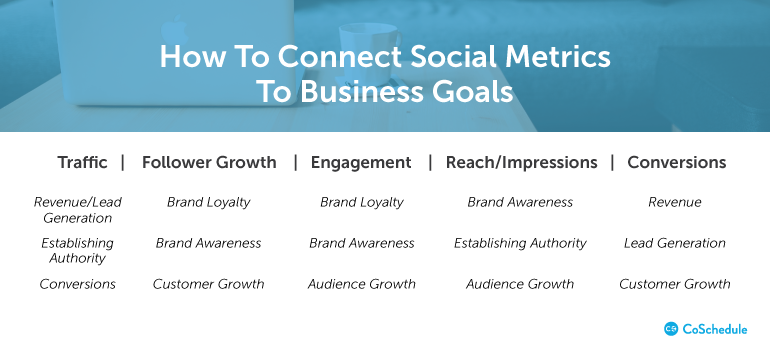
Without specific goals in mind, it can be difficult to measure the success of your efforts and make meaningful changes to your approach. Clear goals will not only propel your strategy forward, but they will also serve as defined metrics when it comes to measuring your progress.
Common Social Media Marketing Goals
Below you will find a list of some common social media marketing goals — decide which of these is most aligned with your business goals.
Attract more patients to your practice
Improve the quality of health information online
Drive traffic to your website
Run a disease awareness campaign
Establish online authority and credibility
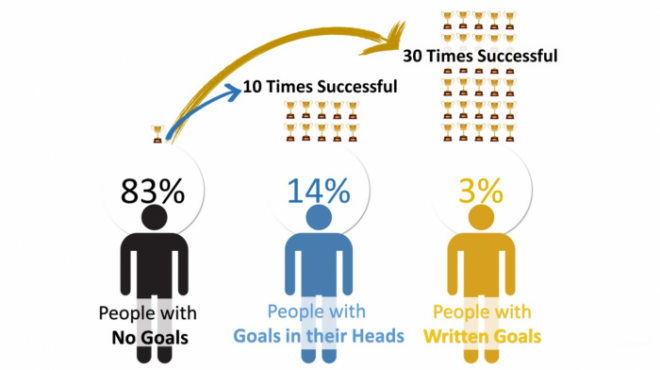
Tip: Research shows that writing down your goals increases the completion rate of goals.
How To Set SMART Social Media Goals
For a goal to become a reality, it needs to be specific, measurable, attainable, and realistic, as well as time specific — these are often called SMART goals. SMART goals are one of the longest-lasting, most popular goal-setting frameworks for business.
Let’s take a closer look at what makes a goal SMART
Specific — the more specific you can be with defining a goal, the easier it will be to clearly see what it is you are trying to achieve. Let’s take as an example a goal to increase your Twitter followers by 10%.
Measurable — how will you measure your success? In this case it’s easy to measure 10% growth in Twitter followers when you check your follower numbers.
Attainable — is your goal attainable? Can you realistically achieve this Twitter growth?
Relevant — a relevant goal is aligned closely to your social media objectives. Is this goal relevant to your overall social media strategy? Is Twitter the right platform for your communications?
Time Specific — give your goal a deadline – for example, increase your Twitter followers by 10% by the end of the month.
Wrapping Up
Setting SMART goals to which you can align your social media activity is a good guarantee of online marketing success. Once you have a clear set of goals, you can track your key performance indicators (KPIs) and metrics more accurately. It’s also important to note that SMART goals are flexible and can be adjusted as necessary. Continuously re-evaluate and adjust your goals as needed to ensure that they remain relevant and aligned with your overall business objectives. A winning formula is to measure, adjust and then rinse and repeat.
Pharmacist Day is celebrated on January 12th every year to recognize the contributions that pharmacists make to healthcare.
It’s a great opportunity for pharmacists to share their work and experiences with the public, and to raise awareness about the important role that pharmacists play in keeping communities healthy.
If you’re a pharmacist, you can use social media platforms like Facebook, Twitter, Instagram, and LinkedIn to share information about your work and to connect with other pharmacists and healthcare professionals. You can also use hashtags like #PharmacistDay or #Pharmacy to join the conversation and find other resources and information about pharmacy.
Here are a few more ideas:
Share a post on Facebook or Instagram highlighting the important role that pharmacists play in healthcare. You could include information about your daily work, the types of services you provide, or the ways in which you help patients.
Use Twitter to share quick facts or statistics about pharmacy and the impact that pharmacists have on public health. You could also use hashtags like #PharmacistDay or #Pharmacy to connect with other pharmacists and healthcare professionals.
Create a LinkedIn post or article highlighting the achievements and contributions of pharmacists in your community. This is a great way to connect with other professionals and showcase your expertise.
Start a live Q&A on Instagram or Facebook to answer questions about pharmacy, medication safety, or any other topic related to your work. This is a great way to engage with your followers and build your online presence.
Collaborate with other healthcare professionals or organizations on social media campaigns to raise awareness about the importance of pharmacy. This could involve creating joint posts, hosting online events, or sharing relevant content on your social media channels.
This presentation I gave in 2020 about how pharmacists can create online impact might also be of interest to you.
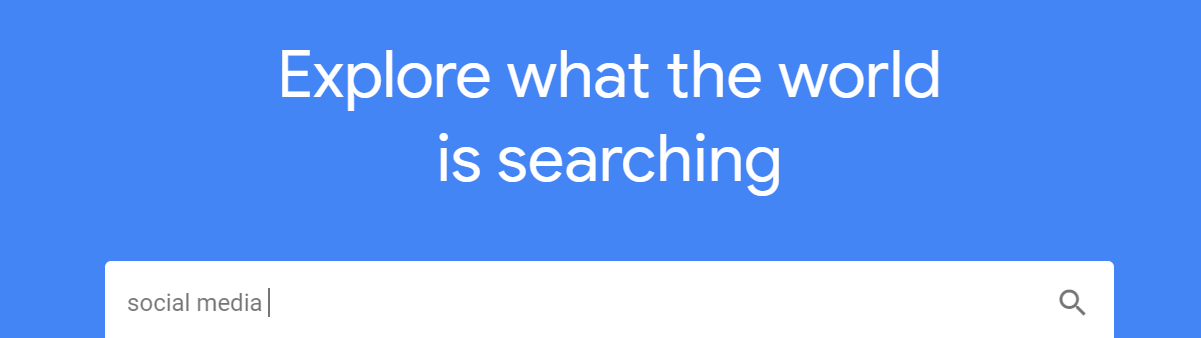
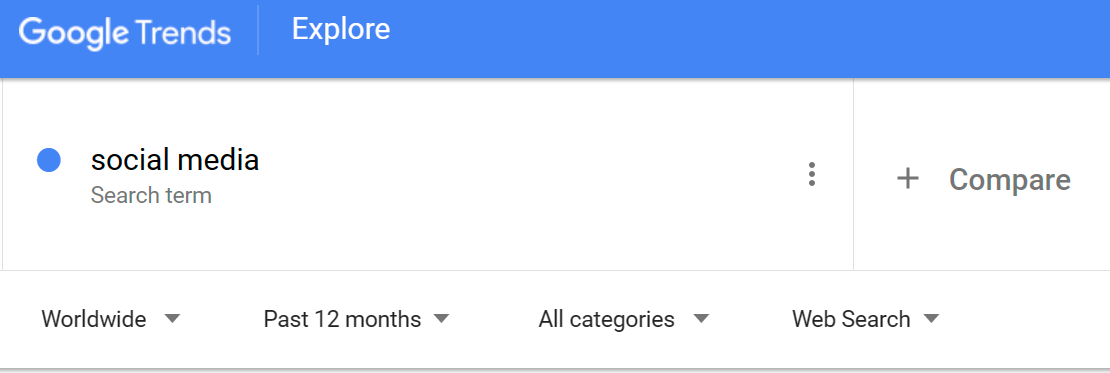
In the “Search” field, enter the term that you want to see trends for. You can enter multiple terms, separated by a comma, to compare their popularity.
In the “Time Range” menu, select the period of time for which you want to see trends. Select a range of dates or a predefined time period, such as “Past Day,” “Past Week,” or “Past Month.”. You can also choose to search “Worldwide” data, or region specific. And you can specify where you want to pull data from, e.g. “News” “Images” YouTube”.
You can also use Google Trends to compare the popularity of multiple search terms. To do this, enter multiple search terms separated by a comma in the “Search” field.
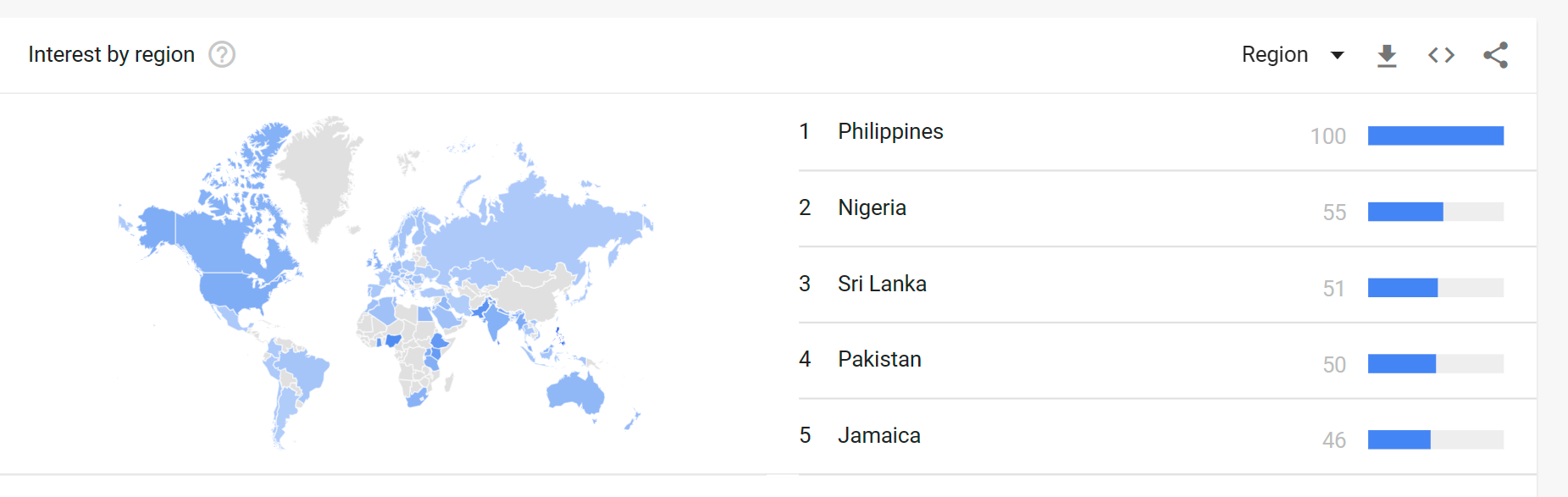
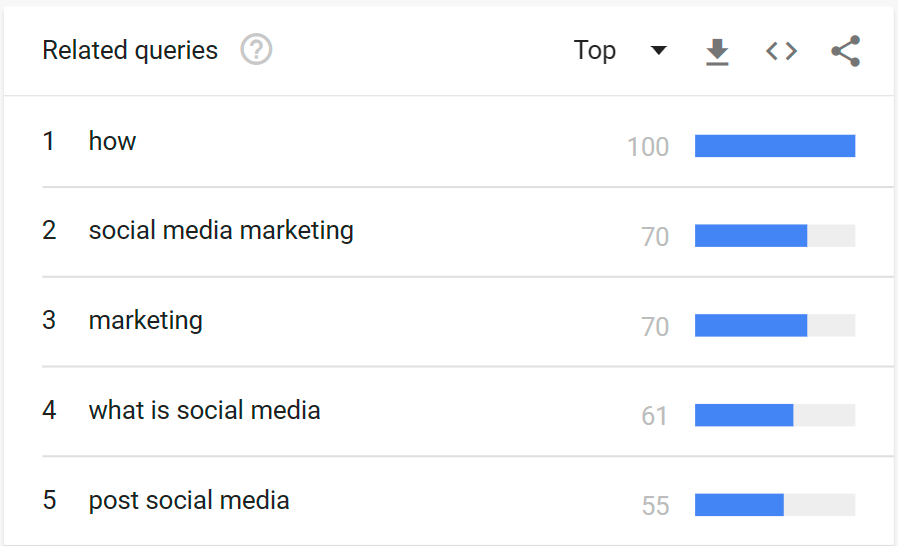
Another useful feature is the ability to see top-related searches, which is very helpful when creating content.
Why you should use Google Trends.
Market research: Google Trends can help you understand how popular certain products or services are, and how their popularity has changed over time. This can be useful for businesses that want to gauge the demand for their products or services.
Content creation: By understanding what people are searching for, you can create content that meets their needs and interests. For example, if you run a blog or website, you can use Google Trends to see what topics are currently trending and create content that covers those topics.
Search engine optimization: Google Trends can help you understand what people are searching for, and how their search habits are changing. This can be useful for businesses that want to optimize their website for search engines, as it can help them identify keywords and phrases to target in their content.
Keeping up with the news: Google Trends can also be used to see what news stories and events are currently generating the most interest. This can help you stay up-to-date on what’s happening in the world.
I hope that gives you a good idea of why Google Trends can be useful and that you are encouraged to try out this tool during the week.
Social media tools provide a unique set of opportunities in healthcare, but with these new opportunities come a number of potential challenges. As health professionals navigate the world of social media, concerns have arisen regarding questions of ethics and professionalism and how the use of social media fits within the social contract between the medical profession and society.
In today’s world of widespread social media use, it is important for healthcare institutions to establish guidelines for the professional use of social media. This can help to maximize the positive effects of social media in healthcare, such as improved communication with patients and the promotion of health-related information, while minimizing the negative effects, such as the risk of the unauthorized disclosure of patient information or the spread of misinformation.
This will become even more important as a generation of individuals who grew up sharing their lives online enters the workforce. Some medical students may view social media as irrelevant to the workplace and may not see it as a factor in evaluating professional abilities.
Organizational worries about social media come from a variety of perspectives, but they may generally be divided into three categories: reputation, privacy, and boundaries. Policies and training for social media can be developed in these connected, yet separate sectors.
Reputation
The ethical standards expected of healthcare professionals do not change because they are communicating through social media rather than face-to-face. However, using social media creates new circumstances in which the established principles apply. Healthcare professionals have a responsibility to uphold the values of their profession and to maintain a professional online presence. They should be mindful of the public nature of social media and avoid inappropriate or unprofessional behavior.
Inappropriate or unprofessional behavior on social media can damage the reputation of both the individual and the organization and may undermine public trust in the profession. Social media conversations can last indefinitely and reach a potentially large and unknown audience. What may be intended as a private joke or a way to decompress by complaining about the workplace or coworkers can be misconstrued when published on social media. This can have negative consequences for both the individual and the organization, as it may be perceived as indicating a lack of professionalism or care for patients.
Privacy
Healthcare professionals have a duty to protect the privacy of their patients and must be careful to not disclose any personal or medical information about patients on social media or other online platforms. This includes avoiding the use of social media for communication about patient care or treatment.
Discussing patient situations on social media, even if the patient cannot be clearly identified, carries a high risk of unauthorized disclosure of patient information. One instance to illustrate this occurred at a Kansas nursing school. Four nursing students were dismissed from their program after one student shared a picture of a patient’s placenta on her Facebook page. Even though the picture did not include any identifying information about the patient, the school regarded this behavior as unprofessional and took disciplinary action. [1]
Boundaries
Online interactions can present challenges when it comes to maintaining professional boundaries. The line between personal and professional content can be blurry on social media, and it can be difficult to determine what constitutes appropriate professional behavior.
It is not uncommon for healthcare professionals to receive friend requests from patients on social media. This can present a challenge in terms of maintaining appropriate professional boundaries while also using social media to improve the patient-provider relationship.
One way to address this issue is for healthcare professionals to consider the nature of their relationship with the patient and the potential risks or benefits of accepting the friend request. For example, if the relationship with the patient is primarily professional, it may be more appropriate to decline the friend request in order to maintain clear boundaries. On the other hand, if the relationship is more personal and the healthcare professional feels comfortable accepting the friend request, it may be a way to build trust and improve the patient-provider relationship.
Professionalism is the foundation for the social contract between the medical profession and society. Healthcare professionals will need to apply principles of professionalism to new settings to establish guidelines and policies for ethical conduct. Ongoing discussion regarding the role of social media in healthcare is necessary as both the technology and our understanding of it continue to evolve and increasingly influence the healthcare landscape.
Notes
[1] Miller LA. Social media: friend and foe. J Perinat Neonatal Nurs. 2011;25(4):307–309
Social media tools provide a unique set of opportunities in healthcare, but with these new opportunities come a number of potential challenges. As health leaders navigate the increasingly complex world of social media, concerns have arisen regarding questions of ethics and professionalism and how the use of social media fits within the social contract between the medical profession and society.
A paper that I co-wrote, describes the changing parameters of professional conduct in digital environments and proposes a set of considerations and recommendations for health leaders to navigate this new frontier.
Leveraging social media in healthcare requires a careful reflection of ethical implications. Healthcare leaders will need to apply principles of professionalism to new settings to establish guidelines and policies for ethical conduct. Ongoing discussion regarding the role of social media in healthcare is necessary as both the technology and our understanding of it continue to evolve and increasingly influence the healthcare landscape.
This week’s cool tool recommendation is BrainyQuote – a directory of inspirational quotes.
Despite how long quotes have been doing the rounds of social media, they are still hugely popular and highly shareable. Next time you’re searching for something to fill your social media calendar consider sharing a quote. This site is the perfect place to find just the right quote for any occasion. And if you’re stuck for ideas, check out the quote of the day feature which makes choosing a quote a breeze.
I love learning about new tools to make social media marketing more creative and effective, so I’ve decided to share some of my favourite tools with you at the start of each week. This week’s cool tool recommendation isLumen5 is a desktop tool designed for bloggers to convert their blog posts into video.
I geeked out over this tool last year when I discovered it. Simply input your blog post’s url and Lumen 5 will import the text and images from that post and auto-create your video. You can then edit it, swap out images, upload other images and add music before you hit publish. The video above is one I created with Lumen 5 from an original blog post
The free plan includes unlimited videos, access to 10 million video files, and 480p-quality video with the Lumen5 watermark. You can also upload your own logo. Upgrading to the Pro plan ($49/month) lets you remove the Lumen5 branding, upload your own watermark and outro, and more.

















 Health Care Social Media