Articles

Posted in social spotlight

Social Spotlight: Claire Whitehouse

This week I am delighted to kick off the social spotlight interview series again with Claire Whitehouse, lead nurse for research at The James Paget University Hospitals NHS Foundation Trust and founder of the #WhyWeDoResearch global campaign.


I love the #WhyWeDoResearch campaign. Can you tell us some more about how it started?

CW:  In 2014 I decided to introduce my team to our local population using twitter as our social media platform. I tweeted using our Research and Development handle @JPUHResearch and having explored the use of twitter for a few months prior to this, I had identified that photographs received the most attention, retweets and ‘favourites’. To introduce our team I decided to release one photo, name and job title per day along-with the individual holding a placard upon which they had written the reason why they personally are involved in research. There was born #WhyWeDoResearch. I had intended this would be for the 12 days of Christmas as a Christmas campaign. Within four days Michael Keeling (@keeling_michael ‏) of York Teaching Hospitals NHS Trust had picked up on it and from there it became a National campaign, at which point it was extended throughout the Christmas period. By the new year it had reached Canada and Australia and became known globally. Now, two years later it is in 23 countries globally, with >15,000 separate accounts participating and >250 MILLION impressions on the hashtag. I lead the campaign entirely voluntarily and there are other individuals who support this lead eg Hazel Smith who is based in Dublin. I am also involved in the Health and Research through Social Media (HARTSofthepossible) project which aims to drive health research through and using social media.

I really love how you have created these grass-roots campaigns. How did you first get started using social media professionally?  

CW:  The Executive Team at the JPUH decided to set up a Trust twitter account and asked departments to raise a hand if they wished to host a departmental account. The Head of Research and I felt this would be a sensible step to take (being research and development) so I volunteered to host the account and take the plunge (as I felt it was at the time). I recognised that there might be individuals or groups considered ‘hard to reach’ who were missing out on research opportunities and we all know social media is a growing entity. I’d used facebook in my personal life and joined twitter as a social media platform for my professional life

Which platform(s) do you enjoy using the most?

CW:  I focus on twitter as it’s so easy to use and has an extremely large reach. The @wenurses team have a fantastic tool called twitterversity which helps people get started.

That’s fantastic! I can probably guess the answer to this next question, but do tell us more about which topics interest you on Twitter? Do you take part in any particular twitter chats?

CW:  Regular twitter chats are hosted using #whywedoresearch – the topics vary depending on who volunteers or what conversations are happening at the time, this is the beauty of twitter, you can create live chats and people will always be interested. In 2016 we hosted the worlds first research tweetfest in May to coincide with International Clinical Trials Day. We can’t claim entire credit as an idea as it grew (as most things do) from a small idea. I tweeted (from my bed) one Saturday morning 2 weeks before ICTD and asked #whywedoresearch followers if they would like a tweetchat on ICTD. By that afternoon I had 11 individuals offering to host chats and within 48 hours we had set up over 20 chats and coined the phrase #tweetfest. The 2017 tweetfest is over 2 weeks from Monday 15th May and there are 31 chats to choose from.

What advice would you give someone just starting out on social media?

CW: Don’t be scared. Embrace it and go for it.

Finally, would you like to share a favourite quote with us?

“Words are, in my not-so-humble opinion, our most inexhaustible source of magic” _- Albus Dumbledore

Thanks Claire for taking the time to share with us your experience of using social media in your work. I look forward to seeing your campaigns grow and prosper over the coming months. 


Posted in #HCSM

Snapchat 101: What Brands Need to Know [Infographic]

snapshot101

What does the rise of Snapchat mean for brands? How big is Snapchat’s audience? Is it only for Millennials?

If you’ve been wondering what the answers to these questions are, and how you might use Snapchat in your marketing, then take a look at this new infographic created by MDG Advertising, which outlines some key usage data for Snapchat, along with notes on how brands are using the platform to best effect.

Let’s start by looking at the stats. 150 million people use Snapshat every day, with 400 million snaps sent daily. That’s a bigger daily active user base than Twitter!  Snapchat grew as much in one year as Twitter has in 4 years combined. The app is expected to add twice as many users as Twitter and Pinterest in the next year.

snapchat102

So what’s the audience demographic? Is it skewed towards Millennials? Right now Snapchat is used most by those aged 25 and under, but adoption by an older demographic is growing.

snaphat103.png

Have brands jumped on the Snapchat phenomenon? Interestingly not. The number of brands who say they are currently using the app as part of their marketing strategy is only 5%. This represents a unique opportunity for your brand to be an early adopter and lead the way on the platform.

snapchatbrands.png

Of those brands who have ventured onto the platform, how are they using it?

snapchatbrands2.png

So finally, the big question. Is Snapchat right for your brand? If you want to connect with a younger audience, yes, you should probably be engaging on the platform. Otherwise, the advice is to wait and see. Keep an eye on what other brands are doing and start formulating a strategy for when you judge the time is right to jump on board.

snapchat102.png

Have you started using Snapchat for your marketing yet? What ways are you using it to engage with your audience?  Or what might be holding you back from establishing a presence there?

Related Reading:

Posted in Cool Tool

Monday Morning Cool Tool: Instagrok

I love learning about new tools to make social media marketing more creative and effective, so I’ve decided to share some of my favourite tools with you at the start of each week.

This week’s cool tool recommendation is Instagrok which allows you to research any topic with an interactive concept map, that you can customize and share.


As you can see from the above example it’s an interesting site to input your particular topics and get related information, giving you the ability to learn about the topics in detail before you brainstorm and giving you a new interactive way to share information with your audience.

Posted in #HCSM

The Role of Social Media in Clinical Trial Recruitment

Last week I was delighted to present at the National Lipid Association’s Scientific Meeting in Philadelphia on the topic of social media and its role in clinical trial recruitment. You can view my slides below.

I also had the honor of chairing a social media panel with Dr Martha Gulati and Dr Katey Rayner.

It was a super experience and as I pointed out in my talk, I would never have imagined myself speaking to these clinicians, nurses, and researchers, if it wasn’t for Twitter. It still gives me a thrill to think how far a tweet can take you. It was by meeting Dr James Underberg, President of the National Lipid Association on Twitter that I found myself on my way from Ireland to Philadelphia for this meeting. So never underestimate those connections you make online – you just never know how far they may take you!

Posted in #HCSM, Video

Are Stories The New Social Media Newsfeed?

The social channels we use are less important now than ever before. Today, it’s all about how you tell your story.

Convince and Convert recently created a short video which explores the idea that stories are becoming the new newsfeed of social media. It’s less about what social network you use to reach your audience. What is important today is how you tell a story.

Snapchat changed the game when it evolved from a messaging app to a storytelling platform. Now stories are integrated as part of Instagram, Facebook, Facebook Messenger, and WhatsApp. Stories are becoming the new newsfeed of social media, and you can’t avoid stories because your customers aren’t using Snapchat. So when we think about how to make content for social media, we need to be thinking in stories, and not in posts.

The presenter shares three elements essential to producing good stories:

  1. Use vertical video
  2. Create a chronological narrative sequence
  3. Add overlays such as text, filters, stickers, and emoji

Key Takeaways

  • Carefully choosing your social channels no longer has the impact it once had on your marketing success.
  • Many of the new feature roll-outs on top social platforms have focused on storytelling.
  • Forget about reaching your daily quota of posts, and focus more on the stories you share.

Related Reading

Posted in #HCSM, Twitter

Can A Hashtag Change Healthcare? The Impact of Healthcare Tweet Chats

tweet-follow1Can A Hashtag Change Healthcare?  

The first time I read this quote from Dana Lewis, moderator of #hcsm the premier tweet chat on healthcare, I was gripped by the notion of how Twitter and in particular tweet chats could influence the way we practise healthcare.

Social media is a radical shift in the way we communicate. The healthcare conversation is no longer a one-way narrative but is evolving into a global, participatory discussion. One of the most powerful ways I see this happening is in the modality of the tweet chat. The role Twitter plays in breaking down patient/provider barriers, disseminating and expanding the reach of healthcare information, widening social networks and co-creating a collaborative model of shared health information is one of the most exciting developments in social media.

What Is A Tweet Chat?

For those who may be unfamiliar with the phenomenon of a tweet chat – it is a pre-arranged chat that happens on Twitter through the use of updates called tweets. It includes a predefined #hashtag which links the tweets together in a virtual conversation. Most tweet chats follow a common format of a moderator who introduces pre-arranged topics relevant to the chat and keeps the conversation on track. The chats usually last one hour and a transcript of tweets is available after the chat has ended.

Symplur is doing an impressive job of compiling all of the healthcare hashtags and providing chat transcripts in The Healthcare Hashtag Project. The goal of the project is to make the use of healthcare social media and Twitter more accessible for the healthcare community as a whole (a full list and a tweet chat calendar of meeting times can be found on the Symplur website).

What Is The Impact Of Tweet Chats On Healthcare?

As a relatively new technological innovation, the use of Twitter as a modality for health communication is only now beginning to be explored with particular emphasis on the role Twitter may play in contributing to health based conversations directed at individual, community, and societal levels.

Many times, people’s choices in terms of Personal Health Practices (PHP) are context dependent and socially constructed. Healthcare tweet chats have tremendous potential to motivate participants and encourage change. Much of this change comes from peer-to-peer support which has been shown to be highly effective in motivating change. Many participants share conversational and informational knowledge that they believe is valuable both to themselves and others.

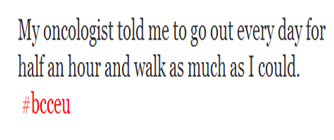
Tweet from participant in the #BCCEU (Breast Cancer Social Media Europe) tweet chat

Studies show that individuals enrolled in meaningful social networks have protective properties in terms of overall health and wellbeing. Healthcare tweet chats provide participants with a sense of community and valuable opportunities for meaningful exchange and positive interactions.

The impact of digital technology in healthcare is leading to changing expectations by health consumers who, along with a desire to share information and connect with others, increasingly want to interact and engage with their healthcare providers. Twitter has also facilitated the emergence of  the “patient opinion leader” an individual who is seen as an expert in chronic conditions such as cancer.  Gunther Eysenbach refers to this group as “Apomediaries” – individuals that assist in the process of information searching but do not act as a gatekeeper.

So, what’s in it for healthcare practitioners?

Dr Bryan Vartabedian (@Doctor_V) of Baylor College notes of social media “the greatest value of this medium is the breakdown of barriers that have traditionally come between doctor and patient.” It is encouraging to see the increasing participation by doctors in many healthcare tweet chats, reaching out and sharing information, but also listening too.

Twitter offers opportunities for healthcare to reach out to patients in new and valuable ways.

These [social media] tools help us reach so many more people; we can bring shared interactions into our practice and that is powerful … This isn’t an addition to your job. This is part of your job.  This is a conversation, and that is what we are trained to do … This is where our patients are these days and this is where we need to reach them. We can engage learners, patients and peers, and we are not limited by geography or time – Farris Timimi, M.D., medical director for the Mayo Clinic Center for Social  Media.

Another striking feature is Twitter’s crowd-sourcing capacity which allows health consumers, researchers and practitioners tap into a global source of advice, support and information. Twitter also provides a unique opportunity to learn from patients’ direct experience shared during these chats.

If healthcare innovators and providers wish to remain relevant and connected to digitally enabled patients, they need to go where the conversations are – more and more those conversations are happening on Twitter and the evolving dynamic of the tweet chat is the best place to find them.

Reference

Eysenbach, G. (2008). Medicine 2.0: Social networking, collaboration, participation, apomediation, and openness. Journal of Medical Internet Research, 10(3), e22. doi:10.2196/jmir.1030

Posted in Cool Tool

Monday Morning Cool Tool: Bloomberry

I love learning about new tools to make social media marketing more creative and effective, so I’ve decided to share some of my favourite tools with you at the start of each week. This week’s cool tool recommendation is Bloomberry. This tool gathers questions being asked across the web on forums, e-commerce sites, Quora, Reddit, and more. It’s a useful tool to help you discover what popular questions around topics can be answered through content that you can create. Here’s a snapshot of questions related to social media strategy, one of the topics I enjoy teaching and writing about the most.

For now, BloomBerry is free whilst in beta, with a new Pro tool being tested. 

Visit https://app.bloomberry.com to try it out.


Posted in #HCSM

Social Media: A New Dimension In Health Research #HealthXPh

I’m so honored to have been invited to give the opening keynote address at the 3rd #HealthXPh Philippine Healthcare Social Media Summit  this week. I love this year’s theme of  “Social Media & Health Research: Connections that Matter.

My presentation highlights social media as a dynamic platform to conduct research on a global scale and to amplify and disseminate research findings. I focus on an understanding of some key characteristics of social media which can be leveraged for research purposes, such as interactivity and real-time communication on a global scale. What this presents is an opportunity for conducting research with an existing audience of highly targeted, motivated and connected patients.

I recommend tapping into the power of existing patient networks through social media as a means to mobilize and accelerate research faster than ever before. However, I stress that online communities are not just there to be taken from, but also given to. So I challenge researchers to consider how they might build trust and authenticity with a community of e-patients.

I finished my keynote presentation by sharing some best practice tips and left the audience with a final challenge to go beyond a basic level of social media activity to become exceptional digital communicators.  I ended with one of my favourite quotes from social media marketing guru Seth Godin.

sethgodingoodenough

Posted in Cool Tool

Monday Morning Cool Tool: GIMP

I love learning about new tools to make social media marketing more creative and effective, so I’ve decided to share some of my favourite tools with you at the start of each week. This week’s cool tool recommendation is GIMP – a free and open source image editor for such tasks as photo retouching, image composition and image authoring.

GIMP (an acronym for GNU Image Manipulation Program) has many uses from a simple paint program and a quality photo retouching tool to an image format converter and an online batch processing system. Here’s an example from one of GIMP’s step-by-step tutorials showing how to modify the filesize of an image when exporting it to a format like JPEG.

This  is a basic feature, but there are many more advanced features to explore. It’s a useful alternative to Photoshop for those who don’t have access to it. Check it out at www.gimp.org and see for yourself.

Posted in #HCSM

A Step By Step Guide To Digital Storytelling With Storify

St

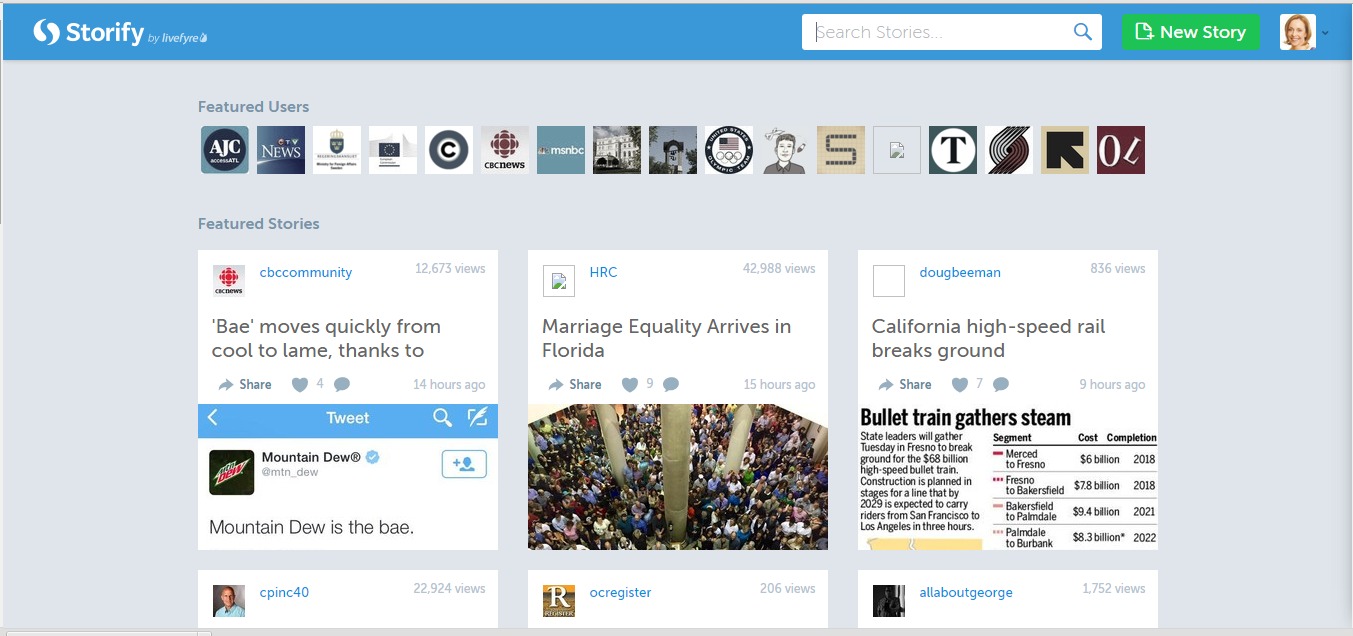
Storify is a platform that allows you to tell stories using elements from the social web such as tweets, Flickr photos and YouTube videos.  There are so many ways to use the Storify app; one of my favourite ways is to capture tweets from a live event and turn them into a visually compelling story.

If you are new to the Storify app, follow my easy step-by-step guide to help you create your first story.

1. Log-in using Twitter or Facebook.

st2

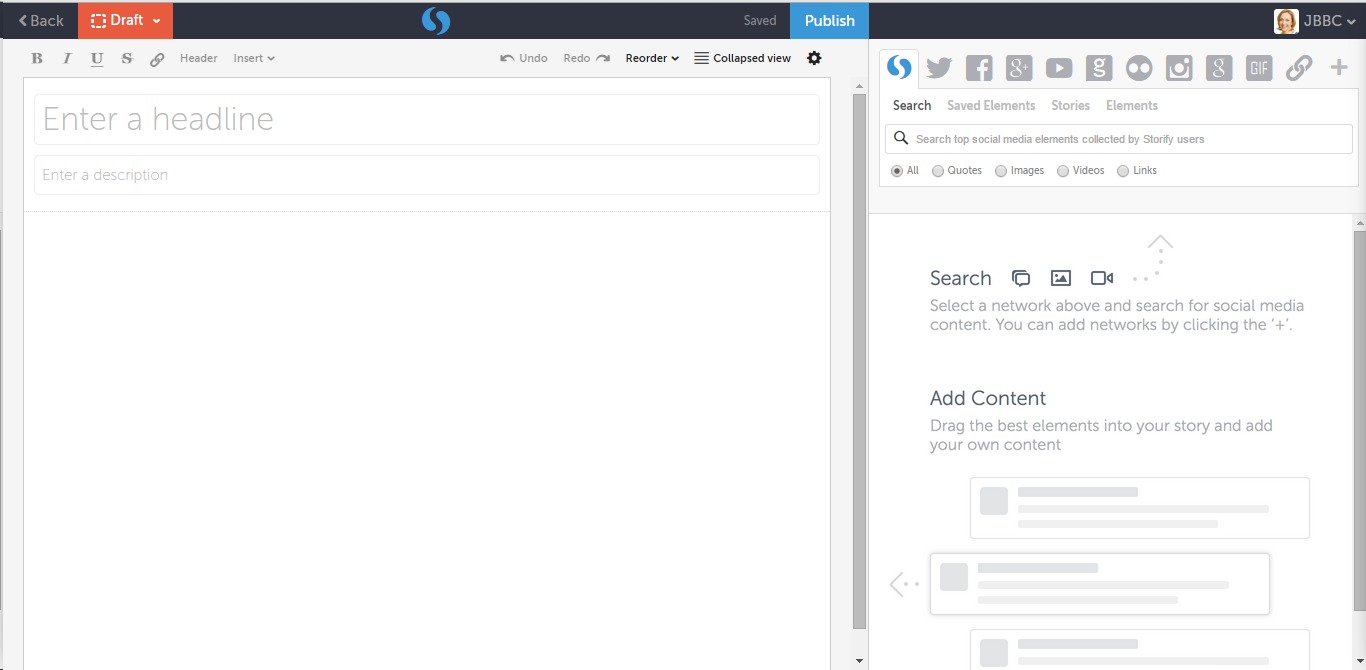
2. Click on Create New Story which will open a blank platform for you to create your story

storify1

3. On the top right hand corner you will find media sources to curate the elements of your story. You can search Twitter, Facebook, YouTube, Flickr, and Google for elements to include.

storify3

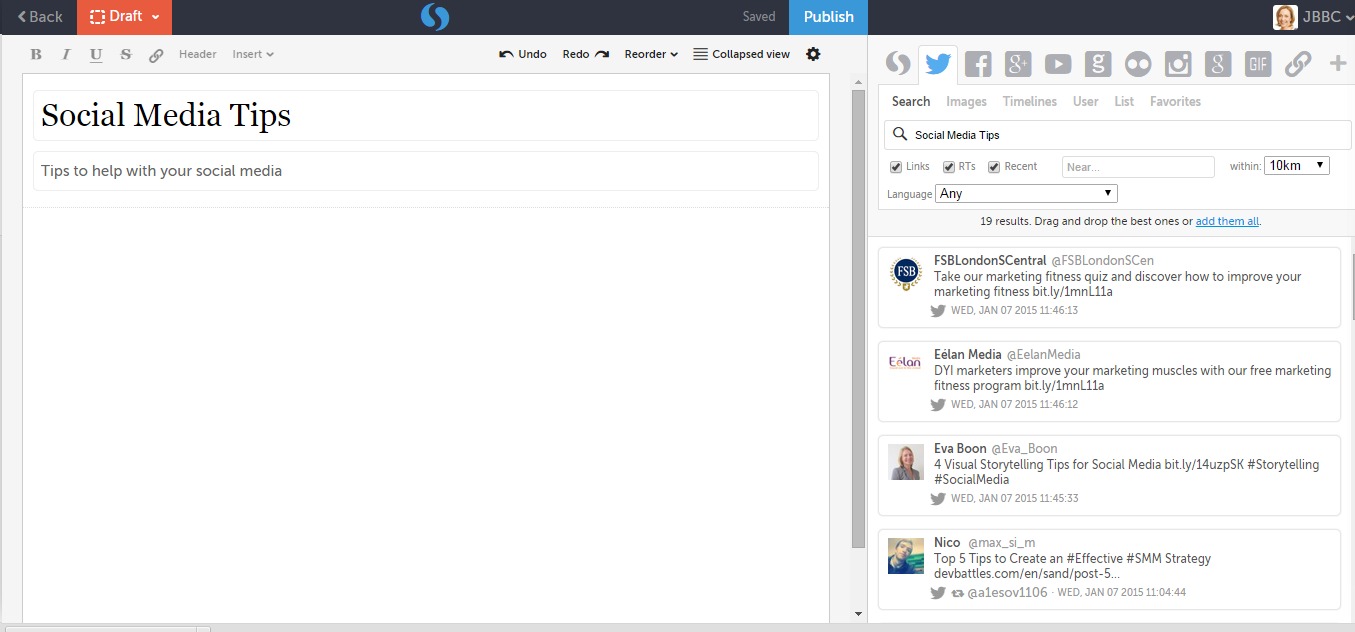
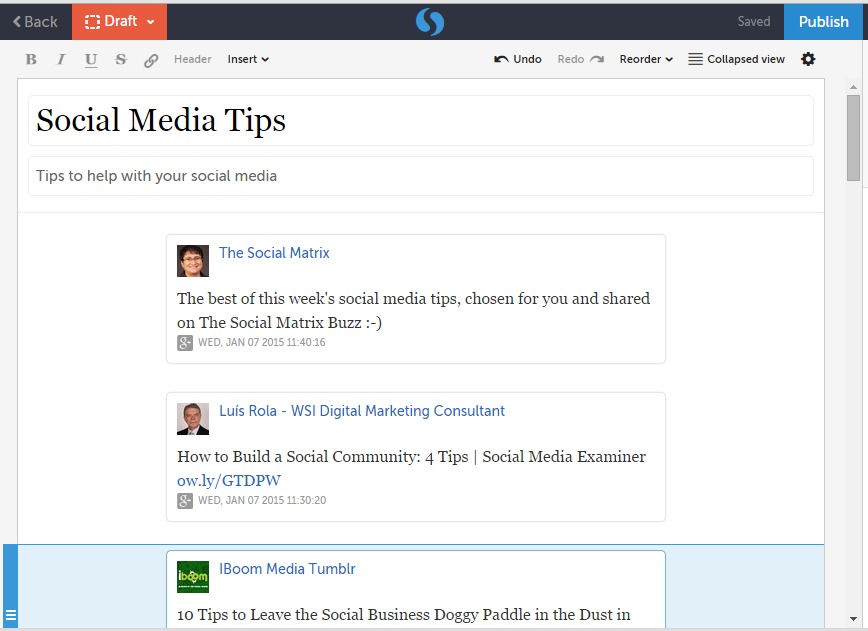
4.  Start by adding a headline for your story and a brief description so people will know what your story is about.

storify social media tips

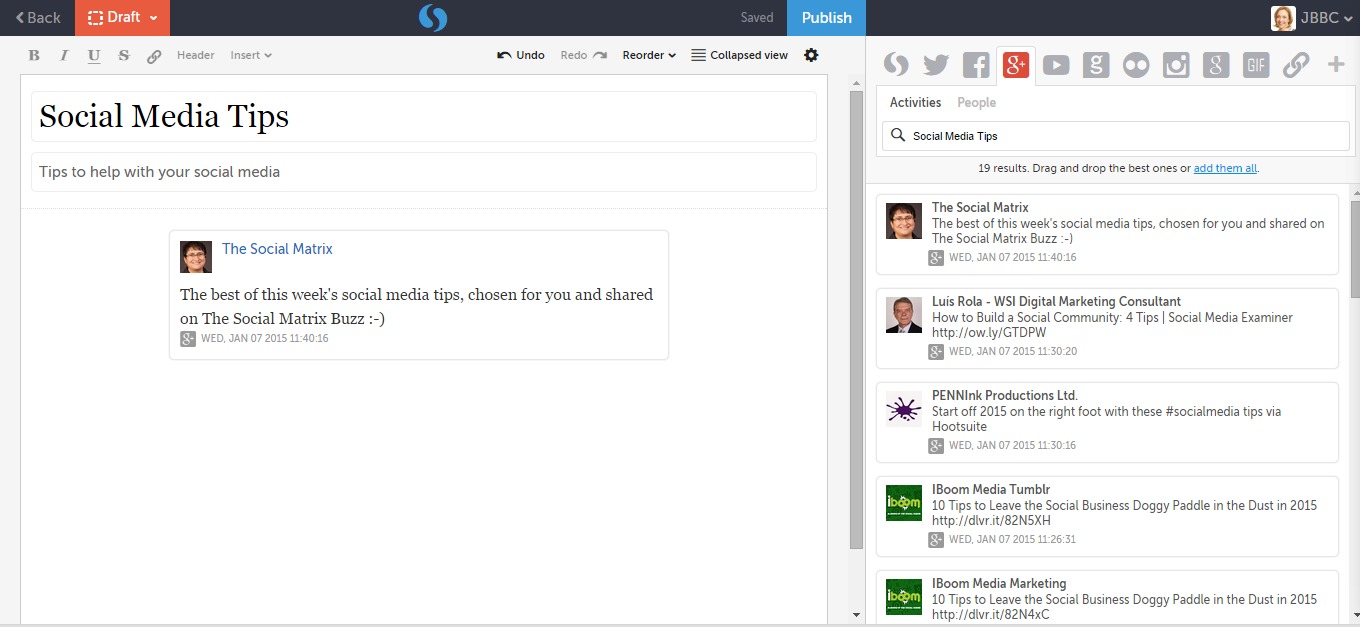
5. You can search for elements to add to your story from your chosen media sources.Once you find something you want to add drag it over to your story. This drag-and-drop method is what makes Storify such a great platform to work with as it keeps all of the original links and functionality of the original source and embeds them into your story.

st4

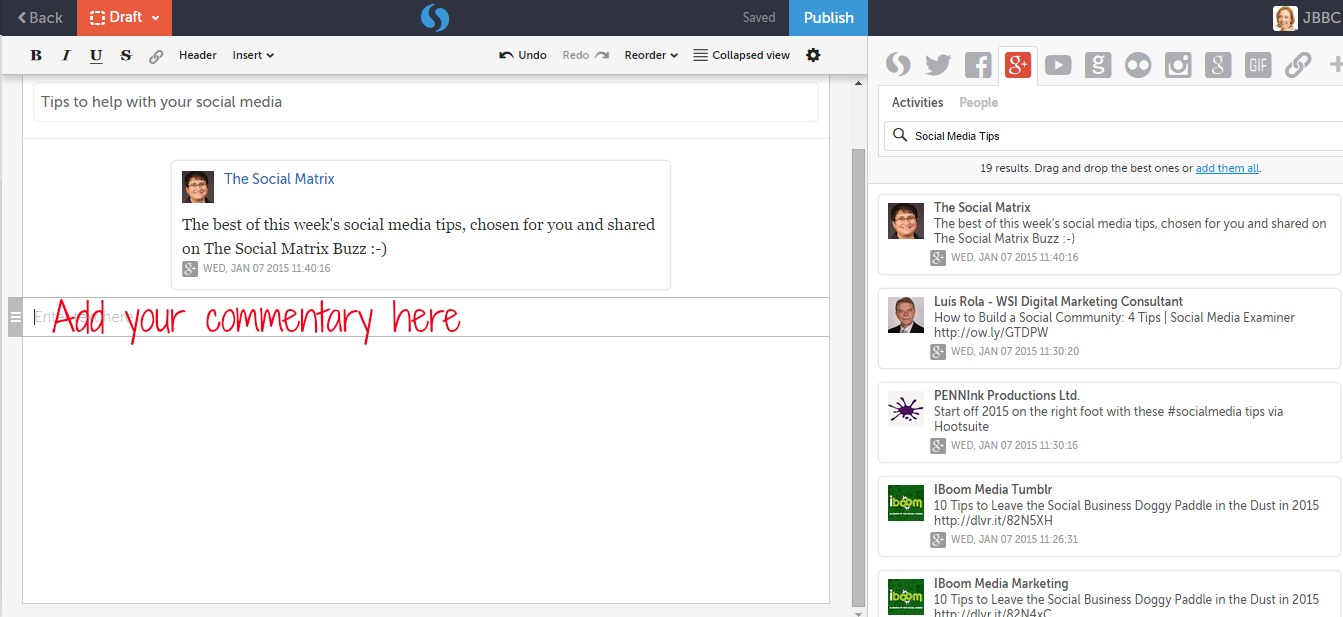
6. Now add your commentary – this step is optional but it is a great way to personalise a story and add your own unique voice. For instructions on how to add a cover image, click here.

st5

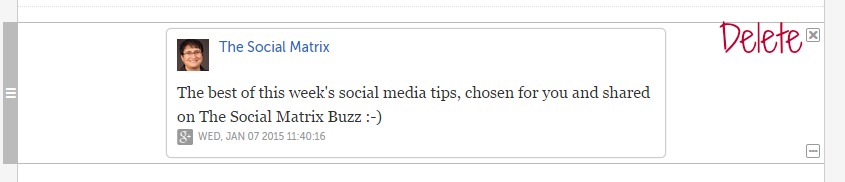
7. It is easy to make changes to your story. To delete an element hit the X in the right corner; to reorder elements in a story simply drag and drop.

stdelete

8. When you are happy with your story, hit publish.

stpublish

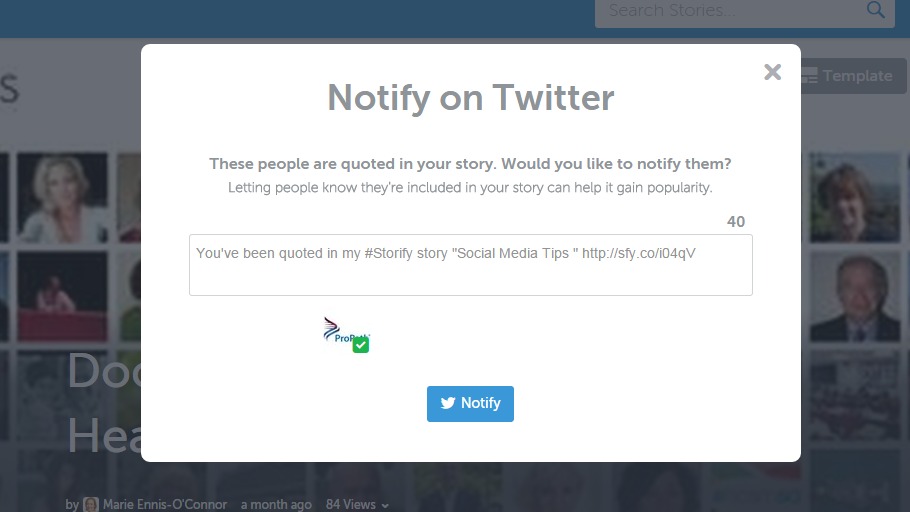
9. You can then notify people who have been quoted in your story, helping make it go viral.

notify

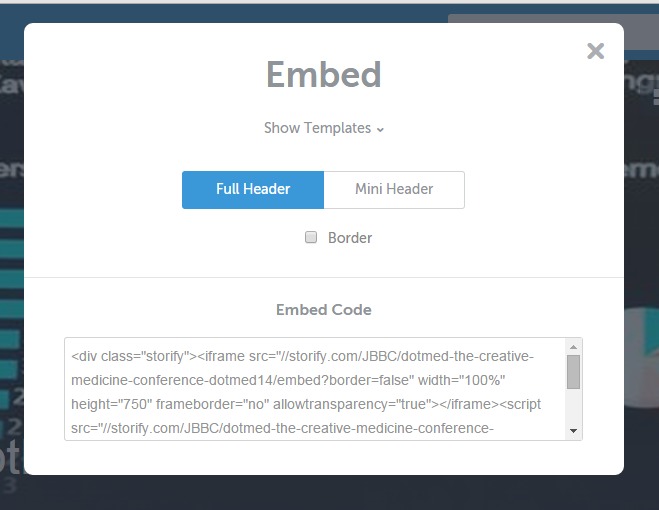
10. You can also share your story on social networks and embed it on your website or blog.

embed

At first glance Storify may seem like a complicated platform to master, but my Storify tutorial shows you it is really quite easy and fun to tell a story online.

If you would like to see some examples check out my profile at: https://storify.com/JBBC

Happy Storytelling!