Posted in #HCSM

Social Spotlight: Kristi Bruno

twitter_e32e881f84

This week I caught up with Kristi Bruno to find out how social media fits her role as Director of Communications, Media and Marketing, at the American College of Chest Physicians.

Hi Kristi, can you tell us how you are using social media in your work.


KB:
We use social media at the American College of Chest Physicians each day.  We have employed social tools to build a community, share the latest research and news in chest medicine with our membership, educate and inform the public and patients about health topics like COPD, lung cancer and asthma.

We are most proud lately of our work on Reddit. Our Reddit Ask Me Anything was designed to increase awareness of a non-pharmacological treatment of severe asthma called bronchial thermoplasty, to raise awareness of the American College of Chest Physicians, and to position the organization as a thought leader in pulmonary, critical care and sleep medicine. We have a couple more AMAs planned this year and we’re thrilled to bring interesting researchers and ideas to this community.

I’m also really excited to continue exploring how our use of Facebook Live can help break down boundaries, bring information to those who might not otherwise get it due to geography or economics. We’ve already started dabbling in Facebook Live in our training center—it’s a great facility and we host courses often and the tool is helping us to tell that story.

Sounds like you are using social media in some creative and innovative ways Kristi. Can you remember back to when you first started using social media? What prompted you to get started with it?

KB: I began my career as a fundraiser and in partnership management for a non-profit. While working for the CHEST Foundation as a Development Manager, I fell into social media. We had a public-facing campaign and I was able to take a tiny budget and make a real impact in reach, engagement and mobilization in a New Year’s contest we were holding. I immediately fell in love and luckily work for an organization that allowed me to take on a new role in our Marketing Communications department so I could further explore my interests. My role continues to evolve at CHEST, but I absolutely have a real love for social and new media.

It’s wonderful that you are able to explore and nurture you passion for social media in your career. That’s awesome. So which platforms do you enjoy the most?

KB: It’s so hard to choose—like picking a favorite child (ha!), but I like them all for different reasons. Professionally, Twitter is amazing. I love that I’m able to connect with like-minded people working in the field, and follow clinicians working in chest medicine to see what they are most interested in—that part really informs my day-to-day work.

For reach—it’s a tool within a platform, but I’m loving the impact of Facebook Live. And, from a branding perspective, we have really enjoyed employing Spotify playlists as a tool for promoting the meeting location each year for our annual meeting. Our team has a great time curating these playlists. And, it’s a nice opportunity to show that our meeting isn’t all about the science! We’ve also used Storify as a tool to engage our subject matter experts in curating interesting content in a specific area. We syndicate these across our platforms. It’s an easy way to engage thought leaders and, again, gives us plenty of ideas as we develop our own content.

I love that idea of using Spotify! What a fun way to showcase your brand’s personality. Now I’m interested to learn more about which healthcare topics interest you. Do you take part in any particular twitter chats?

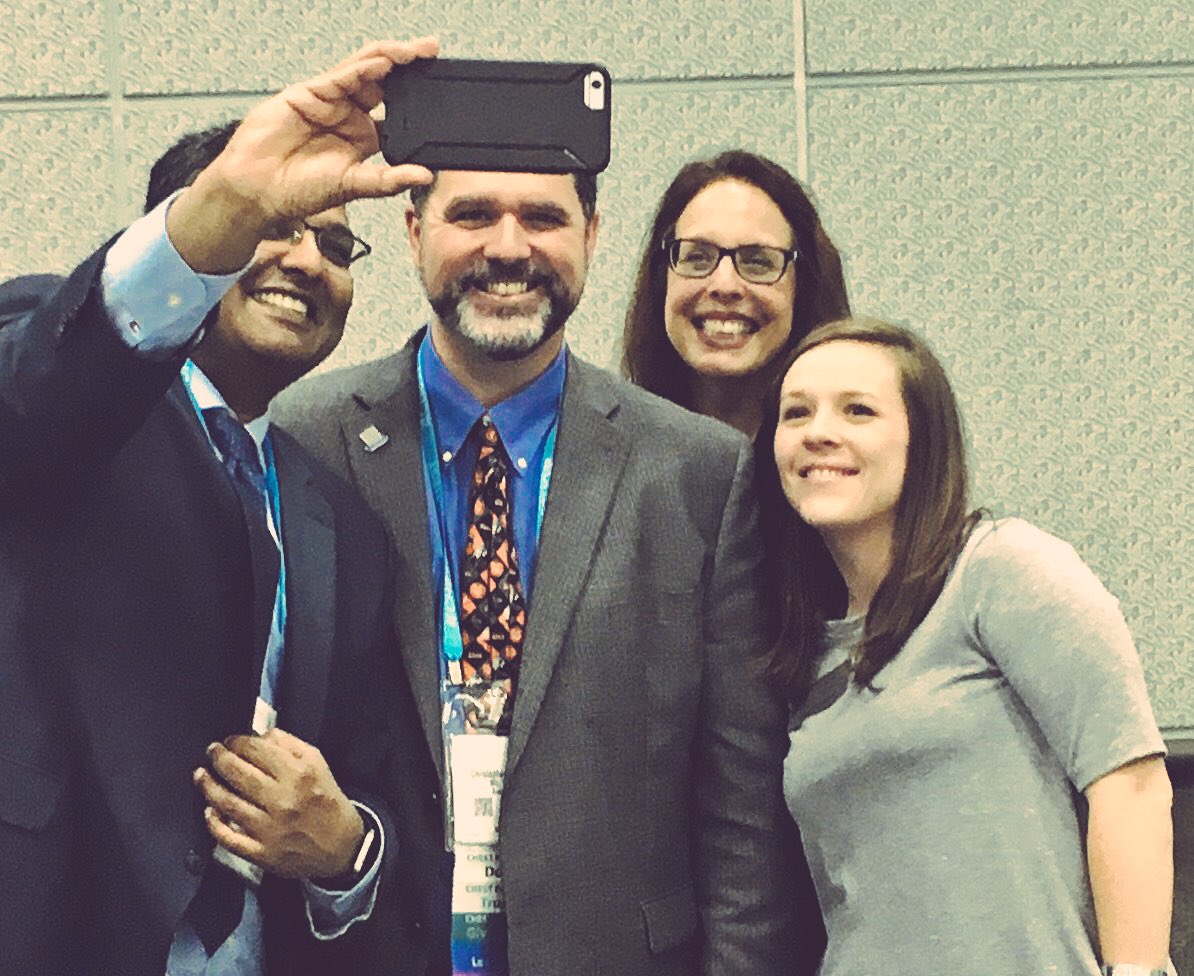
KB: CHEST holds quarterly Twitter chats with the hashtag #pulmCC. We’ve worked hard to engage different sub-specialties in the chats and we’ve talked about big data in the ICU, palliative care, sarcoidosis—it’s run the gamut. I’m also completely in awe of the lung cancer social media chat, #lcsm. The group behind the chat and Twitter handle are so passionate about what they do. I had the pleasure this year of meeting two of them at CHEST 2016—Deana Hendrickson and Tom Verghese (pictured below).
cvj3xlyuaaajxcl

They are two really amazing people. Deana lost her mother to lung cancer, and Tom is a thoracic surgeon. I’m just moved beyond belief by them because they have created a real grassroots movement around a highly-stigmatized disease. I’ve learned a ton from this group and continue to learn!

I know both Deana and Tom through Twitter and I too am in awe of the work they are doing. Without social media, I know I would never have met such incredible people. It’s one of the reasons I love social media so much and recommend it to people who work in health care. For those who are just starting to use social media what advice would you give to them?  

KB: Have a plan! There are so many platforms, cool ideas and things you could do. But, be true to your brand, audience and really think things through and don’t get overwhelmed. Develop a strategy and stick to it—but be flexible because the landscape is constantly changing.

And, read. I was lucky enough to go to grad school at DePaul and get my MA in New Media Studies—but before formal education, I consumed as much information as I could about social media, healthcare, health communications, the patient experience, and what clinicians were talking about on social media. This reading and research benefits me almost every day of my life. Always be a student!

Thanks Kristi for taking the time to share with us your experience of using social media in your work. I’ve really enjoyed learning about the creative ways you are leveraging popular social platforms, and I’ve even picked up some new tips from you! 


About Kristi Bruno

Kristi Bruno is Director of Communications, Media and Marketing with the American College of Chest Physicians and a proud alum of DePaul University’s New Media Studies MA program. Kristi was named Folio: Top Women in Media Rising Star and was the 2016 New Media Studies Fellow at DePaul University. She has spoken at Social Media Week Chicago, and has published on the topic of healthcare social media in several notable journals and blogs. She can be found on Twitter (of course), @kristibruno and she blogs at kristibruno.com.

Posted in #HCSM

Google Is Shifting to a Mobile-First Index. Here’s what you need to know

responsive-google-657x345.jpg

We’re living in a mobile-first world and search engines are seeing the result of this trend: search queries on mobile have now surpassed desktop-based queries.

Google recently announced that its search results index is essentially being flipped and will prioritize mobile results first – so while your website may already be mobile-friendly, your content may not be optimized for the new realities of search.  With Google currently experimenting with this change, there’s a lot you need to know to ensure you’re prepared.

Hubspot has created a useful guide to help you prepare for the changes that are afoot. It explains in more detail what mobile first indexing is, and how you can start to prepare for it by ensuring your website is mobile friendly and you give priority to site speed, user experience and engagement.

Read Google Is Shifting to a Mobile-First Index: What Marketers Need to Know to Prepare

Related

Posted in #HCSM

How To Rock Social Media

Yesterday I presented a webinar with tips on how to rock your social media. For those who couldn’t make the live event, here’s the slide-deck:

Click here for the show-notes with links to tips and tools mentioned during the broadcast. I’ll be adding new resources the notes below, so check back regularly.

Posted in #HCSM, Infographics

Internet Stats & Facts 2016 (Infographic)

I was sent an interesting infographic this week from the folks at Hosting Facts, and the sheer scale of global internet penetration blew me away.

  • There are 3.26 billion internet users; that’s over 40% of the world population.
  • Facebook now has 1.55 billion active users.
  • 2.9 billion Google searches are made every day.
  • 2.7 million blog posts are published every day.

internet stats.png

When it comes to website and domain stats, there are currently 966 million websites in the world today.

  • Google is the #1 most popular website, followed by Facebook and YouTube.
  • The most popular CMS is WordPress, powering 25.4% of all websites in the world and responsible for over 76.5 million blogs created since 2004.
  • There are currently 123.78 million registered .com domain names, making the .com TLD the top domain name extension.

domain names.png

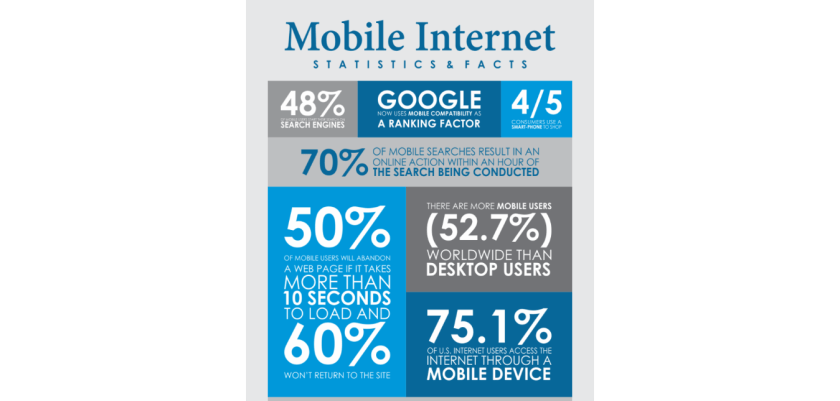
There are more mobile internet users than desktop internet users; 52.7% of global internet users access the internet via mobile.

  • Search engines are the starting point for mobile research, with an estimated 48% of mobile internet users starting their search on search engines.
  • Google uses mobile compatibility as a factor when ranking websites.
  • 70% of mobile searches result in an online action within an hour of the search being conducted.
  • 50% of mobile users will abandon of web page if it takes more than 10 seconds to load, and 60% won’t return to the site.

mobileuse.png

Click here to access the full report. 

Related: AdAge Social Media Facts 2016

Posted in #HCSM

10 takeaways from the 20th Healthcare Internet Conference (HCIC)

Lots of super insights here

sleibforth's avatarSteve Leibforth

This year’s Healthcare Internet Conference again set the bar for healthcare digital marketing conferences with great presentations from a number of healthcare systems to enjoyable and educational keynote speakers like Scott Straton of UnMarketing (who managed to wake up the room at 8 a.m. in Vegas!). Thanks to the team from Greystone including Mike Schneider and Kathy Divis for putting together a thoroughly enjoyable and valu20-years-2able conference.

The two main themes that I took away from the conference this year were the transition to MarTech (marketing technology) and the challenges associated with the move and the move away from “Vanity Metrics” to more actionable metrics.

The annual Healthcare Internet Conference kicked off its 20th year with a Sunday evening event entitled “Let’s Talk Engagement”.

  1. Let’s Talk – Transitioning to a MarTech Mindset: Why It’s Important. How It Happens. Karen Corrigan (@karencorrigan) and Kathy Divis (

View original post 1,302 more words

Posted in #HCSM

Healthcare Marketing in 2017: What to expect

I was delighted to be asked recently to contribute to a article at Austin Marketing on what to expect in healthcare marketing in 2017.

My prediction is that demand for live video will grow in 2017 as consumers want a more immediate and real connection to healthcare brands. Marketing will be less about pre-produced, scripted videos, and more about delivering an authentic experience that people can connect with and feel part of.

In 2016 we saw the rise of mobile video consumption on platforms such as Snapchat and Periscope. In addition, the main social media platforms all rolled out new features and products around live streaming.

With the launch of Facebook Live, Facebook, in particular, is putting greater attention on live video in its algorithm – a move marketers cannot afford to ignore. The ability to reach and engage consumers will increasingly be driven by video, and this, in turn, will expand to include better marketing and advertising options for healthcare brands in 2017.

Read more predictions

What do you predict will happen in the coming year?

Posted in #HCSM

How Google Search Has Changed in 2016

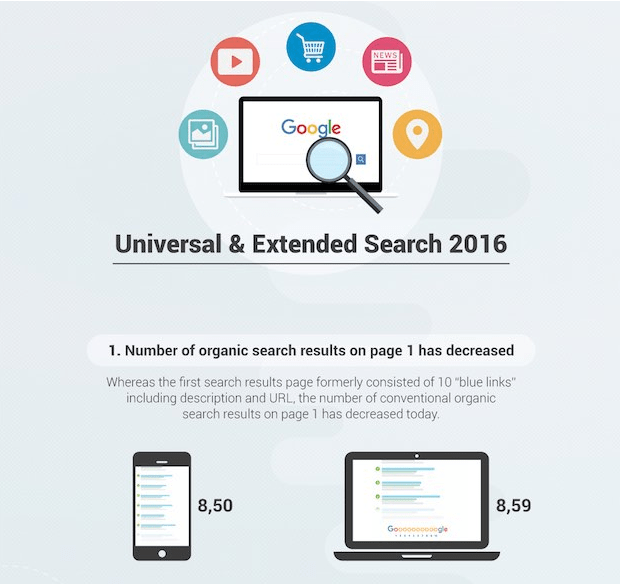
Google’s search engine is displaying fewer organic results on it first page this year than it was last year, and it’s increasingly presenting different experiences for desktop and smartphone users, according to recent research from Searchmetrics.

The report was based on 2016 data from 500,000 general, frequently searched keywords. The researchers examined the first Google search results page for each term and analyzed how 11 features (text results, product listing ads, images, news, maps, etc.) were integrated.

Whereas Google used to almost always display 10 standard, text-based organic results on its first page, the search engine now usually presents fewer results: 8.59 results are presented to desktop users, on average, and 8.5 are presented to smartphone users, on average.

google1.png

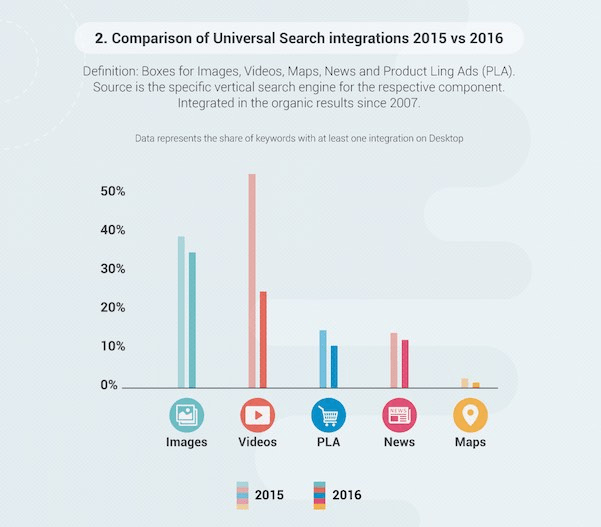
A key reason for the decline in the number of traditional search results presented on the first page is that Google is integrating an increasing number of supplementary boxes/features. Some 34% of the desktop results for the keywords examined by the researchers included image results, 24% video results, and 20% Knowledge Graph results.

Consumers searching on desktop computers are more likely than smartphone searchers to receive Google results with images, product listing ads, and fact/answer boxes; smartphone searchers are more likely than desktop searchers to receive results with video, map, social, and mobile app integrations.

google2.png

Source: Marketing Profs

Related Reading

Posted in #HCSM

4 Ways to Build Trust and Influence on LinkedIn

Do you want to grow your LinkedIn network? Interested in practical, scalable ways to establish your professional credibility?

A recent article from Social Media Examiner shares four great ways to build trust and grow your influence on LinkedIn.

#1: Optimize Your LinkedIn Profile

A strong professional LinkedIn profile creates opportunities for meaningful connections and interactions with other professionals. The article recommends securing your vanity URL, selecting a professional profile image, using industry keywords, avoiding jargon and buzzwords, and including recommendations.

#2: Proactively Grow Your LinkedIn Audience

If you want to grow your LinkedIn audience quickly, you can’t sit on the sidelines waiting for people to notice you.Make an effort to increase the quality and quantity of your connections by inviting your existing contacts on LinkedIn and finding potential contacts to connect with.

#3: Publish Content on LinkedIn

Sharing content on LinkedIn helps you stay top of mind with your core network. It positions you as an influencer who constantly delivers value with high-quality, engaging content. Consider too, publishing your own original content on LinkedIn Pulse  – a super way to showcase your expertise.

#4: Foster Your Community

Simply growing your network on LinkedIn isn’t enough. While more connections mean better social proof, gaining real trust requires an ongoing relationship-building effort. You can do this by commenting on people’s posts and updates, endorsing their skills, and participating in groups discussions.

LinkedIn is an excellent platform for establishing influence and thought leadership, but building influence doesn’t happen overnight. It takes time and effort to expand your network. Many people give up before they achieve significant progress. Follow the advice in this article and you will soon start to see results.

Are we connected on LinkedIn? Send me a message and let’s reconnect if we are. Or if we are not yet connected, send me an invite and I’ll be pleased to connect with you.

https://ie.linkedin.com/in/marieennisoconnor

Posted in #HCSM

What Does the Future Hold For Social Media?

I love these kinds of articles which predict the future of social media. As marketers we need to keep an eye on trends and be ready for future changes in the social media world.

This article from Marketing Land presents six high-level possibilities for social media’s next phase of evolution.

1. Monopolization – one platform coming to dominate the social media landscape – Facebook anyone?
2. Pay-only visibility – are we in the end times of social media’s free lunch?
3. Individualization – Already, social media platforms are recognizing the demands for customizability and personalization in their user bases.
4. Niche segmentation – niche specialists will provide more novel experiences than their massive, slow-moving counterparts – think Snapchat.
5. Virtual and augmented reality – futurists have been including VR and AR in their predictions for the future of social media for a while now – this one is definitely on the future cards.
6. Streamlining  – social media apps becoming one-stop shops for everything you’d want on the internet.

What do you think of these predictions? How do you see the future of social media evolving?


You might also like to read: What You’ll Need to Build the Agency of the Future