Posted in #HCSM, Conference, Digital Health, Doctor, E-Patient, Ehealth

The digital revolution and the era of the e-patient

I was delighted  to have the opportunity to share the stage with Dr Kendall Ho, a practicing emergency medicine specialist and founding director of the eHealth Strategy Office of the University of British Columbia, at the Universitas 21 Health Sciences Group annual meeting  held recently at University College Dublin. In a lively and engaging presentation Dr Ho spoke to delegates about how medical educators can embrace social media.

Also presenting was consultant rheumatologist,  Dr Ronan Kavanagh,  speaking on how doctors can use the tools of social media in their practice.

And my own presentation on the digital revolution and the era of the e-patient.

Posted in #HCSM

4 Essential Steps to Healthcare Social Media Marketing Success

Crowd Clip ArtAs the Internet increasingly becomes the medium of choice for researching health information, social media has become an important channel for healthcare marketing.  In today’s social media-connected, content marketing rich environment, healthcare marketeers who are not using social media as part of their strategy are missing out.  In today’s post,  I will outline the four essential steps required for successful healthcare  social media marketing.

The first step is to gain a clearer image of who your audience is and what they are saying about you. Only then will you be able to create compelling, relevant and valuable content to fuel the social media engine.

(1) Identify and segment your online audience

Your healthcare marketing efforts will be much stronger if you can identify your target market and segment it so that you can tailor your content more specifically for them. Unless you take this first step, your social media marketing activities will remain unfocused. If you can clearly identify your target market, then you can plan the best combination of email marketing, social networking strategies, SEO, Pay Per Click, Banner ads, etc. You are looking to drill down deeper to discover their geographic location, their gender, level of education, family status, which social media sites they use, what conversations they are having online, how they are engaging with you, your competition and your online partners.

(2) Plan your social and digital media channels

Armed with this information you will now be able to plan which social media channels are most suited to your target market and direct your efforts accordingly. For example, if you identify that your audience is predominately female, you might direct some of your healthcare marketing efforts to Pinterest, a site whose rapid growth and success has been driven by women.

(3) Join in the online conversation

There is a support and community group for just about any medical condition or interest online.  To further expand their reach and focus on patient care, these groups need the input of qualified healthcare practitioners to help validate the information discussed on their sites and to ensure balanced views that are in the best interest of patients. Participating in these communities by providing advice, educational podcasts, guest contributions to widely read blogs and websites can help you broadcast your brand and build your reputation, while providing valuable support to the group.

(4) Monitor your online reputation

Consistency, credibility and connection are the cornerstones of maintaining your healthcare brand’s integrity.  It is important to listen to what is being said about your brand, not just to know what is going on and whether you are receiving any negative publicity or comments that need to be addressed, but also to know what you are doing right, so that you can do more of it. At a minimum keep an eye on tweets, comments and messages on your Twitter, blog and Facebook accounts. You should also set up Google Alerts for your brand and industry.

There’s no question that social media is growing in importance in the healthcare field and it is no longer an optional marketing strategy.  The conversation is happening online with or without you, so for the sake of your healthcare brand, join it!

Posted in #HCSM, Doctors 2.0, Video

Social Media Lessons And Tools For Doctors

Social media is transforming how doctors and patients interact. How should doctors use social media? What tools can they use to do the job?

In this short video segment, Albert Einstein College of Medicine‘s Social Media Manager,  David Flores speaks with Kent Bottles, M.D., a noted speaker on the subject of social media and medicine and senior fellow at the Jefferson School of Population Health at Thomas Jefferson University.

Dr Bottles says that what he finds most useful about social media is the ability to tap the knowledge of others to help him research, think and write.  He believes no matter how bright you are, you’re always better informed by reaching out for help. While he cautioned against falling for social media “hype,” he explained that doctors should become familiar with social media because of these resources’ ability to engage, inform and galvanize.
Posted in #HCSM

Twitter Moves Markets: Can It Impact Disease?

For those who are engaged in social media, nothing is more powerful than an active Twitter account. Twitter demands engagement and fosters a sense of community. Medicine, although quick to adopt many new technologies has been slow to embrace social media outlets and, in particular, Twitter.

“The ability to share ideas and information in 140 characters provides a unique platform for physicians to communicate with one another, with patients and with the world. Twitter allows physicians to teach, to counsel, to support and to dispel rumors and myths. Twitter allows physicians from different parts of the world to consult with one another and share knowledge in order to determine the best treatment plan for a particular disease process or patient. Twitter affords patients with an opportunity to connect with other patients who may have similar medical problems and challenges.” Kevin Campbell M.D.

See on drkevincampbellmd.wordpress.com

Posted in #HCSM, Doctor, Video

Health Care Social Media in Medicine: An Interview with Kevin MD

Check out this exclusive interview by Michael Weiss with Dr Kevin Pho, founder of  KevinMD.com on the topic of the increased role of Health Care Social Media in the Practice of Medicine.

Speaking about the interview on his blog, Professional Patient Perspectives,  Michael writes:

I think you will enjoy Dr. Pho’s informative and thoughtful answers as we talked about everything from Rating Physicians on-line to integrating mobile health & Smartphones into the traditional medical examination room to the present/future effects of ObamaCare on Healthcare and discussed the prospects of using technology like Skype for Video Medical Exams and chronic illness Follow-ups.

Posted in Infographics, Twitter

The Essential Guide To Twitter (Infographic)

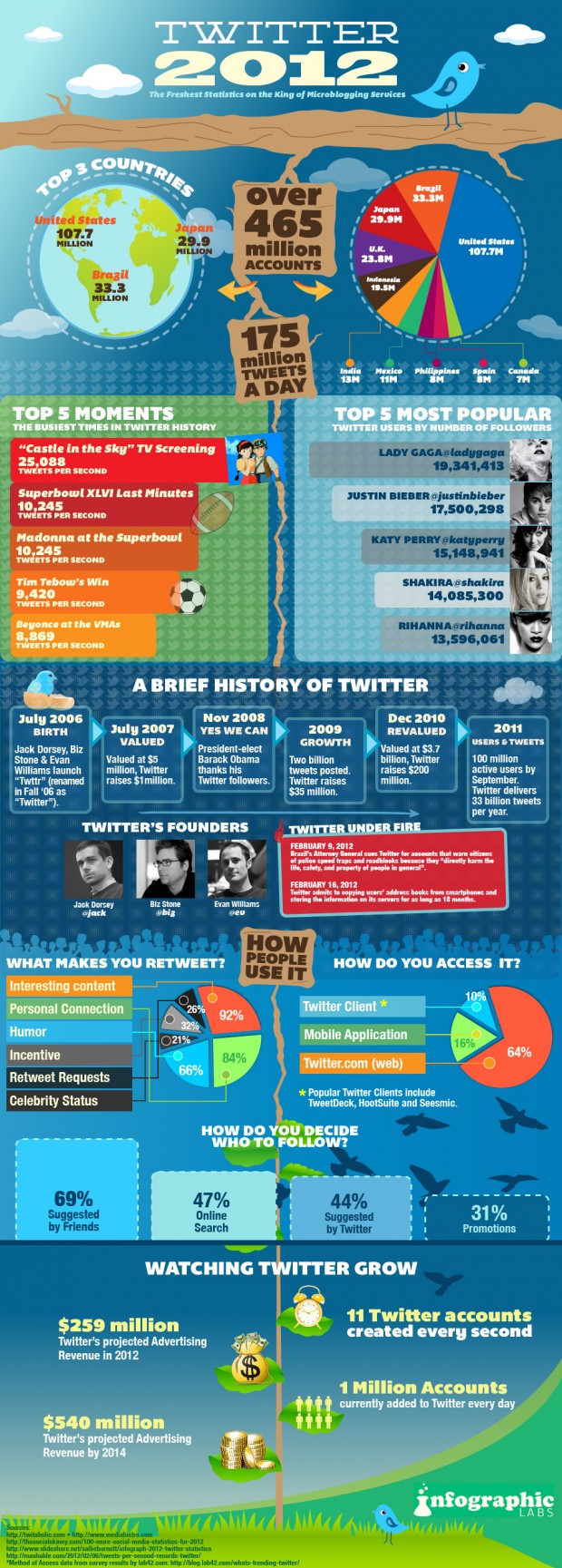
Did you know that 11 new Twitter accounts are created every second?  That 175m tweets are generated every day and 69pc of Twitter users determine who to follow based on friends’ suggestions

These stats and more, including the busiest times on Twitter, and what makes Twitter users retweet,  are contained in the following infographic by Infographic Labs published on Visual.ly.

Posted in Ehealth, Nursing

Social Media Use Within Nursing

See on Scoop.itHealth Care Social Media Monitor

The last decade has seen tremendous growth in the use of communication technology within healthcare. Along with the rise of various eHealth technologies during the early 2000s, the recent increased prevalence of socially-driven Internet technology (social media) has begun to impact the nursing profession in a number of salient fashions.

Nursing education and practice are two areas which have been influenced by the evolving communication modalities that social media technologies can facilitate. Regardless, the nursing profession as a whole has been remarkably slow to recognize and study these new modalities of communication facilitated by the evolution of social media.

See on www.medicine20congress.com