Posted in #HCSM

6 Simple Things You Can Do On Social Media In Under 10 Minutes

As a social media consultant, I work with clients strategically to help them develop a marketing plan which is aligned to their business objectives.

I set up social media accounts for them or optimize the accounts they already have.

I provide them with a social media playbook which includes guidelines, branded templates, content calendars and everything else they may need to keep their social media marketing on track.

And then my job is done. I say goodbye and move on to the next client.

Except I never really say goodbye.

I keep an eye on their progress from a distance. I share their content to my own feeds and I am always a phone call or an e-mail away when they need my help again.

I really care about my clients and I can’t help but feel disheartened when I see all the effort they initially put into setting up their social accounts fizzle out.

As they post less and less I watch as their social media activity dwindles away bit by bit.

When I ask why they often tell me they simply don’t have the time to maintain an active presence and hiring someone to do their social media marketing full-time is beyond their budget right now.

So for those clients, I have devised a 10-Minute-A-Day Social Media Plan to deal with their overwhelm. You can download the plan here.

Below you’ll find 6 simple actions taken from that plan that you can do to keep your social media channels updated every day.

1. Check Out What’s Trending

Take a quick look at trending hashtags with tools like Twitonomy to see if you can add your perspective to a trending conversation.

Recommended Reading: 3 Reasons You Should Track Hashtags — And 3 Tools You Should Use

2. Share A Curated Item

Curation helps you provide your audience with relevant, high-quality information on a regular basis without sacrificing your time and resource. Use a tool like Quuu to collect curated content to share with your audience.

Recommended Reading: 10 Golden Rules of Content Curation

3. Whip Up A Quick Graphic

Create a quick graphic to accompany your social media updates using a tool like Adobe Spark or Canva. These graphics creation tools are so quick and easy — you’ll be amazed at what you can do in a couple of minutes with them. To save more time, create pre-made branded templates upfront and then just drag and drop your images into these templates.

Recommended Reading: How To Create Professional Graphics — Even If You’re Not a Graphic Designer

4. Retweet Your Own Tweets

Though I’d be wary of over-doing this strategy (from a narcissistic viewpoint) it appears that you can increase your exposure by liking and re-tweeting your own content. This is because Twitter uses Likes and re-tweets as indicators of popularity in the algorithm.

5. Reshare Your Best Twitter Content

To find your best content, check your Twitter analytics which can be accessed from your Twitter profile. Then use a tool like Hootsuite to share your content at optimal times. The Buffer Browser Extension makes sharing content even quicker and easier. It allows you to open the composer on any web page and add posts right to your Queue, without having to go back to your dashboard. 

6. Automate Social Media With IFFTT

I’m not a big fan of automating social media activity but used well, it is a boon to time-pressed social media marketers. The key to making it work is to spend time creating genuine, engaging content, and then maximizing its performance through the strategic use of automation tools. IFTTT (an acronym for If This, Then That) allows you to sync up multiple apps so that when a certain activity happens, it kicks off a separate activity in another app. I use IFTTT to add my tweets to a Google Spreadsheet to create a Twitter Bank of tweets to draw on.

Towrap up — the 10-Minute-A-Day Social Media Plan is by no means a strategic plan. Rather it’s a tactical plan to get a handle on social media when you feel overwhelmed and pressed for time.

Following the plan ensures that social media becomes a daily habit. You won’t get everything done in ten minutes, but that’s OK. The important thing is that you will get something done and that adds up each week.

Before you know it you will be able to look back at the end of a month and see how much you have scaled your activity just by spending ten minutes a day doing one or two things.

You will then be well on your way to mastering social media overwhelm. In the immortal words of Zig Ziglar:

You don’t have to be great to start; but you have to start to be great!

Posted in #HCSM

Ten Top Tips To Celebrate Social Media Day 2021 #SMDAY

While every day is Social Media Day, June 30th, 2021 marks the twelfth annual official global celebration of all things social media.

I’ve been a social media evangelist for the past ten years and I am still as excited by its possibilities today as I was when I sent my first tweet and wrote my first blog.

The field of social media is dynamic and constantly changing, so as practitioners we are constantly learning and adapting to changes in the ecosystem. That’s what I find so energizing about working in this area.

To celebrate Social Media Day, here are ten of my tried and tested tips for social media marketing success.

1. Perfect Your Social Profiles

Review each of your existing social profiles with these questions in mind.

· Is it time to update your bio with new information?

· Should you use a more professional image for your avatar?

· Are your header images clear and compelling?

· Are you making good use of keywords?

· Do you need to include a new call-to-action?

Insider Tip: Complete all sections of your profile and schedule a review date every month or two to check your information is still current.

2. Get To Know Your Audience Better

Develop a deeper understanding of your target audience. Where do they like to hang out online? What content is most relevant to them? What kind of information are they looking for? How do they like to consume that information?

Once you deeply know your audience, you can then start to build relationships with them and create content that is relevant to them.

Insider Tip: Creating audience personas is a crucial part of designing your social media strategy and truly understanding who you’re trying to reach.

Download my audience persona template here

3. Meet Effort With Effort

Take the time to acknowledge when a person follows you online, leaves a comment on your blog, or re-shares your content. Share and retweet their content also. Favorite a tweet to let the person know you see them.

Insider Tip: Go out of your way to publicly (and privately) celebrate and acknowledge your followers.

4. Write Better Headlines

Did you know that on average, 8 out of 10 people will read headline copy, but only 2 out of 10 will read the rest?

Your headline is the first impression you make on a prospective reader. An eye-catching headline is a key factor in getting readers to click through to your article.

Insider Tip: Read 15 Ways To Crack Captivating Headlines for tips on creating headlines that attract attention.

5. Add More Images To Your Content

People connect more emotionally with images than text, and in an increasingly crowded digital landscape, when our minds are attracted more readily to content that draws our eye, images can break through the online content clutter to quickly communicate your marketing messages.

Insider Tip: Add an image to all your online posts — even those that are text-based. To aid brand recognition and create a strong visual identity, maintain consistency across all your images by sticking to the same colors, fonts, and layouts.

Check out my guide to creating professional graphics

6. Use The Right Tools

Whether you wish to edit a video for Facebook, design a Story for Instagram, or add visual impact to your blog posts, you’ll get the task done quicker and more effectively when you have a dedicated tool to hand.

Find just the right tool at this mega list of social media tools to try.

7. Make Sure You Are Using The Right Social Network

Not all social media is created equal. Different platforms attract different audiences.

It’s important, especially if your resources are limited, that you’re focusing your social media efforts in places that will generate the most return for your efforts. There’s no point in spending your time on a particular social network if your audience isn’t there. Nor should you spread yourself too thin by trying to be everywhere at once.

Every additional channel your business is active on means additional time and effort required to engage on and create tailored content for that platform.

Read Which Social Network Is The Right One For Your Medical Practice?  for more guidance.

8. Post Content At Optimal Times

Content has no value unless it’s amplified. One way to ensure amplification and optimize your social media reach is to post your content at the right time so it reaches your audience when they are online.

If you search for optimal posting times, you will find many guides online. You can follow these recommendations as a starting point, but I do recommend you do your own testing to see which days and times work best for your own particular audience within your industry.

Insider Tip: Sprout Social publishes an annual review of the best times to post to each of the major social media platforms. It may provide a good point for you to start testing optimum times for your own social media posts.

9. Repurpose Your Existing Content

One key to maintaining a steady stream of quality content is to re-purpose what you already have. By re-purposing content you have already written, you can extend and breathe new life into your current and past content.

Insider Tip: Get into the habit of creating content that can be repurposed in several different ways. Read How to Create Six Unique Social Shares From Just One Piece of Content for ideas on how to do this.

10. Don’t Just “Do Social”; “Be Social”

Finally, we all know those folks who only tweet you when they want you to read, comment or re-tweet their content. Don’t be one of those. Don’t get a reputation for being interested only when you want something. Focus on building online relationships. You can’t expect people to care about your community if you don’t care about theirs.

Posted in #HCSM

3 Places To Find Interesting Ideas For Your Healthcare Blog

Have you started a blog for your medical practice or healthcare facility? Are you sometimes stuck for ideas when it comes to popular health topics to write about?

I’ve put together this list of places to find topic suggestions when your well of inspiration runs dry. I turn to these places when I need a fresh injection of ideas for my own content marketing and I feel sure you will find them helpful too.

1.Buzzsumo

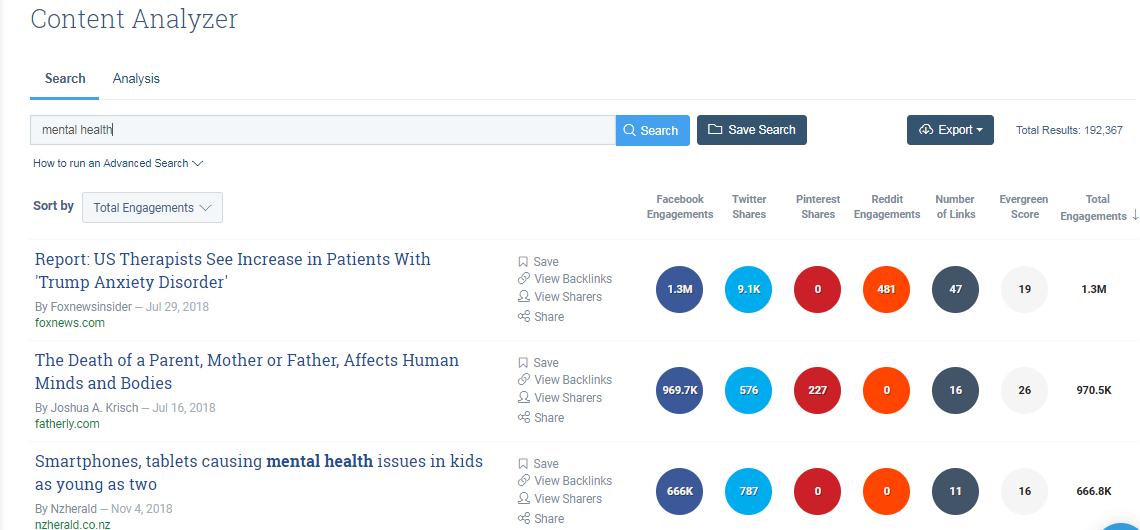
Buzzsumo is a useful tool to find which popular healthcare topics people are searching for on social media. These are the topics people want to read about so it’s worth brainstorming ideas around this content.

In the example below, I’ve searched for the term “mental health” and you can see it’s brought up some interesting topic ideas!

download


2. Keywords Everywhere

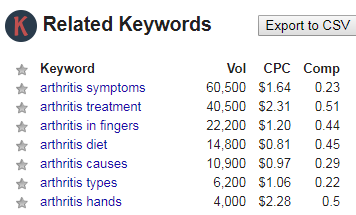
The Keywords Everywhere browser extension returns a host of long-tail phrases based on what people are searching for using specific keywords.

download

Insider Tip: The Google Keyword Planner within Adwords is another useful tool to find ideas for content based on keyword search.

3. Quora

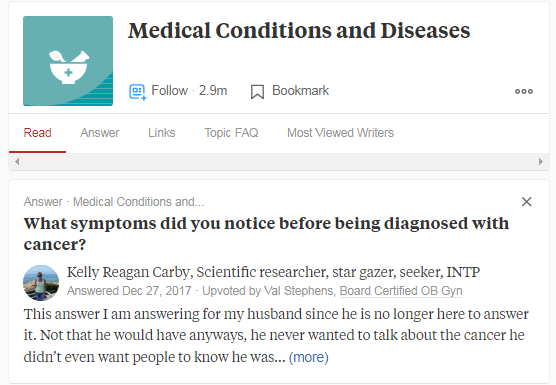
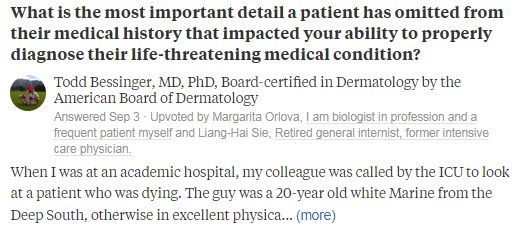
Quora is a question and answer platform where you can either ask a question about your topic or simply do a search using your topic keyword to find what people are asking about that topic. It’s a super place for market research. Make a list of those questions which you feel you could write about.

download

You have the option to follow chosen topics in your niche. Once you do so you’ll keep seeing the ‘Top Stories’ (questions) in your Quora newsfeed. You can also check out the ‘New Questions’ option to see the latest questions. When you have written an article or blog post on the topic, go back into Quora and answer a question related to the topic. You can include a link to your post in your answer.

Insider Tip: Yahoo Answers and Reddit are also good places to do market research online.

Where do you find inspiration for your content marketing?  

Posted in #HCSM, Thursday Tip

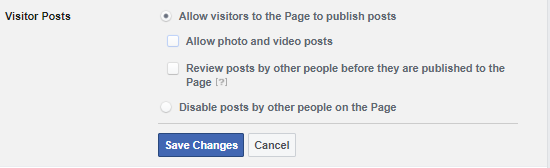
#ThursdayTip: How To Check Your Wall Posting Preferences on Facebook

Welcome to this week’s social media tip. Today I want you to show you how to set your wall posting preferences on Facebook. 

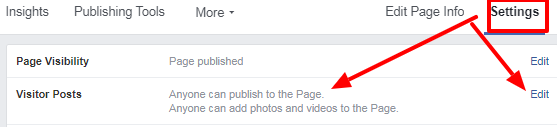
Recently I was teaching a social media workshop when the topic of how to deal with people posting directly to a Family Practice Facebook page came up.  The person who raised the topic hadn’t realised that it’s possible to limit who can post to your Page. In fact, you can set your page’s Posting Ability tab so that only your page admins can post to your Facebook page.

Here’s how to do it.

1. Choose Settings from your Admin panel. Then choose Edit.

download - 2019-11-28T153942.983

2.  From here, edit the posting ability to decide if you want everyone to be able to post on your page, or if you want to allow only your page admins to post by checking the relevant boxes.

download - 2019-11-28T154554.830

3. When you’re done, hit Save Changes.

A very simple step, and one that those who are new to Facebook can easily overlook.

Here’s to your social media success!


Posted in #HCSM

Which Social Network Is The Right One For Your Medical Practice?

Are you using the right social media platform to maximize your online reach? Not all social media is created equal. Read on find out more about choosing the right platform to enhance your medical marketing activities.

Most small practice owners I’ve talked to find themselves overwhelmed by social media because they feel they need to be active on all platforms.  It’s important, especially if your resources are limited, that you’re focusing your social media efforts in places that will generate the most return for your time online.  Don’t spread yourself too thin by trying to be everywhere at once.  Every additional platform your practice is active on means additional time and effort required to engage on and create tailored content for that platform.

Before becoming active on a social network, try answering the following questions to help you choose the platform that is right for your practice.

1. Will this platform help me achieve my marketing goals?

Setting SMART goals to which you can align your social media activity is a good guarantee of online marketing success. If you can’t explain how a particular social channel will help you to achieve your goals, then it may not be the right fit for you.

160620.snapchat.jpg

Recommend Reading: How To Set SMART Goals For Your Healthcare Marketing

2. Is my target audience active on this platform?

Different platforms attract different audiences. There’s no point spending your time on a particular social network if your audience isn’t there. Look at existing data to learn where a specific demographic spends their time online. For instance, if you’re targeting a younger demographic (25 years and under), then you should consider using Snapchat.

For the female-focused market, Pinterest is a good choice, because of its significant reach among women; 42% of online women are Pinterest users. 34% of users are between the ages of 18 – 29 and 28% are between 30 – 49, which creates a wide demographic of women who can be reached on this platform.

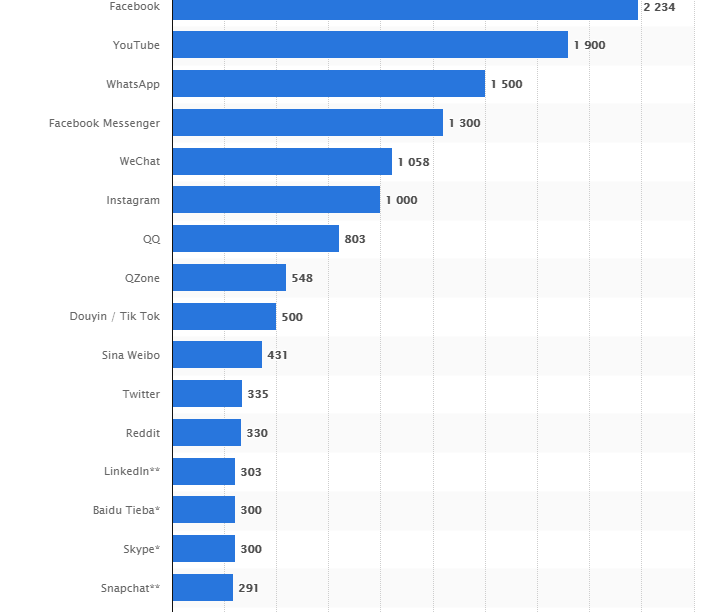
With an average of 1.47 billion daily active users, Facebook is still the king of all social networking sites (though we might see this predominance changing soon), so this is the most logical network to start with.

download (30)
Most popular social networks worldwide as of October 2018, ranked by number of active users (in millions) Source: Statista

However, the catch with Facebook is over 80 million businesses have a presence on the network which makes it a crowded and competitive landscape. And with organic Facebook Reach estimated to currently be as low as 1–3%, succeeding on the platform is more difficult than ever.

Certainly, you should create a presence on  Facebook for your practice,  but be realistic in terms of what you can achieve there.  To succeed you will need to include paid strategies for a successful Facebook marketing plan. The good news is that Facebook advertising allows for a high level of targeting right down to age, interests, income levels, geographic location etc. to ensure your message is delivered to the exact audience type you are looking to attract.

Recommended Reading: 10 Tips To Create More Engaging Content For Your Medical Practice Facebook Page

Look beyond Facebook to the many online groups and fora where your patients are also congregating. For example, Quora is a question and answer platform where you can either ask a question about your topic or simply do a search using your topic keyword to find what people are asking about that topic.

download (31)

3. Which social networks are my competitors using?

Which social networks are your competitors using? Are they active on networks you aren’t? Use a tool like Buzzsumo to identify the social channels on which your competitors get the most shares. Chances are if these channels match your demographics and are working well for your competitors, they will work well for you also.

Recommended Reading: Six Tools To Help You Perform A Competitor Audit

4. Will this platform match the content I create?

If you want your content to do well on social media, you’ve got to be strategic about what you publish and where you publish it. You need to create content that aligns with your audience’s expectations on each social channel.

Identify how, when, and where your specific audience likes to engage with content. For example, Instagram is the best platform for reaching millennials and users there will expect high-quality graphics and videos. It’s a great way to connect visually with your audience.

Twitter, on the other hand, has the most diversity in terms of audience penetration and is the best network for real-time communication. Due to its interactive, in-the-moment nature, it will require more of a commitment of time to participate in online conversations and chats and remain visible in the fast-moving stream of tweets.

Consider creating more video content for YouTube.

It’s no secret that video content is booming across all businesses, including healthcare. People around the world are now watching a billion hours of YouTube’s content every single day.

download.png

YouTube is the second largest search engine in the world with added SEO potential due to its Google connection. As a form of patient education and health promotion, YouTube has great potential but is currently an under-utilized platform for healthcare.

5. Can I integrate this platform with another similar one?

It’s better to use fewer channels well than to stretch yourself thin trying to maintain a presence on every social network. There is a degree of reciprocity between certain platforms – for example, Facebook and Instagram – the key is to choose channels which integrate well with each other to create maximum impact.

6. Consider your existing resources

Do you have the skills or personnel to create the right content for the networks you’ve chosen? While it’s true, you don’t have to pay to sign up for a social media profile on most platforms, these days, the organic reach of most Facebook posts is less than three percent. Running a social presence now requires an investment of resources, both in terms of finances and time.

To Wrap Up

When choosing a social network always keep one eye on the bigger picture. Rather than being led by current trends, back up your decisions by aligning them with your goals and audience.

When assessing a platform ask yourself if it is the right fit for what you are trying to do and for whom you want to reach.  Faris K. Timimi, MD, medical director for the Mayo Clinic Social Media Network (MCSMN) and a practicing cardiologist in Rochester, Minnesota, advises physicians to “look at the demographics and the nature of the platform, the content of what you are putting out there, and what are the characteristics and how does it fit.”

My final piece of advice is to master one social network well before adding another to your strategy.  Regularly review what’s working and what’s not. After a period of say six months, ask yourself this platform is still working for you. If it, then focus on improving your reach on it.  If it’s not working, consider whether it’s worth investing any more time on. Remember you don’t have to be everywhere to make an impact.


Related

Cosmetic Surgery on Social Media – Patients Rate Preferred Social Media Sites and Content

Posted in #HCSM, Twitter

How Does A Health Care Twitter Chat Work?

If you are looking to connect with more people in your industry on a wider scale, joining a Twitter chat is the perfect place to start.

It’s no secret that I love Twitter. I joined it eleven years ago – that’s eons ago in social media years, which as we all know we measure in dog years.

Since then I have watched disheartened as Twitter has become a far less friendly, far noisier place. That said, there are still incredible ways to use Twitter to learn and to connect with other like-minded people.

One of those ways is a Twitter chat.

What is a Twitter Chat?

A Twitter chat is a great networking and learning tool, and a super way to engage in meaningful conversations about shared topics of interest. Think of it as a virtual meet-up for people with common interests.

For those who may be unfamiliar with Twitter chats, they are a public chat, moderated by a host that happens live on Twitter. To filter all the conversations a specific hashtag is used. This hashtag allows you to follow the discussion and participate in it.  Most Twitter chats are recurring and focus on specific topics introduced by a moderator.  The chats usually last one hour and a transcript of tweets is often made available after the chat has ended.

Twitter chats can be fun and lively, and they’re a great place to learn and network. They are also a super place to meet new people. When you attend a Twitter chat regularly, people will get to know you and in this way, you can develop your network and grow your followers

What Is The Impact Of Twitter Chats On Healthcare?

For patients who participate in health-related Twitter chats, there is tremendous potential to motivate participants and encourage change. Much of this change comes from peer-to-peer support which has been shown to be highly effective in motivating change. Many participants share conversational and informational knowledge that they believe is valuable both to themselves and others.

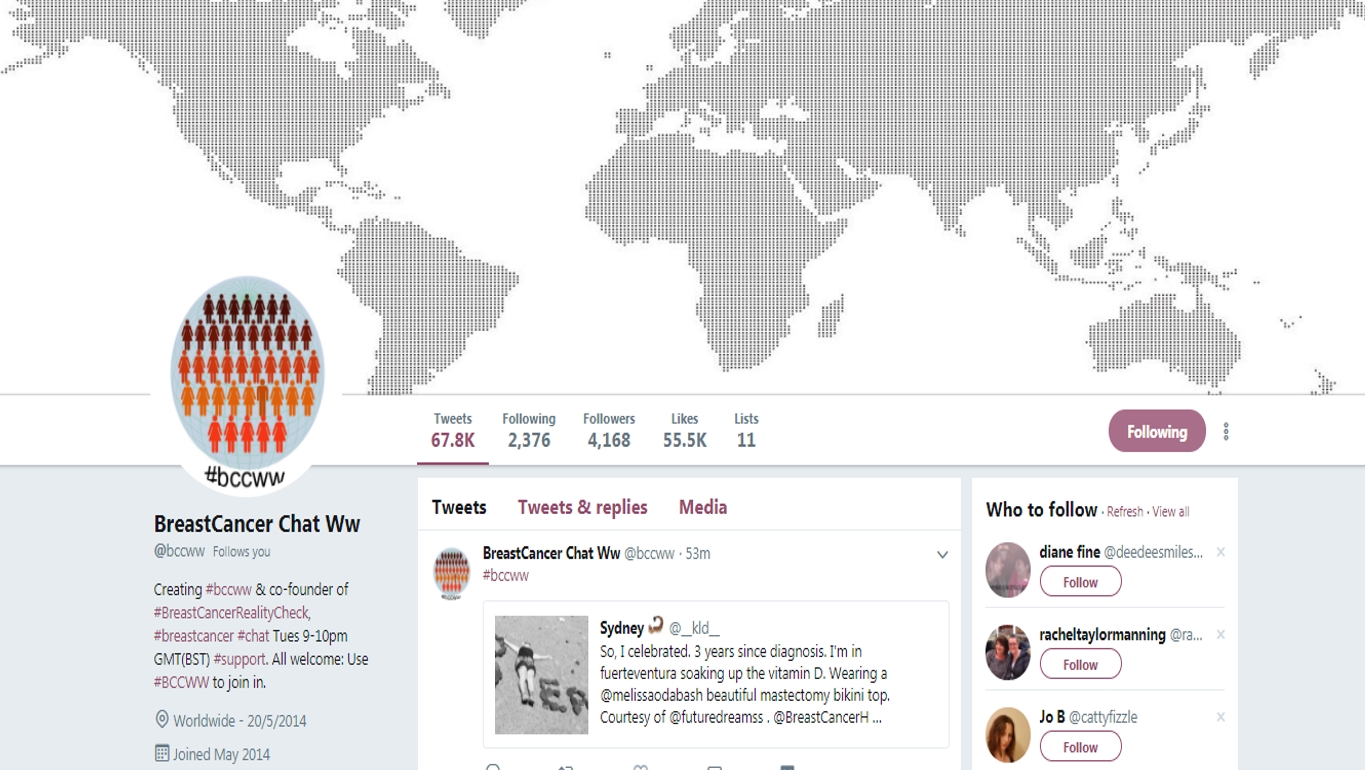
The trailblazer in this area is the Breast Cancer Social Media chat (#BCSM). The first #BCSM chat took place in 2011. Moderated by two breast cancer patients, Alicia Staley and Jody Schoger, the goal was to provide credible, evidence-based information and support for anyone affected by breast cancer.

Picture1

Alicia and Jody were soon joined by breast surgeon, Dr. Deanna Attai who saw immense value in taking part in these conversations. From this inside peek into the world of patients, Dr. Attai surmised that while doctors were providing information, patients, overwhelmed by their diagnosis,  were not necessarily hearing it.

In 2015, BCSM published a study which demonstrated that breast cancer patients’ perceived knowledge increases and their anxiety decreases by participation in Twitter chats like #BCSM. In a separate paper published in 2016, the use of social media was linked to more patient confidence in cancer treatment choices.

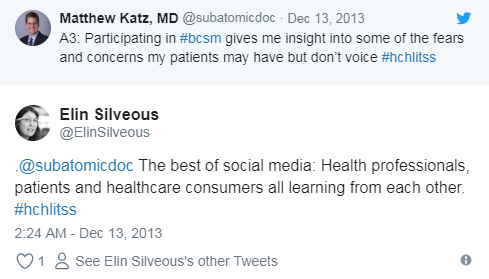
Dr. Matthew Katz, a radiation oncologist based in the US, agrees that Twitter chats provide valuable insight into patient concerns and credits them with making him a better listener.

download (90).png

I also love what Elin Silveous says about Twitter chats being the best of social media. It’s about all healthcare stakeholders coming together to learn from and with each other.

Where To Find Healthcare Twitter Chats

Symplur is doing an impressive job of compiling all of the healthcare hashtags and providing chat transcripts in The Healthcare Hashtag Project. The goal of the project is to make the use of healthcare social media and Twitter more accessible for the healthcare community as a whole (a full list and a tweet chat calendar of meeting times can be found on the Symplur website).

How To Take Part In A Twitter Chat

1. Find a chat you’d like to join using Symplur or another tool like Twubs.

2. When it’s time to join the chat, you can join in straight from your Twitter account. Simply search for the relevant hashtag at the designated time.

Pro Tip! TweetChat is a great tool to use to make participation easier. Simply log in with your Twitter handle, enter the hashtag of the event, and TweetChat will pull up all the related messages so you can follow the conversation. If you plan to tweet a lot during the chat, it’s good etiquette to send out a brief message to your followers letting them know that you are attending a Twitter chat.

3. Take a breath and jump right into the chat with an introduction to who you are and where you’re tweeting from. ​The person hosting the chat will ask questions in order to spark conversation between you and the other participants.

Pro Tip! Twitter chats move fast, which is why using a third-party tool like TweetChat is so useful. Don’t worry if the pace is so fast that you feel you’re missing out on some of the tweets. The host will often provide a transcript after the chat so you to pick up on what you might have missed.

4. If you are new to Twitter chats, you might like to listen at first to get a better sense of how it works before you join in.  However, even if all you do is listen rather than participate, take a moment at the start to introduce yourself when the host asks for introductions. You can let participants know this is your first chat – you will often find that “newbies” receive a lot of encouragement from the group.

5. Remember to use the hashtag associated with the chat for all tweets and retweets during the chat. Again, this is where the TweetChat tool is useful because it will automatically add the hashtag to your tweets, so you don’t have to remember to do it yourself.

6. The host will introduce their questions with Q (for question) or T (for topic) followed by the number of the question, for example T1, T2, etc. When you want to respond to a question, use A (for answer) and the corresponding number, for example, A1, A2, etc.

7. A good tip is to find out in advance what the topic will be so you have time to prepare some tweets in advance. Whether it’s a question or comment relevant to the topic,  a link to some research you have seen, or an article you’ve written, being prepared in this way gives you more confidence to take part.

8. Follow Twitter etiquette. Let your Twitter followers know before the tweet chat that they’ll be seeing a lot of tweets from you for the next hour. You could even invite them to the tweet chat if you think they may be interested in the topic.

9. Enjoy! As I said at the start Twitter chats are super places to learn and find new people to connect with. If you haven’t yet tried a chat, then try one out this week and do let me know how you get on.

How do YOU get the most out of Twitter chats?

Any Twitter chats you’d recommend? What tips and tricks have you learned by participating in Twitter chats?


You might also like to read

 Everything You Ever Wanted To Know About Hashtags in Healthcare…But Were Afraid To Ask!

Posted in #HCSM, Thursday Tip

#ThursdayTip: How To Build Your Email List

Welcome to this week’s quick social media tip. Today I want you to think about the value of creating and growing a list of email subscribers. 

With the explosion of social media marketing in recent years, the traditional email format may appear outdated. But nothing could be further from the truth.  Even with the pervasiveness of new technology, email still remains a persuasive digital marketing channel for building awareness, boosting acquisition, and increasing conversion.

4 Reasons You Should Build An Email List

1. Email marketing helps you build relationships and credibility

People like to do business with those they know, like and trust. Email is direct, making it more personal and personalized than social media marketing. Email gives people a way to easily contact you with their questions.

2. Email marketing keeps you top of mind

Did you know that at least 91% of consumers check their email on a daily basis? While you can go for a few days without checking social media, most people check their email several times a day.

3. Email marketing is inexpensive

Email is an inexpensive way to reach people who are interested in hearing from you and communicating with them regularly.

4. You own your list

Unlike social media which is subject to change, your list is yours. in the words of Ann Handley, email is the only place where people (not algorithms) are in control. With social and other digital channels — Facebook, Instagram, LinkedIn, paid search, organic search — someone or something else decides who sees your content and when and where they see it.

5. Email marketing converts better than social media

A study by McKinsey & Company revealed that email is a significantly more effective way to acquire customers than social media. People who buy products marketed through email spend 138% more than those who do not receive email offers.

Bottom line — ignoring email as part of your marketing strategy means you are missing out on potential business opportunities.

Take Action: One of the best ways to build your list of subscribers is to offer something of value up front. This email incentive known as an “opt-in offer” or “lead magnet” is something you are willing to give away for free which requires people to provide an email address to download. Check out this list of 15 ways to create your first lead magnet.

Want to subscribe to my newsletter?

Each Monday I send out a weekly digest of social media marketing tips and the latest social media updates.

Click here to subscribe to my mailing list.

Related Reading

20 Email Marketing Dos and Don’ts for More Effective Email Campaigns


Posted in #HCSM

When Are The Best Times To Post On Social Media In 2021?

Content has no value unless it’s amplified. One way to ensure amplification and optimize your social media reach is to post your content at the right so they reach your audience when they are online.

If you search for optimum posting times, you will find many guides online. You can follow these recommendations as a starting point, but I do recommend you do your own testing to see which days and times work best for your own particular audience within your industry.

Sprout Social has published its latest listing of the best times to post to each of the major social media platforms, which is based on the company’s 20,000+ customer base, who use the platform to schedule and post online. It may provide a good point for you to start testing optimum times for your own social media posts.

Best Times to Post on Facebook

While Sprout Social observed that “compared to past years, there were few completely ‘off’ times for Facebook when reviewing the past year of data. Weekends, late night and earlier morning all showed more consistent engagement and have become much more opportune times for brands to get eyes on their content.” (This seems at odds with its recommended worst time to post being Saturday – but again it proves my point that it is best to test for yourself).

  • Best times: Tuesday, Wednesday and Friday 9 a.m.–1 p.m.
  • Best days: Tuesday, Wednesday, Friday
  • Worst day: Saturday

Best Times to Post on Instagram

Similar to Instagram’s parent company Facebook, the top times to post on Instagram expanded in 2020 compared to previous years. Midday engagement during weekdays became even denser with top times throughout the 11 a.m.–2 p.m. range, and evenings and weekend times showed increased opportunities for engagement.

  • Best times: Tuesday 11 a.m.–2 p.m., Monday through Friday 11 a.m.
  • Best day: Tuesday
  • Worst day: Sunday

Best Times to Post on Twitter

  • Best times: Wednesday 9 a.m.– 3 p.m., Tuesday through Thursday 9–11 a.m.
  • Best day: Wednesday
  • Worst day: Saturday

Best Times to Post on LinkedIn

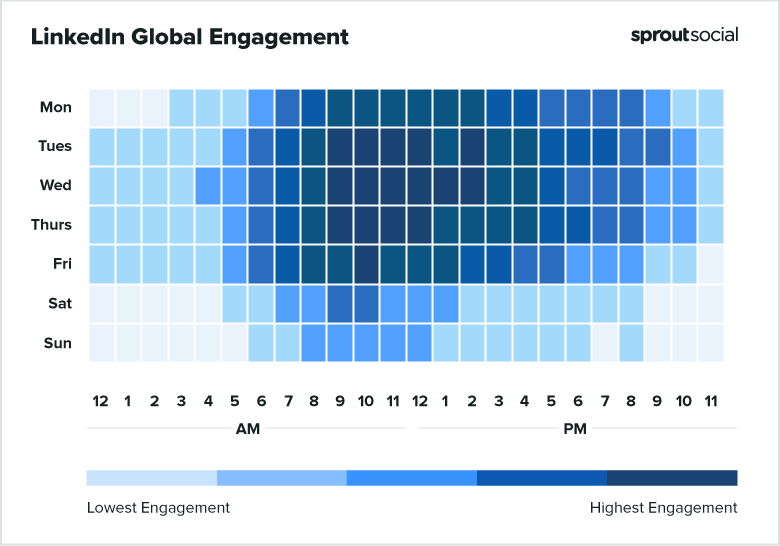
  • Best times: Tuesday through Thursday 9 a.m.–noon
  • Best days: Tuesday and Wednesday
  • Worst day: Sunday

To sum up

Consistent social sharing can help you stay top of mind with your audience. It’s a common mistake to only post content once and then not again. To get the most engagement, visibility and reach, reshare your content on multiple networks at various times and in different ways. Vary your updates when you do — for example, highlight a different statistic or quote, or ask your audience a question.

These data points are general but they provide a good starting point to start testing your audience engagement. Try them for a month, take note of your findings and see if your engagement shifts at the end of the month.

Posted in #HCSM, Twitter

What To Post on Twitter: A Cheat Sheet For Healthcare Tweeters

Have you recently joined Twitter and are wondering what you should tweet beyond “This is my first Tweet”? Or have you been on Twitter for a while now but are running out of things to post? 

If your tweeting needs a fresh injection of ideas, check out the following list of tweets you can adapt and post to your followers.

  1. Link to a new post on your blog – ok this is one of the most obvious tweets to send, but if you haven’t blogged in a while, why not see this as an opportunity to revisit your website and identify your most popular posts. Pull out a quote, or a statistic or turn your headline into a question before tweeting a fresh link to your chosen post.
  2. Share an inspiring or motivational quote – tag it with #MondayMotivation for more traction.
  3. Post a behind-the-scenes photo of your office.  People love to see behind the scenes stuff – so bring your camera to your next staff meeting, lunch or event. Sharing pictures of your employees (with their permission, of course) makes your practice so much more relatable. Furthermore, it helps to build a sense of camaraderie
  4. Participate in Follow Friday – #FollowFriday or #FF on Twitter is a tradition in which people send tweets recommending other Twitter users they think are interesting to follow. The tweets are sent on Fridays and contain the hashtag #ff or #FollowFriday.
  5. Use Hashtags strategically. Use hashtags to identify real-time opportunities for engagement in news and events, identify current trends and key influencers. Find trending hashtags with tools like TwitonomyHashtagify.me and RiteTag.
  6. Thank a new follower – thank someone by name when they follow you. People love to be acknowledged by name.
  7. Share a health care tip. Share a quick seasonal wellness or preventative care tip with your followers.
  8. Tweet a “Did you know?” or “True or False” style tweet. These kinds of tweets are popular for encouraging interactions among your followers.
  9. Conduct a poll. Ask your followers a question using Twitter’s Poll Feature. Use it to get a snapshot of readers’ attitudes on health topics like vaccination, screening, complementary therapy, mental health – the list is endless. Share the results in a follow-up tweet.
  10. Live tweet. Live tweeting is a great way to share valuable information at conferences and events.
  11. Post a “fill-in-the-blank” prompt. This is a fun way to engage your audience. Here’s an example:  Fill in the blank: ________________ always makes me smile.
  12. Tweet about cause awareness events. It could be Breast Cancer Awareness Month, Alzheimer’s Disease Awareness Month or Healthy Weight Week. Join in using the relevant hashtag on Twitter.
  13. Post holiday-themed tweets (Christmas, Hanukah, 4th July, etc.) You could also join in fun holidays like National Donut Day. Check out this calendar to keep you right up to date with ideas.
  14. Share news and updates from your practice. Are you rolling out a new program, product or service? Let your followers know about it in a tweet. You can highlight when someone on your team achieves a new certification level or when you acquire a new piece of equipment that affords better care. Patients will appreciate you keeping them informed.
  15. Share your thoughts on an industry trend. Healthcare is constantly changing and evolving. Can you predict or comment on the latest healthcare trend? Set up Google Alerts to keep updated on emerging trends in your industry to provide the latest information for your readers.
  16. Create a Twitter Moment. Twitter gives you the ability to create “Moments,” which  allows you to curate a series, or gallery, of tweets revolving around a particular theme. Follow this step-by-step guide to create your first Twitter Moment.
  17. Engage with your patients around relevant conversations. Join a health-related Twitter chat – you’ll find a comprehensive list at Symplur.com.

So there you have it, some suggestions for things to post on Twitter when you have run out of ideas. Of course the most important thing about Twitter, indeed any social network, is that it’s just that.. social. Don’t just engage in one-way tweeting. Twitter is a two-way communication tool.  Make sure you are also taking the time to be sociable – like and respond to others tweets, retweet and comment often.


Want more tips like these? 

Sign up for my weekly newsletter to be in the know. 

Posted in #HCSM, Thursday Tip

#ThursdayTip: How To Create Content With Emotional Resonance

Welcome to this week’s social media tip. Today I want you to think about how you can create emotional resonance through your content marketing.

The word “emotion” is a combination of the prefix e-, meaning “away,” and the Latin word movere, meaning “to move.” In this sense, emotions break us away from our standstills, moving us in new directions and prompting us to take action.

Numerous studies have found emotional arousal plays a key role in driving social sharing. In 2012, researchers Jonah Berger and Katherine Milkman published research based on an analysis of 7,000 articles from the New York Times to see which types of articles were most shared by email.

1_z9Gy_P_eVc44TVx_0QKXVA

The results indicate that virality is partially driven by physiological arousal.

“Content that evokes high-arousal positive (awe) or negative (anger or anxiety) emotions is more viral. Content that evokes low-arousal, or deactivating, emotions (e.g., sadness) is less viral.” — What Makes Online Content Viral?

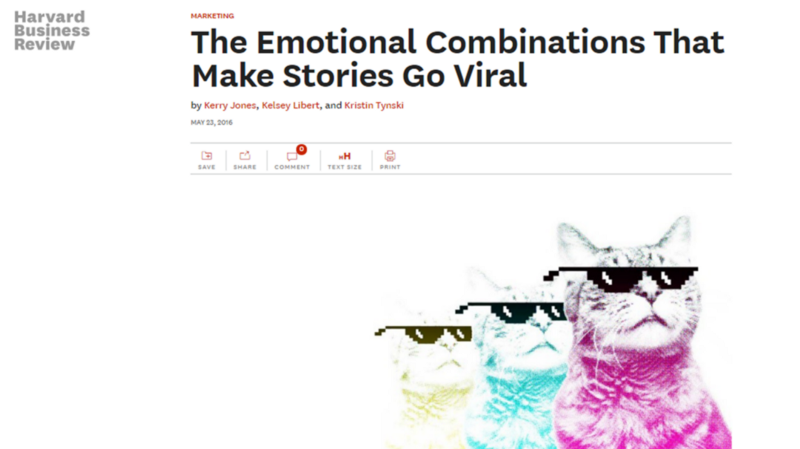
The Harvard Business Review released research in 2016 which showed that creating a powerful emotional experience increases the chances of going viral. The research, based on an analysis by Frac.tl of the top 100 images of the year from imgur.com, as voted on Reddit.com, found:

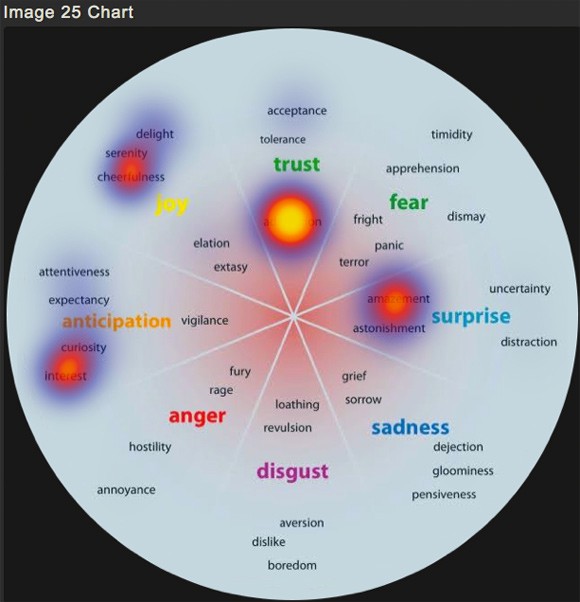
  • A significant correlation between content views and positive feelings (specifically joy, interest, anticipation, and trust).
  • Negative emotions were less commonly found in highly viral content than positive emotions, but viral success was still possible when negative emotion also evoked anticipation and surprise.
  • The emotion of admiration was very commonly found in highly shared content, an unexpected result.

1_kBhD0w1ocN5rogIlHR76CA
Heatmap of the aggregate emotional data, representing the totals compiled (HBR)

One way to create emotional resonance is to tell a heartwarming story.

Effective stories inspire people by creating human connection and emotional resonance. In 2015, an article about a husband and wife celebrating 82 years of marriage, topped USA Today’s most shared content. Not only was the story uplifting and inspirational, but it also shared insights on reaching over 100 years of age (if you’re interested — the couple describes a healthy diet and frequent naps as the secret to growing old).

1_LbgwswX5Q6kztsl7kP6Oww.jpeg

Marie Yoland Eveillard speaks with her father Duranord Veillard, who will celebrate his 108th birthday on Saturday, and mother Jeanne Veillard, who turns 105 in May. The couple got married in Haiti in 1932. Tania Savayan/The Journal News

Once you understand how to strike the right emotional chords with your message, you can greatly increase your chance of getting your content widely shared.

Here’s to your social media success!